
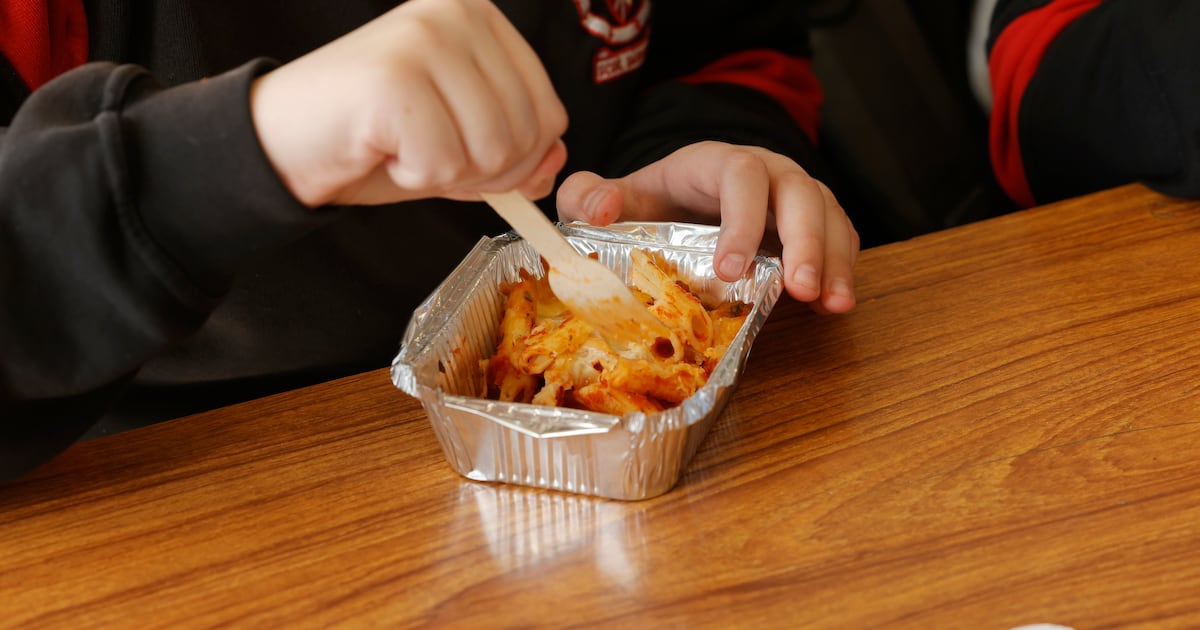
The State’s hot school meals scheme is to be overhauled following two reports that found shortcomings in the quality of food provided and a high level of waste.
The analysis, commissioned by Minister for Social Protection Dara Calleary, comprised two reports: an audit of the nutritional value of what was on offer and a survey of pupils’, parents’ and teachers’ views on the scheme.
The hot school meals scheme was first introduced as a pilot in 37 Deis primary schools in 2019 and has since expanded to provide meals to approximately 550,000 primary school children in 3,200 schools across the State. It is funded by the Department of Social Protection with a budget of €286 million in 2026.
The Nutrition Review Report, carried out by a dietitian, found that while the majority of meals did not contain foods considered high in fat, salt or sugar, these options were chosen over healthier alternatives when available on a menu.
The review also found that almost a fifth of hot school meals were uneaten every day.
The survey of pupils, parents and teachers found while overall the attitudes towards the scheme were positive, the majority of parents felt children should have the option of a cold lunch, and greater flexibility in menu items.
The Minister outlined four major changes to the scheme after bringing the reviews to Cabinet on Monday.
“Firstly, we are going to develop a three-week standardised menus cycle. At the moment, that is not present in many schools,” Calleary said.
“Secondly, we are making adaptations for special schools, for children with special dietary requirements, to ensure to improve the inclusivity of the programme.
“Thirdly, different size meals for different age groups. We find different levels of acceptance from junior infants, right up until sixth class, and given the nutrition requirements will differ, we’re going to adjust the proportions.
“Finally, we’re going to look at the flexibility of introducing a cold lunch option. That was the preference of many parents,” Calleary said.
While acknowledging the report’s importance and the lessons to be drawn from it, one school principal questioned why it garnered so much airtime over other issues in the education system.
“Why are chicken goujons making the headlines? There’s so much else going on in education and in Deis schools than the hot meals,” Órla Hanahoe, principal at Cnoc Mhuire Senior National School, a Deis Plus school in Tallaght, Dublin 24, told The Irish Times on Monday.
The hot meals scheme was “a necessary part of our school”, Hanahoe said.
“For the very marginalised children in our school, they could eat two or three [meals]. So for those children, even though I see a lot of waste and I see the flaws within the scheme, if there’s a few children in every class whose needs are being met and who are being filled up with something hot and tasty and filling, then that’s great,” she said.
Hanahoe said the report was “necessary, and we need to learn from it”, both to reduce food waste and ensure children are exposed to unprocessed foods.
However, she said there were “basic things” she wished got more attention: keeping the school warm, avoiding debt in a large building where the population is falling, and maintaining a positive environment for the students.