
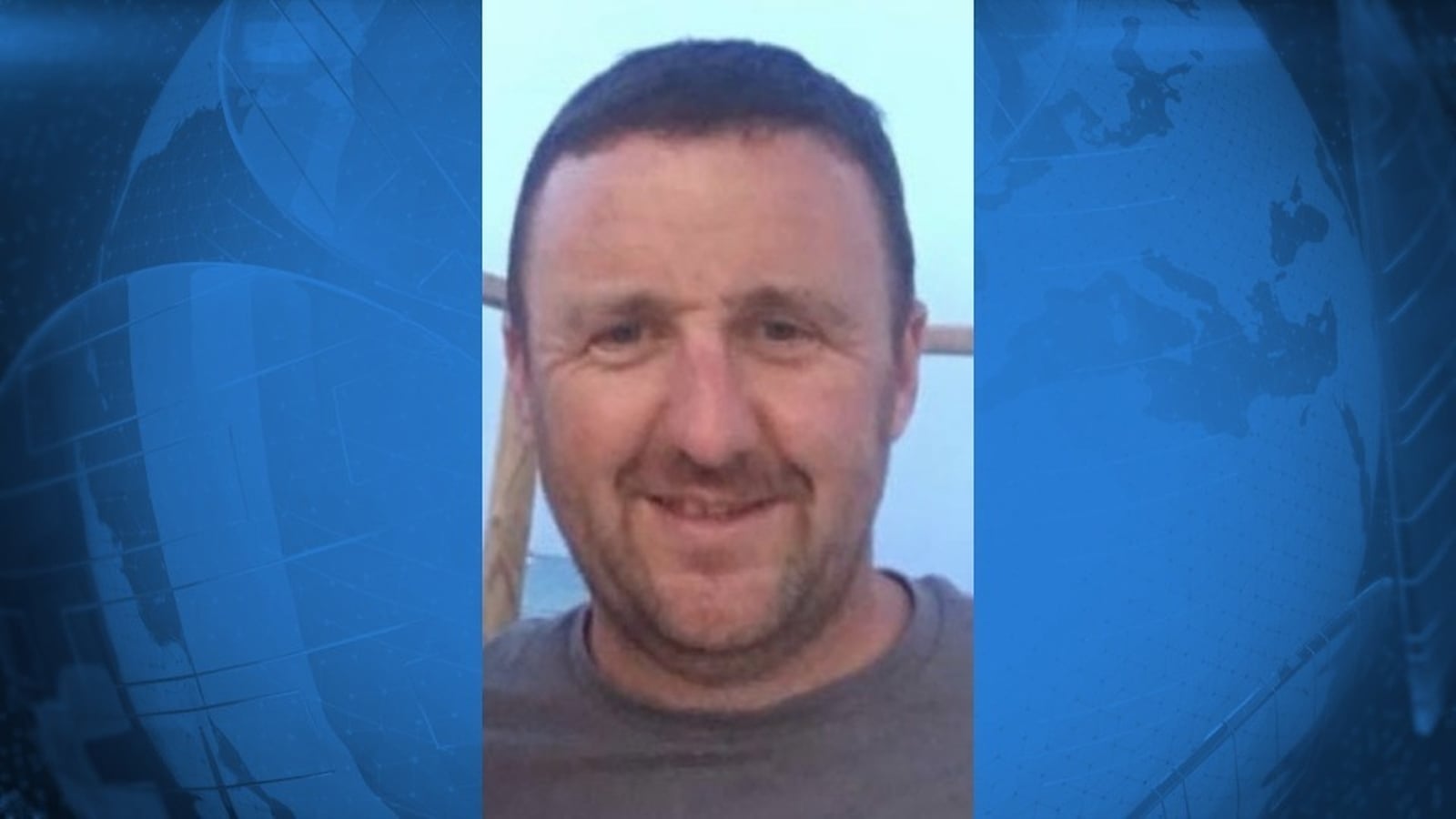
A man died by suicide the day after staff at a psychiatric hospital became aware that he had written a “goodbye letter” to his family whilst in their care, an inquest in Cork has heard.
Ray Kenny, aged 50, of Kilworth in Co Cork died at Cork University Hospital on 26 May 2025 having been transferred from St Stephen’s Hospital in the city.
The bus driver and father-of-three had been found unresponsive by staff at the hospital.
Coroner Philip Comyn said that it was a matter of concern that even though a psychiatrist in St Stephen’s had ordered all potential ligature items be removed from Mr Kenny, he was in a ward where five other patients had access to those items.
Mr Comyn said it was a matter that should be looked at more closely as it seemed like an “exercise in futility”.
However, the inquest had heard there was no suggestion that items were taken from other patients.
The coroner offered his condolences to the Kenny family at the conclusion of the inquest and commended them for their “heroic” efforts on behalf of Ray.
A verdict of death by suicide was recorded in the case.
Cara Kenny said that her late husband Ray “loved his life” and had “wanted to get better and to get home to his family”.
She said that her husband did not want to be in St Stephen’s Hospital. However, she indicated that they encouraged him to remain onsite so he could ultimately “come home to them for good”.
“He was constantly telling us how frustrated he felt while he was there, and felt his mind was muddled with the constant chopping and changing of his medication.
“He constantly questioned if the medication he was being prescribed was as it had been previously, as he felt he was not making any progress. He was begging for help but wasn’t getting it and couldn’t understand why he was not getting better.”
She said that her husband had been taken off a medication which had helped him with depression in the past.
However, the psychiatrist who treated Mr Kenny at the psychiatric hospital, Dr Grozdana Lalevic, said that the medication in question had not proved to be of assistance to the patient.
She said that Mr Kenny was risk assessed and that all matters relating to medication were discussed and agreed upon with him.
Meanwhile, the inquest heard that on 25 May 2025 Cara texted Ray to say “good morning”. She failed to get a response and called his mobile phone.
She made phone contact with a member of staff at St Stephen’s Hospital at 10.58am that day and explained that she was worried that she could not contact her husband.
“I was advised by the staff who answered the phone that he was in good form and that he was looking forward to coming out with his family on day leave. The nurse on duty advised they would pass on the message.
“Fifteen minutes later I still hadn’t heard from Ray. I was so worried I called again and spoke to a nurse on duty that advised he was lying down after his morning medication and they would let him know to call me.”
She waited for her husband to call. Instead at 11.30am she got a phone call from the doctor on call who told her that her husband was being moved to CUH having been found unresponsive on site. He died at the hospital the following day.
Mrs Kenny said her husband was a “very active man who ran marathons”. He had spent time at St Stephen’s Hospital and in a psychiatric hospital in Dublin in 2015 – 2016.
His mental health improved following his treatment in Dublin, and he was released from hospital.
For a period of nine years, his mental health was stable. He had a “traumatic” experience at St Stephen’s Hospital and had never wanted to return there.
Mrs Kenny said that when her husband noticed his mental health deteriorating in March of 2025, he sought help from his GP and CUH.
He was admitted to St Stephen’s Hospital on 27 March 2025 and released on 3 April. He was readmitted to the hospital on 22 April and remained there until the day of his death.
Mrs Kenny said that her husband was a non-smoker. However, he started smoking 40 or 50 cigarettes a day at the hospital as he was so agitated.
He did not have any real outlet as regards exercise and was in a ward with five other people. Following an incident on the grounds of the hospital he was not allowed to walk around unaccompanied for his own safety.
Ray Kenny had been allowed to go home to spend time with his family two days before his death. He had appeared to do well that afternoon, but his wife said that he became agitated in the period before his return.
A clinical nurse manager at the hospital told the inquest that Mr Kenny was assigned a key nurse upon entering the facility.
She said all the necessary risk assessments were carried out. She also stressed that all patients at the hospital are checked to ensure that do not bring “potential aids to self-harm” into the ward”.
She confirmed that a systems analysis review of the Mr Kenny case was conducted in the aftermath of his death.
In a statement after the inquest, Cara Kenny said that their lives had fallen to pieces following the death of her husband.
“How can it be that my husband died while he was in the place that was supposed to keep him safe?
“He told me every day how he just wanted to be better and wanted to come home. We begged him to stay there because we thought it was the best thing for him to keep him safe and now we have to live with this.”
She added that the Mental Health Commission carries out an inspection of St Stephen’s Hospital and other facilities of its type to determine if it is maintaining appropriate standards, including the minimising of ligature anchor points.
“St Stephen’s Hospital was deemed non-compliant with minimising ligature anchor points in 2017, 2018, 2019, 2020, 2021, 2022, 2023, 2024 and 2025.
“What is the point of these audits, reports and recommendations if nothing changes as a result of their findings? Why is this non-compliance allowed to continue?
“Standards were repeatedly breached; necessary changes were not made. Ray sought help and was failed by the very system that was to protect him.
“It should not take the loss of another person for this to be brought to light.”
If you have been affected by any of the issues in this article, visit rte.ie/helplines