
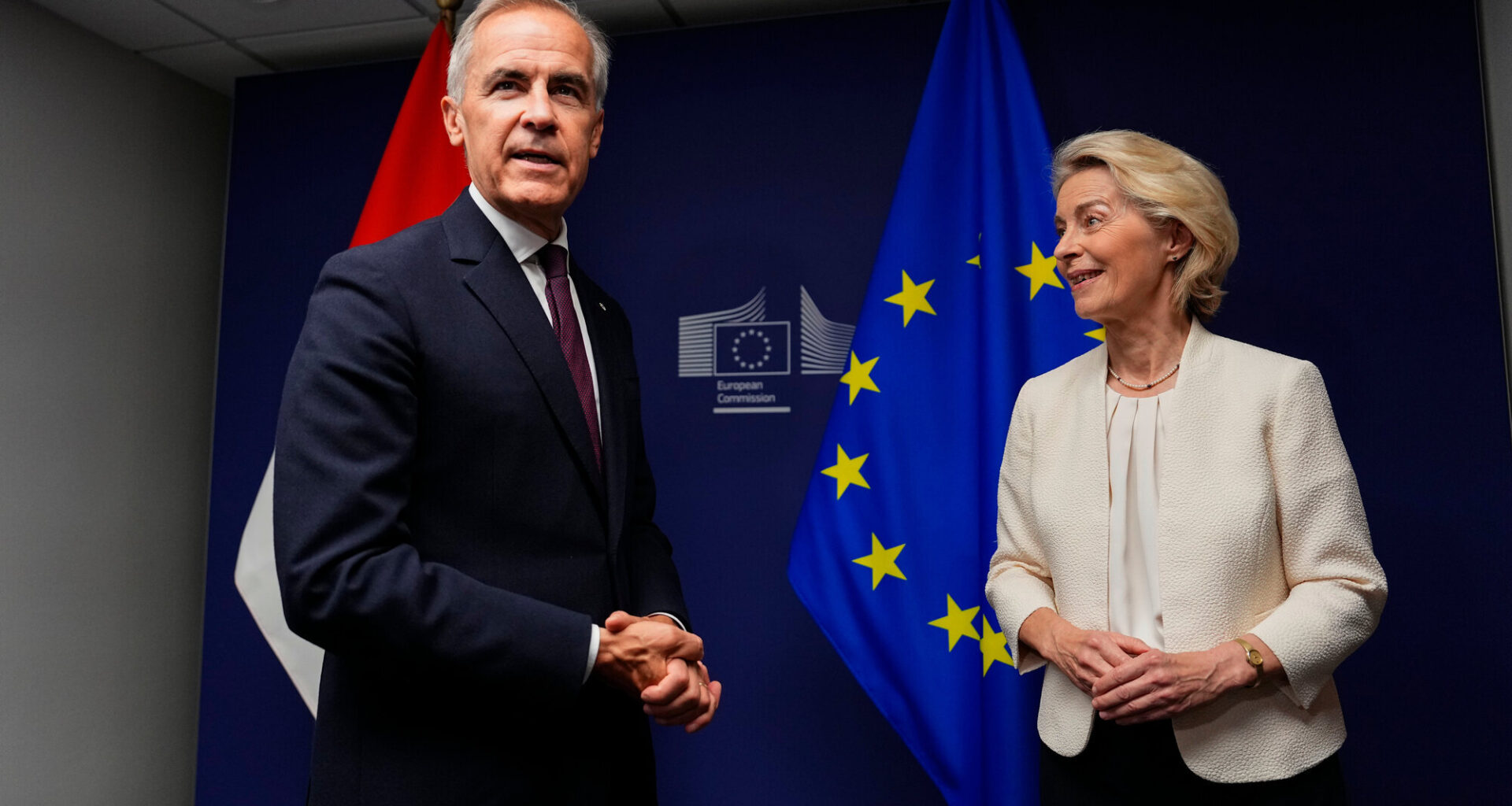
Something big is stirring between Canada and Europe — and Ireland has more riding on it than most.
Earlier this month, Canadian foreign minister Anita Anand became the first Canadian foreign minister ever to join an informal ‘Gymnich’ EU foreign ministers’ meeting, which was held in Wicklow. That wasn’t just a diplomatic novelty. It was the latest step in a relationship that’s deepening fast.
Now it’s gone further still. Canadian prime minister Mark Carney wants what he calls a “unique security and economic alliance” with Europe. European Commission president Ursula von der Leyen has just floated something more radical: Canada as the EU’s first “associate member”.
The label is up for grabs, and some EU governments will baulk at inventing a new tier of privileged partner. But the question underneath won’t go away: what should Europe offer a democracy like Canada that wants deep economic and security ties but neither wants nor could have full membership?
The current geopolitical crisis demands an answer. Both Canada and Europe know the risks of economic and security dependence upon the United States.
Both are urgently seeking ways to handle the shockwaves of instability emanating from Washington and to build global structures to withstand future such shocks — whether from Washington or indeed Beijing.
With human rights and multilateral institutions under sustained attack, and territorial conquest back on the agenda — in Ukraine, Taiwan, Greenland — preserving a rules-based order isn’t sentimental idealism. It’s a hard-nosed national interest, and Ireland has a big stake in this.
Carney calls Canada “the most European of the non-European countries”. He’s building on CETA, the EU-Canada defence partnership, co-operation on critical minerals and technology, and — most strikingly — Canada’s newly won access to the EU’s joint defence-procurement fund, SAFE.
The task now is turning all that into something coherent.
Start with money. Ireland is small, open, and allergic to the idea of “strategic autonomy” curdling into continental protectionism.
Real autonomy doesn’t mean Europe making everything itself — it means choosing reliable partners and cutting dangerous dependencies, deliberately.
Canada fits that bill. It has energy, critical minerals, world-class research and a serious defence industry.
The EU offers Canada a market of 450 million people and serious investment firepower.
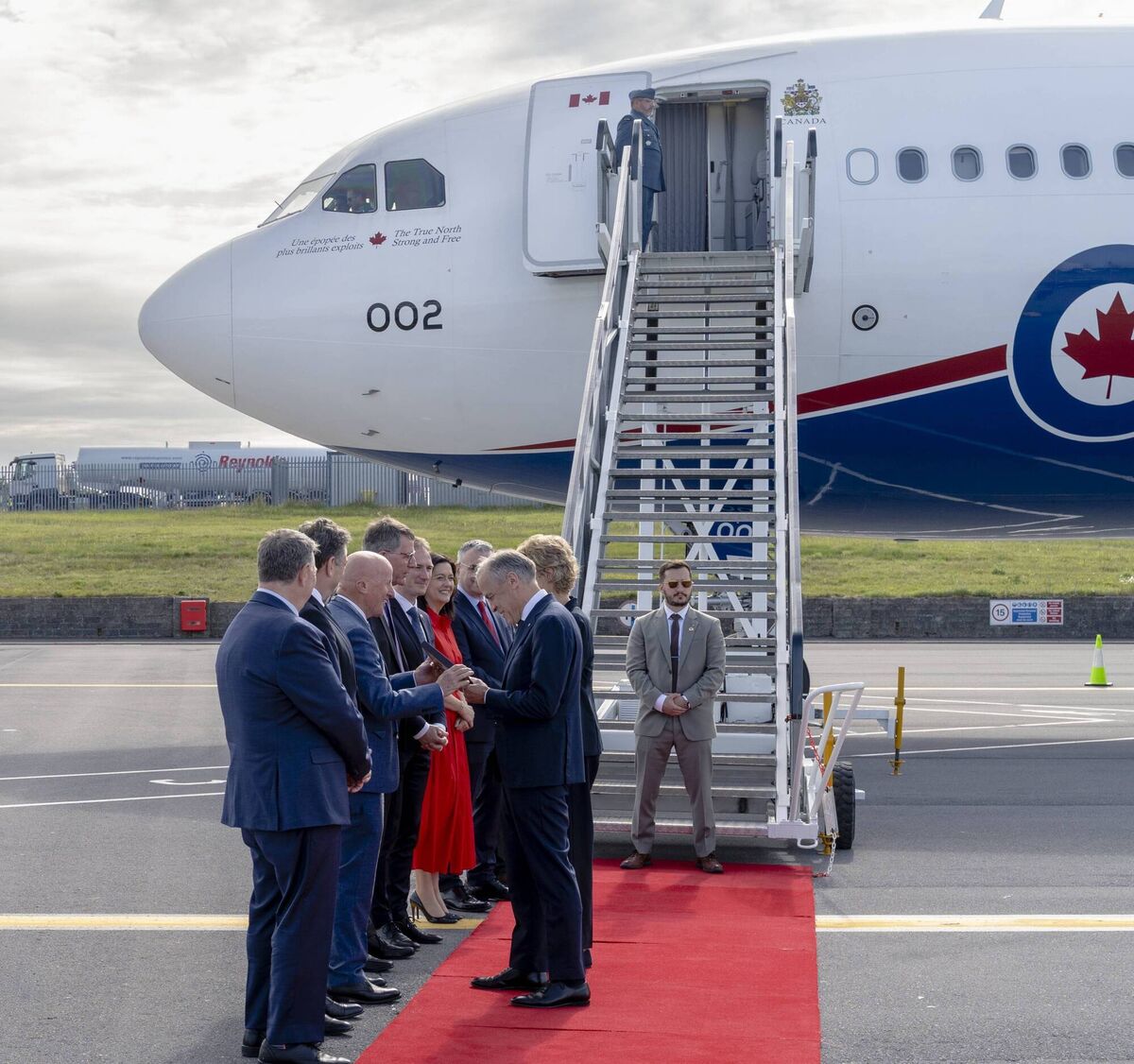 Canadian prime minister Mark Carney arriving at Ireland West Airport. While Carney visited Ireland in June, Ireland and Canada agreed to co-operate on economic security and trusted supply chains.
For Ireland, keeping that door open means diversified trade and supply chains built with partners you can trust — vital in pharma, life sciences, tech and advanced manufacturing, the sectors that pay Irish wages.
This isn’t abstract.
When Carney visited Dublin in June, Ireland and Canada agreed to co-operate on economic security and trusted supply chains, including a new Pharmaceutical Supply Chain and Resilience Dialogue.
That’s jobs and exports, not geopolitics for its own sake.
Ireland sits beside some of the world’s busiest transatlantic shipping lanes, data cables and communications routes and hosts critical data centres.
Their protection isn’t someone else’s problem.
Canada is both a North Atlantic and an Arctic power.
The two countries have already agreed maritime-security training between their armed forces — a start that could grow into co-operation on undersea cable protection, maritime awareness and cyber resilience.
None of this requires Ireland to abandon neutrality or Canada to leave NATO.
It just requires both to notice they share a very large, very exposed ocean.
Canada’s entry into SAFE — the EU’s €150 billion defence instrument — matters more than the small print suggests.
Ireland is in SAFE too, and for a state with no major defence industry of its own, having more trustworthy players on the field is good news.
A European defence market monopolised by a handful of big continental firms doesn’t serve Ireland.
More competition, more suppliers, more options does.
That’s really what the Canada question is testing: does Europe require self-sufficiency, or does it need the political and industrial muscle — plus the right trusted friends — to act when it counts?
Get that right for Canada, and the same logic opens doors for Japan, South Korea, Australia and New Zealand.
Whatever this new relationship ends up being called — associate membership, strategic partnership, or something an EU summit dreams up at 3am — the principle matters more than the title: not every country outside the EU should be treated the same.
Ireland is well placed to push this along. The EU-Canada summit lands in Montreal on October 29–30 — during Ireland’s Council presidency.
Ireland can’t dictate the outcome, but a presidency can manage the agenda, broker the compromises, build the coalitions, and move things along.
Ireland isn’t a neutral broker — it has skin in the game: open markets, diversified supply chains, access to critical raw materials, resilient pharma and digital infrastructure, North Atlantic security, and a rules-based international order that small states depend on more than most.
What should not get lost in the geopolitics is that Ireland and Canada have always shown up for the UN, peacekeeping, and international law.
That tradition can’t be crowded out by talk of alliances and defence procurement. Hard security and a rules-based order aren’t rivals — increasingly, one relies on the other.
This is a question about what kind of Europe Ireland wants. Not just how close Canada gets to Europe — but what kind of Europe Canada is getting close to.
Ireland has a chance to help answer Canada’s call — and shape its own future in the process.
Ben Tonra is full professor of International Relations at the UCD School of Politics and International Relations (SPIRE)