

Every good story has a villain and, in the tale of modern-day anxiety and chronic stress, cortisol has been firmly cast as the bad guy. Thanks to the extensive reach of the social media “wellness” world, people who’d never even heard of this steroid hormone a few years ago suddenly think they know all about it. Feeling wired and jittery, with fluttery heart palpitations and a gut that’s doing backflips? That’s down to a sudden cortisol spike! You’ve got too much! Quick, do some box breathing!
In reality, though, we might have got cortisol all wrong. In fact, it may just be the most misunderstood hormone in the body, slapped with a bad reputation it doesn’t deserve. That’s according to Dr Erin Kinney, author of a new book, The Cortisol Cure: The secret to resetting your stress response, boosting energy and feeling better than ever, which turns everything we thought we knew on its head.
She’s more than aware of people thinking cortisol is bad. “There’s been a lot of talk in the media and on social media: lower your cortisol, suppress it, we have to get rid of it. But it’s a really important hormone. We actually want to make sure we have enough of it to handle all our stressors.”
.jpg) Dr Erin Kinney: ‘We actually want to make sure we have enough cortisol to handle all our stressors’ (Dr Erin Kinney)
Dr Erin Kinney: ‘We actually want to make sure we have enough cortisol to handle all our stressors’ (Dr Erin Kinney)
The common association with stress is warranted; cortisol is a hormone that your body produces in response to stress. But – and this is crucial – your body creates cortisol to give you the energy that you need to handle that stress. “It’s also what wakes you up in the morning and makes you feel good,” explains Kinney. “It makes you turn your brain on. And the other thing that’s really important to know about cortisol: it’s a major, potent, anti-inflammatory molecule.”
Even stress, in and of itself, is not inherently bad. High-intensity exercise, for example, is a stressor – it is putting our body into the same physical “fight or flight” state, and harnessing the same energy, as our ancestors evolved to be able to run away from predators. “Stress is simply, to our bodies, a spend of energy – and when we relax, that’s when we earn it back,” says Kinney.
Where the biggest misunderstanding lies is in our tendency to blame stress symptoms on having too much cortisol. Kinney explains that the opposite is true: our health is often impaired by having too little, and then undergoing what she calls a “cortisol crash”.
Kinney, a naturopathic doctor, speaker and podcast host who runs a private practice in Maryland, USA, first became interested in cortisol after experiencing a range of unexplained symptoms in her mid-twenties.
“I went from running marathons and being the picture of health to gaining 30 pounds and struggling to get out of bed,” she writes in The Cortisol Cure. “My joints ached. I had migraines, IBS-like symptoms, acne, and constant fatigue. Worst of all, I was crying all the time and I didn’t know why.”
Kinney went to her doctor and got as far as the words “I think I might be depressed” before being handed a prescription for antidepressants and sent her on her way.
 Cortisol is one of the primary targets of modern wellness – but we may be approaching it the wrong way (Getty)
“I walked out of that appointment in tears,” she continues. “I hadn’t even been given the chance to explain what was happening in my body.”
It was only after a therapist referred her to a naturopathic doctor that she discovered the real reason for her collective health problems: her cortisol was practically non-existent.
Kinney was “shocked”. Like most people, she had only heard about high cortisol being a problem. That insight sparked a lifetime of study and started her own journey to become a doctor. She’s now known as the “Stress Reset Expert”, having treated thousands of patients to balance their hormones, improve their mood and restore their energy.
Stress is simply, to our bodies, a spend of energy – and when we relax, that’s when we earn it back
Kinney uses the wonderfully easy-to-digest analogy of a bank account to describe how cortisol actually works and how a crash plays out. “When you rest and you sleep, that’s when you’re ‘earning’ cortisol that you can spend on things,” she says. “But if you go through a prolonged period of stress where you’re not sleeping very well, you’re not relaxing, your body is ‘on’ all the time, it’s like you’re in a cortisol spending frenzy and you have no earning capacity.”
And what happens if you spend and you don’t earn? “You’re going to go overdrawn in your account.”
When this happens, the body responds in several ways to keep functioning. Firstly, it will overproduce adrenaline, another energy hormone – “but it’s like a cheap energy hormone,” says Kinney. “It’s that feeling you get when you’ve stayed up all night and drunk 10 Red Bulls.”
Just like necking energy drinks to pull an all-nighter, this isn’t very sustainable, and your body knows it. After a period, it will move on to the next viable strategy in its arsenal: converting the sex hormones estrogen, progesterone and testosterone, which are very similar molecularly to cortisol, to use as an alternative energy source.
Kinney explains the process: “It’s like those are your savings account, and the body will essentially rob Peter to pay Paul and go, ‘Oh, we’ve got testosterone over there. I’m going to just convert that into cortisol so she still has energy.’” As a consequence, you’ll then get symptoms of drops in those hormones.
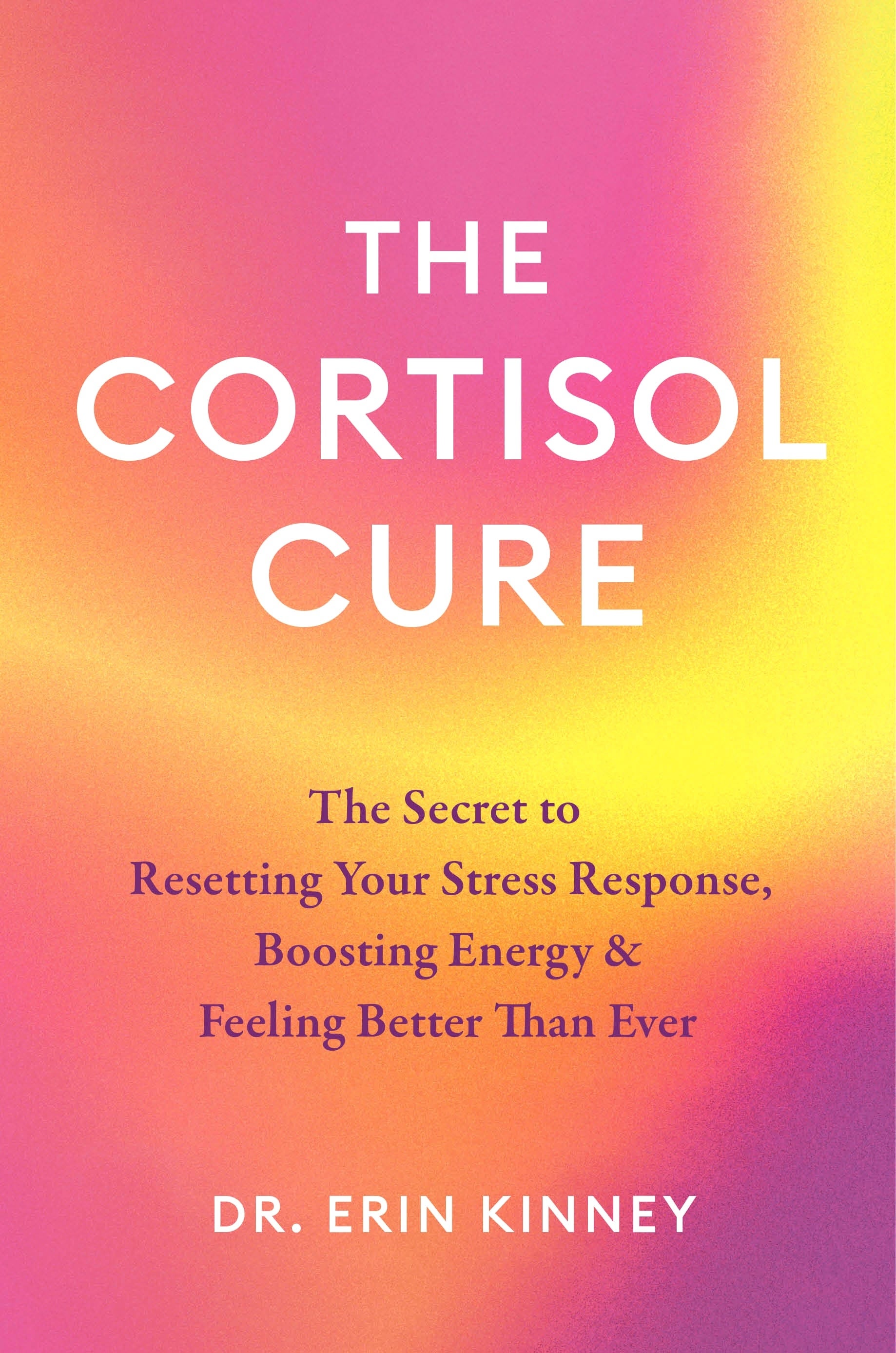 The Cortisol Cure is out now (Piatkus)
The symptoms of a cortisol crash are wide-ranging. First off, there’s fatigue. Brain fog is also common, both because cortisol is what locks your brain into focus, and because dips in estrogen, progesterone and testosterone – converted into cortisol when you’re running low – can exacerbate matters further, particularly for women. And then there’s pain: joint pain, migraines and back pain. Cortisol is a natural anti-inflammatory; deplete your stores and inflammation is more likely. It’s the same reason younger people can see acne flare-ups when their cortisol is low, as inflammation is a key part of the skin condition’s development.
Kinney flags that another cortisol crash symptom is weight gain. She sees many midlife women who are completely unable to shift the number on the scales, despite cutting calories and working out more.
Here, she uses another easy-to-understand analogy: “If you pretend your body is like a house and inside you have your laundry room, your bathroom, your kitchen – which is like your major organs, your liver, kidneys, bowels – the weight you want to lose is akin to a basement closet filled with junk.”
If you’re running a household, sorting out the basement closet is not high on the priority list; the basement closet is, in fact, going to come right at the bottom. “You’re only going to clean that out if you have the energy and the time to do so,” posits Kinney. “If your household checking account – your cortisol account – is running low, you’re not going to spend the money on an organiser for the basement, right?”
You need enough energy, or cortisol credit, built up to lose weight. It’s why Kinney, somewhat counterintuitively, often advises female patients to slow down. “I actually have them stop exercising and just do gentle walks and stretches instead, and we work on refuelling the body and getting their cortisol back up,” she says. “Then when we approach weight loss, it’s a whole different ballgame. It works every time.”
If your household checking account – your cortisol account – is running low, you’re not going to spend the money on an organiser for the basement, right?
Cortisol debt can also impact sex drive, mood, sleep, digestion, and the menstrual cycle. So, if the key to improving our health is replenishing our cortisol stores and getting back in the black, how to go about building credit? Here are some of Kinney’s top tips:
Toes up
“My favourite quick practice is a 10-minute ‘toes up’ reset where you lay flat and you close your eyes. You could listen to music or do a meditation. It’s like a power relaxation nap – kind of like charging your phone.”
Duvet days – in moderation
“I block out one day a month and call it my ‘bed day’. I don’t get out of bed – I sleep and I read and sometimes I’ll watch a movie, or my partner and I might have sex. I plan for it and I put it in the calendar as an intentional practice.”
Eat regularly
“The most important diet thing relating to cortisol is to keep your blood sugar balanced. When you have a blood sugar dip, that is what we call an internal stressor to the body, which will activate your cortisol response. I make sure patients are eating something at least three times a day. No skipping breakfast – eat your protein before having your caffeine.”
 No skips: breakfast is a must if you’re ever going to balance your cortisol (Getty)
Exercise – but not too much
“Movement is an important part of living a healthy lifestyle, but exercise for most people is the extreme version of fight or flight. If you’re doing a HIIT class or cardio, it’s the same as running from something, so it’s putting your body into that cortisol ‘spend’ state. It’s not to say that you shouldn’t exercise; just make sure you’re not overdoing it.”
Save it for when you need it
“If you have a really busy season coming up and you know you’re going to want to have more energy, make some extra deposits in your energy account in the weeks leading up to it. Before a big event or project, I’ll only walk and maybe do some light yoga. I don’t do any intense exercise – because I don’t want to drain my energy account too much.”
Work out your relax muscle
“In modern-day society, we put so much value on productivity, but we don’t put value on rest and recovery. We have two muscles of our nervous system: your stress muscle and your relax muscle. Often, all we do all day long is work out the stress muscle – we get up, we exercise, we drive to work, we work, we come home, we cook dinner, we go with friends, we take care of our kids. We’re constantly doing. Every time you do something where you’re ‘on’, it’s a rep for that muscle, so for most of us it’s very strong. Conversely, our relax muscle is very weak. We need to re-learn how to switch off and just be.”
‘The Cortisol Cure’ by Dr Erin Kinney is published on 22 September 2026 by Piatkus, and is available to buy online and in stores