
A Northern Ireland university is to lead a global investigation into the reasons why almost half of all patients prescribed weight-loss jabs stop their treatment within the first year.
It comes after a recent report revealed that up to eight million people in the UK alone are either taking, have taken or are considering taking weight-loss medicines.
Around two million people have paid for prescriptions for GLP-1 weight-loss drugs such as Ozempic, Wegovy and Mounjaro themselves.
Demand for the medication has grown in recent years, with The Irish News revealing last month that an “unapproved and deadly” form of weight-loss drug was on sale illegally in Belfast.


For those taking GLP-1s, staying on the treatment can present challenges including side effects, uncertainty, a high cost and difficulty accessing ongoing support.
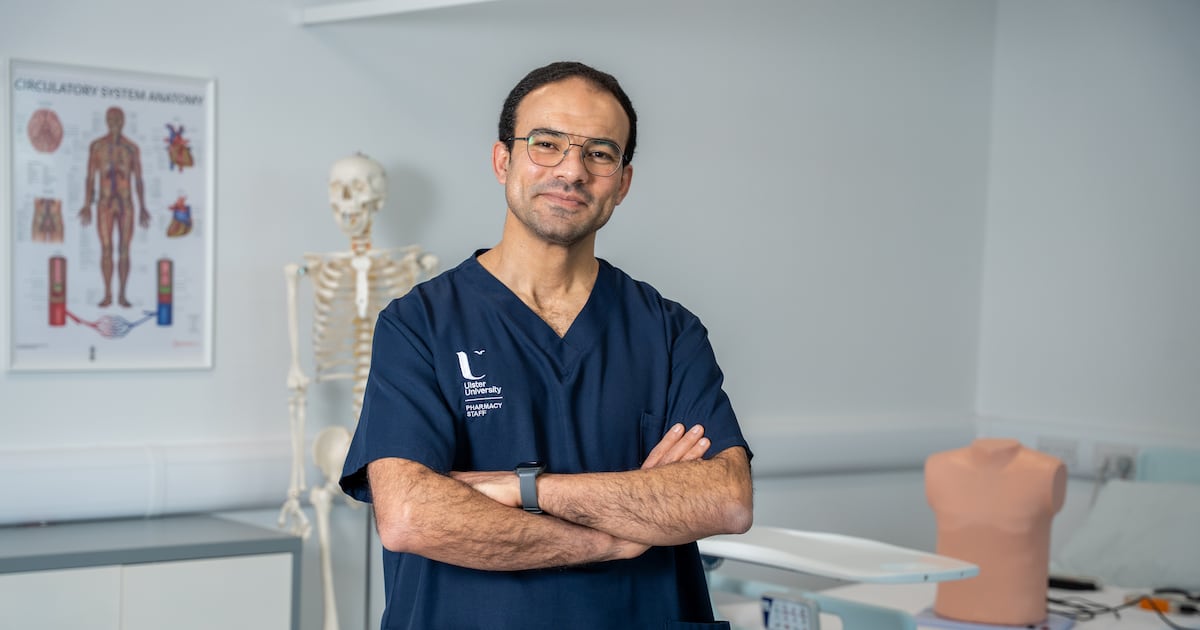
 Almost half of people who discontinue injectable weight-loss medicines cite cost or insurance barriers, as Ulster University researchers investigate why patients stop treatment and what support could help them stay safely on their medicines PICTURE: ULSTER UNIVERSITY
Current research suggests financial barriers account for almost 48% of individuals stopping, followed by gastrointestinal side effects at around 15%.
These can include nausea, vomiting, diarrhoea and constipation.
Now, researchers from Ulster University’s pharmaceutical school in Coleraine will aim to determine what support could help patients use these treatments safely and successfully over the longer term.
Led by UU’s lecturer in clinical pharmacy Dr Mohamed Elnaem, the project will involve collaborations with colleagues in Turkey, Spain, Pakistan, Indonesia, Egypt and Jordan through the Global PharmEd Optimise Research Network.
Dr Elnaem said: “Weight-loss injections are changing the way we approach obesity treatment, but prescribing a medicine is only part of the story.
“We need to understand what happens once people begin taking these medicines in their everyday lives, what challenges they face, why some people stop treatment, and what support they need to continue safely.
“Our research is about moving beyond the headlines and understanding the real experiences of patients. By working with researchers internationally, we can explore challenges that are shared across different healthcare systems and understand where experiences may differ between countries and communities.
“Ultimately, the solutions need to be tailored to the needs of individual patients and communities.”
Dr Elnaem added that they hoped the research will identify “practical, evidence-based approaches that can improve how these medicines are used and the support available to people taking them.”