
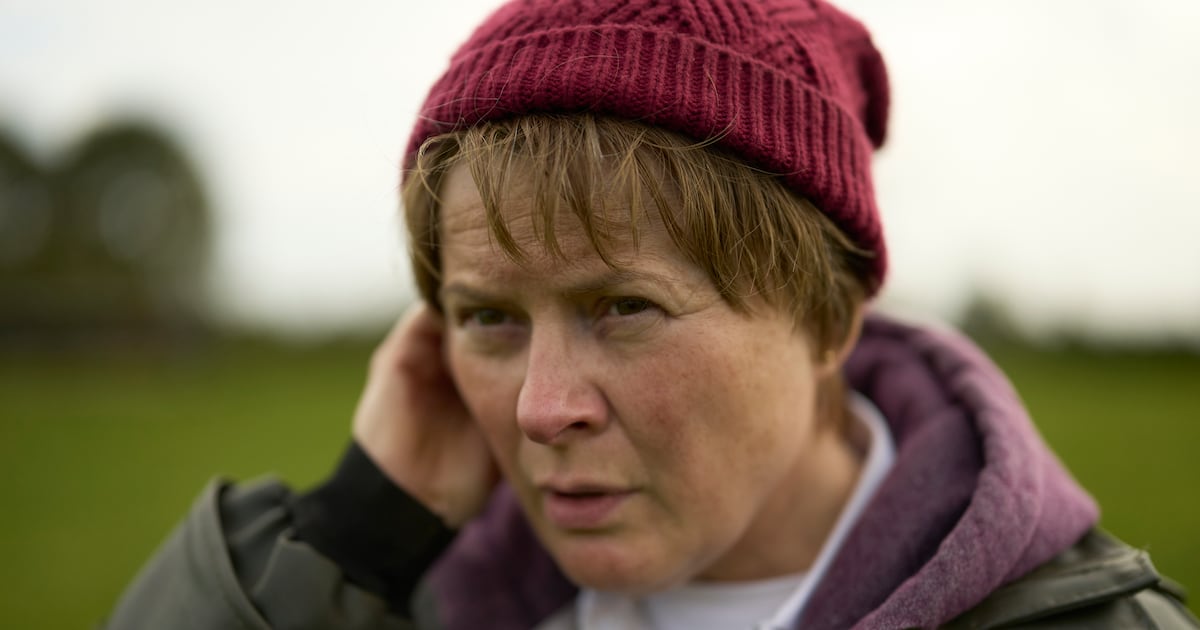
I don’t know if I’ve ever been to a film event where there’s a standing ovation before the first scenes have even played on the screen. At the Irish premiere screening of The Lost Children of Tuam there were several minutes of applause for the film’s subject, Catherine Corless, the Galway historian who uncovered the deaths of almost 800 children at the Bon Secours Mother and Baby Home in Tuam. She stood before the audience, dwarfed by producer Liam Neeson and director Frank Berry, “overwhelmed”, in her own words, yet completely composed and focused in her delivery of a speech dedicated to the memories of the children who died in the Tuam home yet lack any burial records. An excavation is under way at the site where the remains of 99 children have so far been found in a mass grave.
The film left me reeling. Actor Andrew Bennett, who plays Corless’s husband Aidan, said in a Q&A session after the screening that he’d only been aware of the top lines of the Tuam scandal before he took on the role and, having seen The Lost Children of Tuam, I know what he means. In the 12 years since Corless’s work first put the mother and baby home on the international map the story had become a one-liner in my head amid the other scandals and revelations of the treatment of our most vulnerable at the hands of the Catholic Church and the State. This film has pulled Tuam back into sharp focus and it is difficult to describe the seething rage I felt watching the concise yet meticulous storytelling, reflecting Corless’s own painstaking work.
[ Catherine Corless: ‘I was always a bit determined. I was teased a lot growing up’Opens in new window ]
The Q&A session also revealed that there were many victims and relatives of Tuam and other mother and baby homes in the audience, with some rightly advocating that the level of investigation into Tuam needs to be applied to many similar institutions around the country. The former Bessborough home in Cork is top of the agenda, with planning permission granted to build apartments on the site where the burial places of 859 children and 19 women remain unknown.
It is likely that any Irish person who watches this film will have some connection to Ireland’s shameful institutions. My grandmother was born in the workhouse in Athlone, Co Westmeath in 1916, with no father listed on her birth record. By 1926, according to the census, she was at was an “inmate” at St Joseph’s Industrial School for Girls in Summerhill in Athlone at the age of just nine. By then her father was listed as “dead”. Some of her fellow “inmates” were only two years old.
The circumstances of Granny’s incarceration at Summerhill are unknown, and I plan to go through the process of applying for her industrial school records. Her status as “inmate” indicates that she was sent to St Joseph’s under court order, rather than voluntarily admitted by family. I do know that she retained connection with her family and, despite the hardships of her upbringing, likely escaped the Magdalene laundries and mother and baby homes because of timing and geography.
In 1916 when Granny was born the workhouse system was winding down, with the facility in Athlone acting as a fever hospital as well as a home for the elderly and destitute. The nearby mother and baby homes of Tuam and Castlepollard didn’t open until 1925 and 1935 respectively. Although the identity of Granny’s father was never recorded, she is never referred to in her meagre records as “illegitimate”. The 1926 census lists all the children in the Tuam home as illegitimate. Their only and immaterial “crime”.
St Joseph’s Industrial School was run by the Sisters of Mercy and a family member recalls that “Granny always hated the nuns” because of her treatment in the institution. Seventy years after her time there, I was being educated at a Covent of Mercy school in Kildare. The nuns on the teaching staff were in single figures and although my memories of them are not particularly warm I can’t complain about my treatment beyond some individuals severely lacking in empathy, the overall dearth of sex education and a deep commitment to many, many Masses.
I was at that school when Bessborough became the final mother and baby home to close in 1998, something my friend and I reeled at as the credits rolled on The Lost Children of Tuam. We had taken our seats skitting about the possibility of “Liam Neeson Guest” in the row behind us turning out to be Pamela Anderson. We left them enraged, fired up, and ashamed of our country for its appalling treatment of women and children under a punitive and oppressive Catholic cloud.
The Lost Children of Tuam opens in cinemas nationwide on Friday, September 25th