
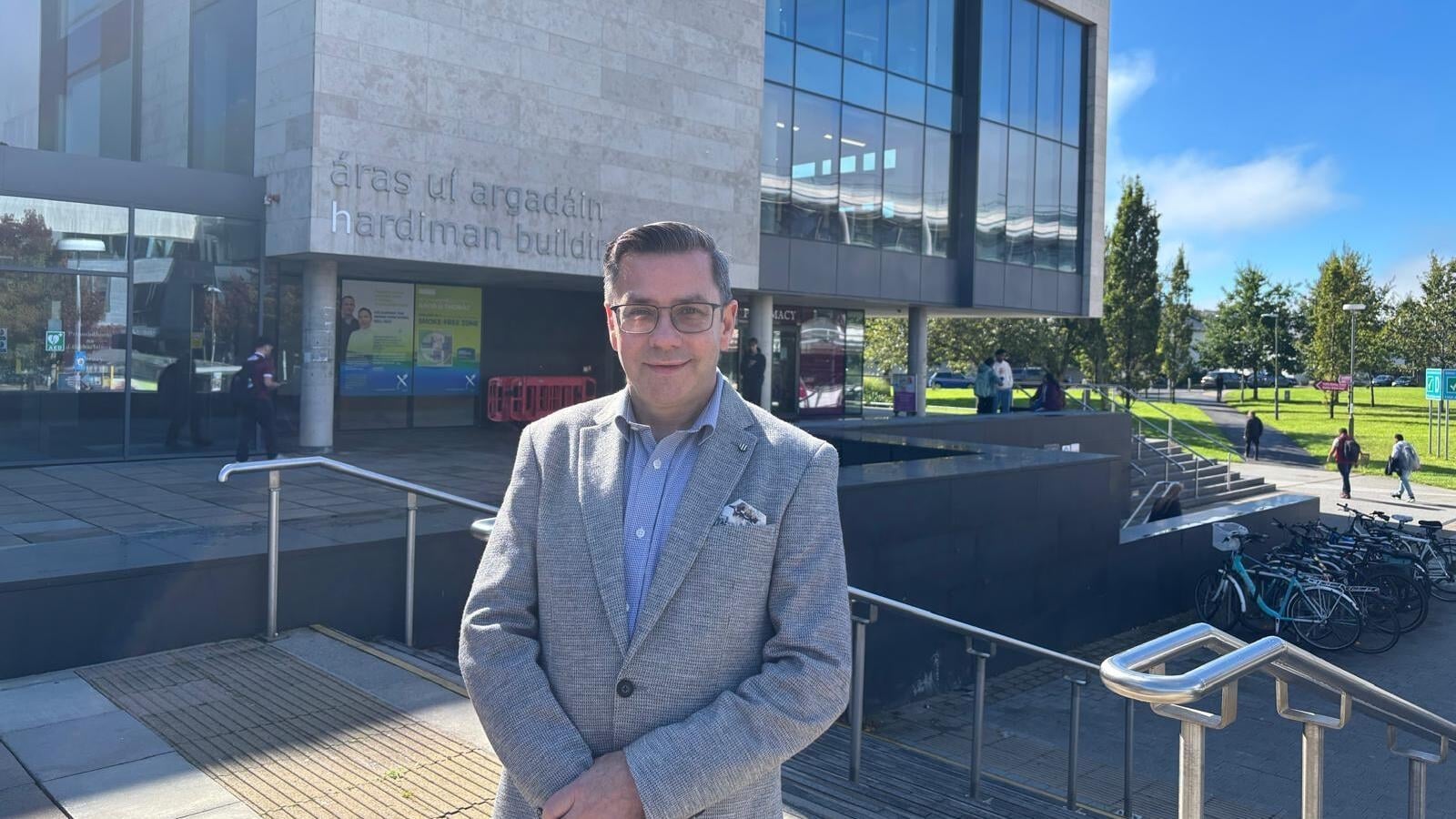
Artificial intelligence is here to stay but are the next generation of leaders and innovators still able to think for themselves?
Researchers at the Massachusetts Institute of Technology in the US have warned that students there are increasingly starting to feel the effects of over reliance on AI technology and the growing trend is leading to what they describe as “cognitive surrender.”
The MIT report has sounded a number of warnings for educators, including that the technology available to students has caused “major shifts in campus culture,” isolating students who are skipping on campus hours and abandoning communal studying.
It also suggests that there are early signals that overreliance on chatbots can have a range of significant negative consequences such as diminishing critical thinking, weakening memory, eroding confidence, and undermining mastery.
In December 2025, Ireland’s Higher Education Authority published a wide-ranging framework on the responsible adoption of generative AI which third-level institutions here are now trying to implement.
But with AI proficiency now a requirement for many graduates and the risk of academic cheating ever present, how are Irish universities and their students navigating the use of AI?
First released in 2022, Chat GPT is just one of the many AI generative programmes available to students trying to manage the academic workload of college life.
University of Galway student says uses AI for ‘nearly every class’
Other programmes such as Microsoft Copilot, Google Gemini and Claude are also readily available. So how often are students at the University of Galway using AI and what are they using it for?
For one male student, the use of AI is a regular occurrence. “I’d probably use it every day, like definitely for college work, probably every module, nearly every class.”
For one female student, AI’s ability to ease a mounting workload is particularly appealing. “Sometimes I do use it to summarise like books and let’s say like stuff on our reading list. I’d use it to summarise everything into key points.” she said.
Another male student said attitudes towards AI vary across campus.
“In some lectures we’re told to use AI or promoted to use it, in other lectures some of the lecturers are kind of anti-AI.”
One young man who is studying Marine Science believes some are overusing the helping hand of AI.
“I wouldn’t really use it for most things, but maybe if I needed help on something … You know, a lot of people use it for like … copy and paste and the whole shebang, but I wouldn’t be for that anyway,” he said.
Listen: Students at University of Galway speak about their AI use
We need your consent to load this rte-player contentWe use rte-player to manage extra content that can set cookies on your device and collect data about your activity. Please review their details and accept them to load the content.Manage Preferences
While many students are regularly using generative AI for research purposes, for some the temptation to use the technology to create the work they are assessed on has proved too much.
During the 2025/26 academic year, almost 600 third-level students across 12 higher education institutions in Ireland were found to have inappropriately used AI.
At the University of Galway during the same period, there were 138 cases where students were found to have deliberately used AI in an unauthorised manner.
There were 33 instances of a student inadvertently breaching related to the unauthorised use of AI.
So how can a third level institution such as the University of Galway ensure students are still learning and thinking for themselves?
Answering that question has led to a shift in how things are being done, with some courses and modules moving back towards the exam hall for assessment.
Dr Justin Tonra is Academic Integrity Officer at the University of Galway and Deputy Chair of the National Academic Integrity Network.
“Any kind of assessment that is done in an unsupervised way represents a possibly unsecure assessment.
“So it doesn’t necessarily mean that these unsupervised assessments are no longer viable, but the real challenge is that these types of assessment can no longer be used for high stakes.
“So instead of them being, 60%, 70%, 80% of a module’s grade, it might move to a smaller percentage of the assessment and then the process elements where you can observe the student’s work, those become more valuable in awarding grades,” he said.
The need to protect critical thinking skills is also having an impact in disciplines where the use of AI is a key component of the curriculum.
Professor of Computer Science at the University of Galway Michael Madden, who is Chair of the Artificial Intelligence Association of Ireland, said: “Even where students are allowed to use AI, we have to take a policy of, okay, so you’ve used AI, but you still are the owner of the outputs and you still need to be able to explain everything that you’re submitting.
“And so we’ve increased our amount of oral assessments tied in with assignments where we hold brief interviews with students to ask them to explain their work.”
According to Professor Madden, even those who will harness AI in the future are now taking a step back to evaluate the level of learning being achieved.
“It is somewhat ironic that we have to go back to sort of old-fashioned techniques of oral assessments and paper-based exams in order to overcome integrity risks,” said Professor Madden.
With AI impacting both the university experience and the type of roles now available for those who attain their desired qualification, the approach to preparing graduates for tomorrow’s workplace is also changing.
Marie Laffey is Head of the Career Development Centre at the University of Galway.
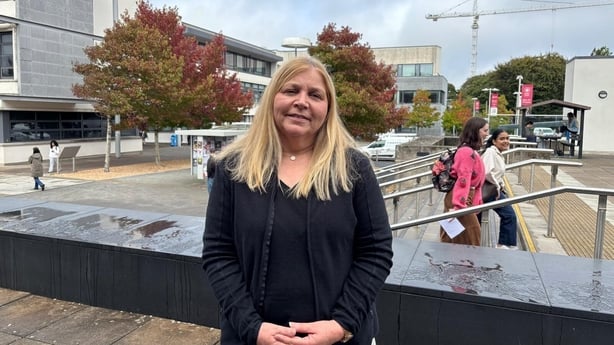
Head of the Career Development Centre at the University of Galway Marie Laffey said employers are still looking for human skills
“We see a need from employers that are looking for AI capability.
“It is a balance and particularly employers are still looking for the human skills.
“So they’re looking for the critical thinking, the leadership, teamwork, most importantly communication, being able to adapt, be curious, but alongside I suppose the digital literacy and AI capability and that the expectation is that they will be working alongside AI,” she said.
However, Galway Chamber CEO Karen Ronan believes the impact of AI use on today’s graduates has come with a cost for employers.
She said: “When they get into a work environment, they need to have interpersonal skills. They need to be able to network, they need to be able to negotiate and often we’re not seeing those skills actually transfer into the workplace.
“But those are skills that historically a lot of people would have arrived into the workplace with because they would have been involved in maybe project work or liaising more with their student counterparts.
“That’s not happening to the same degree.”
She said the onus is now on the employer “to be able to provide those skills”. “And they are skills you can learn, but that has a cost associated with it,” she said.
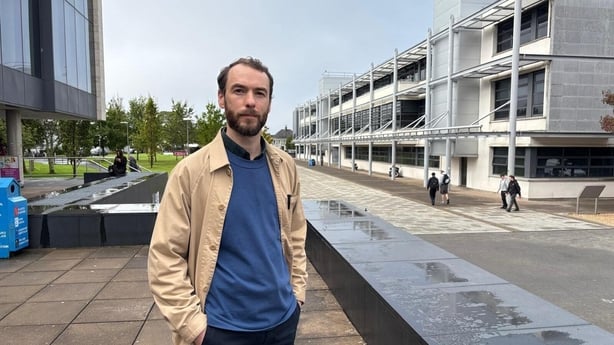
Dr Justin Tonra said graduates need to know the fundamental knowledge in their fields
As third-level institutions across Ireland grapple to strike a balance, for Dr Justin Tonra and his fellow educators the challenge to ensure that students really do know what they need to know by the time they graduate continues.
“Even though graduates of higher education may at some point be in a profession where they’re using AI, they still need to know the fundamental knowledge of their field.
“So they will need to know whether an AI’s content is accurate or whether an AI is doing what it should be doing in a given field,” he said.
“And they can only know that if they themselves understand those fundamental skills and knowledge of that field.”