
RefugePavilion Theatre, Dún Laoghaire★★★⯪☆
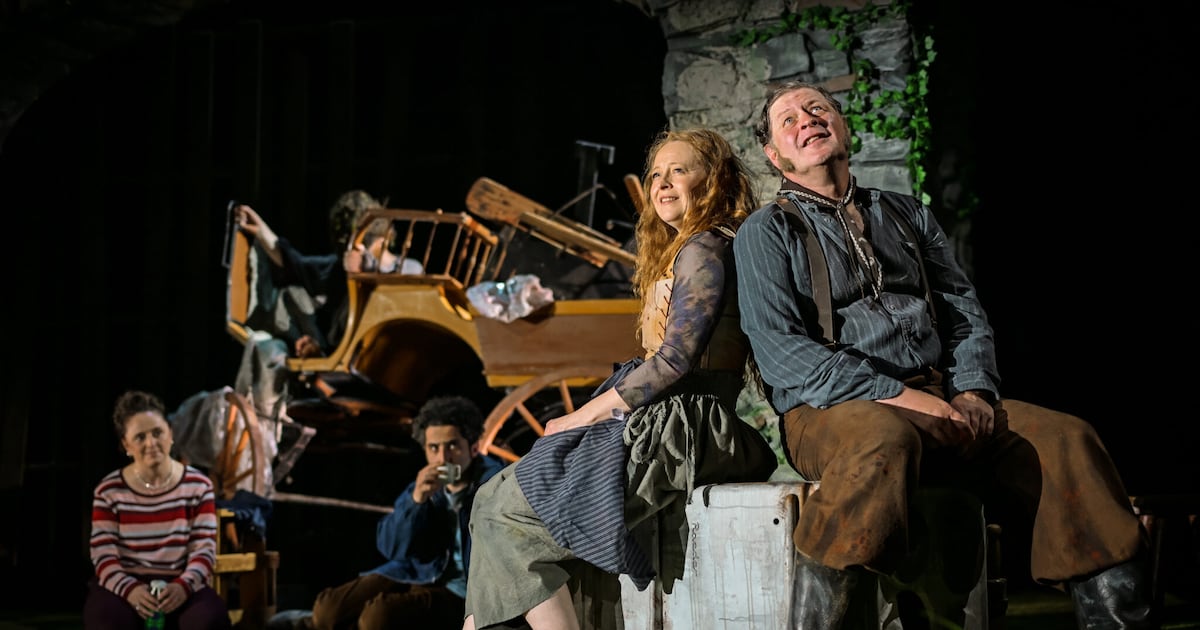
An old carriage shed at Castle Matrix, in Co Limerick. A broken-down carriage, a dusty mirror, walls thick with ivy. A tree.
In expressionistic dance movements, a man in a grey tracksuit (Matthew Williamson) beats up a young Afghan man, Zabi (Sabah Qalo). Zabi runs, crawls under the carriage and falls asleep. When he wakes, a red-haired woman in 18th-century peasant dress, Hannah (Hannah von Peinen), is kneeling beside him.
This is the thrillingly weird opening of Deirdre Kinahan’s new play.
Refuge tells the true and not well-known story of the Irish Palatines. Beginning in 1709, thousands of Protestants fled the German Palatinate after years of war, religious persecution and a devastatingly cold winter. Sir Thomas Southwell was among the Anglo-Irish landlords who settled Palatine families on his Co Limerick estate, around Rathkeale. His settlement there became one of the few Palatine communities in Ireland to endure.
The historical story centres on Hannah and her husband, Peter (Holger Kraft). Peter embraces their new life and the colonial project. Hannah is more ambivalent. “These low grey skies are not ours, Peter; these soft hills, they do not belong to us; and I cannot pretend, I will not pretend, it is ours like you do.”
Part of her ambivalence comes from her friendship, and growing romantic attachment, with an Irish poacher and Hougher (Aidan Kelly), one of the people being dispossessed from the land on which the Palatines are settling.
The play, which is staged at Dublin Theatre Festival by Fishamable and Staatstheater Mainz, a German company from Rhineland-Palatinate, at first feels like a strange pastiche of Brian Friel’s Translations crossed with the enchanted atmosphere of A Midsummer Night’s Dream. Kinahan’s writing is full of simple, declarative, lyrical statements: “To take a man’s home is a terrible thing.” “I sinned against God.” “I like the bogland. I like the rivers. I like the delicate cotton flower that can be found in the grasses.”
There is a simplicity and limpidity to this high poetic register. Under another director it could easily fall apart, but Jim Culleton’s excellent direction understands that the play should not be naturalistic. The lines are delivered starkly, with great sincerity. Steve Wickham sits to one side of the stage, providing a beautiful live score that moves between violin, piano and percussion.
Matthias Werner’s set creates an uncanny, almost mythological vision of Ireland: deliberately tacky and elfish but dreamlike and unsettling too.
Quickly the twist is revealed, and the reason these stories are paired. Hannah is a ghost, wandering a land that isn’t hers, and now tends to lost souls in the same predicament. “I didn’t come to Ireland to conquer or steal another family’s future. I came here for refuge,” she says.
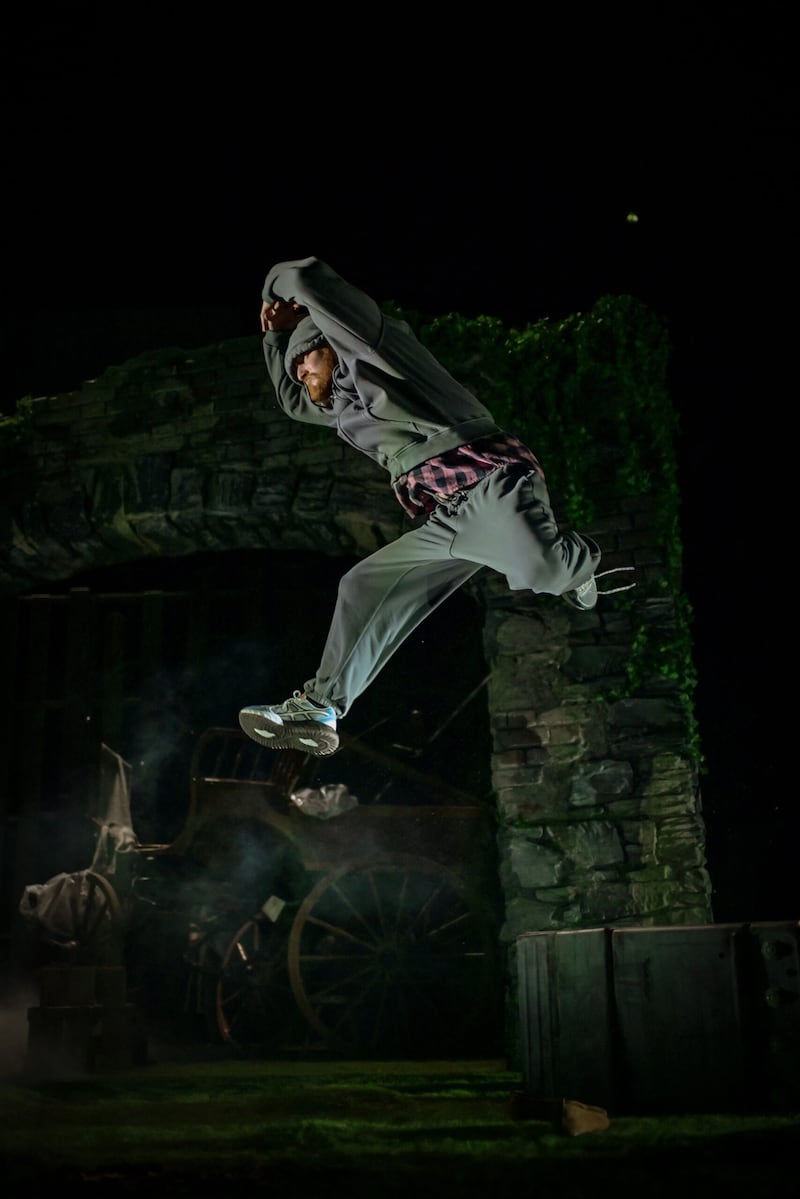 Refuge: Matthew Williamson in Deirdre Kinahan’s play. Photograph: Andreas Etter
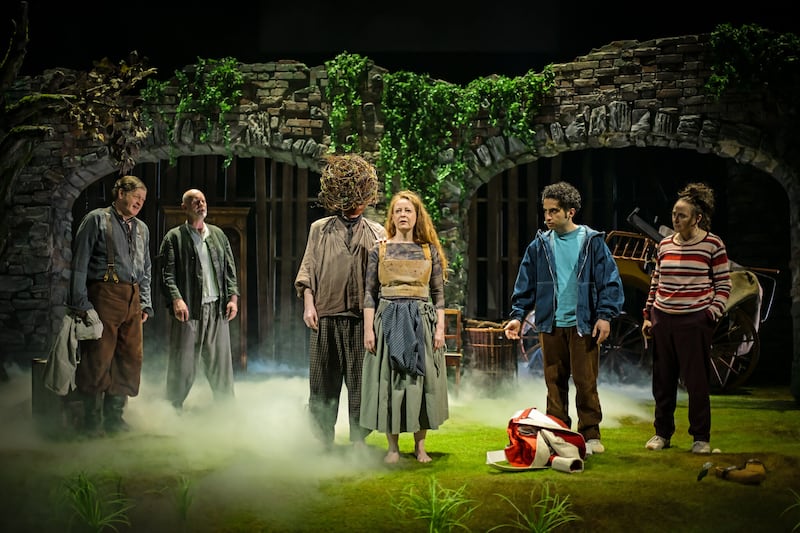 Refuge: Holger Kraft, Aidan Kelly, Matthew Williamson, Hannah von Peinen, Sabah Qalo and Mary Murray. Photograph: Andreas Etter
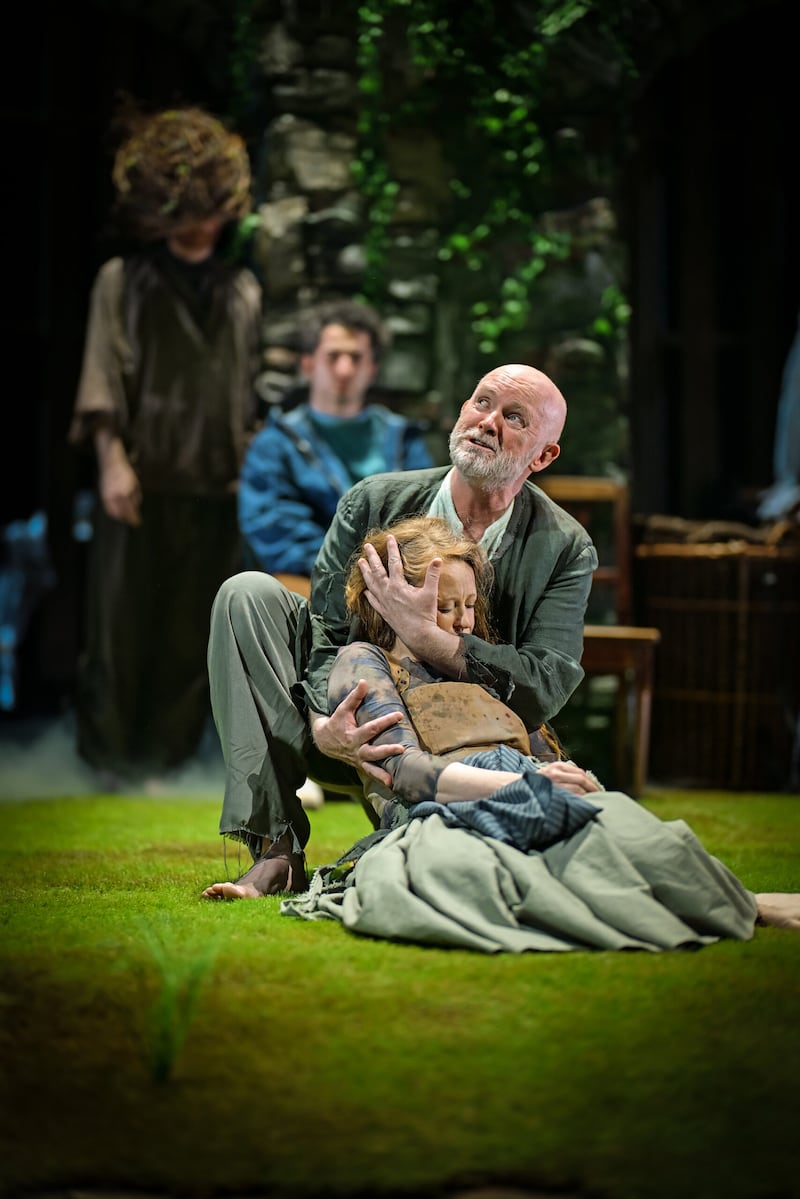 Refuge: Matthew Williamson, Sabah Qalo, Aidan Kelly and Hannah von Peinen. Photograph: Andreas Etter
Kinahan is very good at holding both sides of this historical story at once. There is sympathy for the dispossessed Irish but also for the Palatines: people seeking refuge who have little choice about where they are sent, even as they become instruments of colonial oppression. Peter is essentially the bad guy, yet the play insists on his humanity.
Curiously, that generosity disappears in the present day. We understand Zabi, but the man in the grey tracksuit who attacks him remains a faceless racist. There is a certain squeamishness in this omission. Understanding what might drive a young man to such violence is not the same as excusing it.
I would have liked the play to extend its historical curiosity into the present: we are unlikely to get very far without some willingness to properly look at the people whose actions we find most repellent.
Refuge is at the Pavilion, Dún Laoghaire, as part of Dublin Theatre Festival, until Sunday, October 11th