
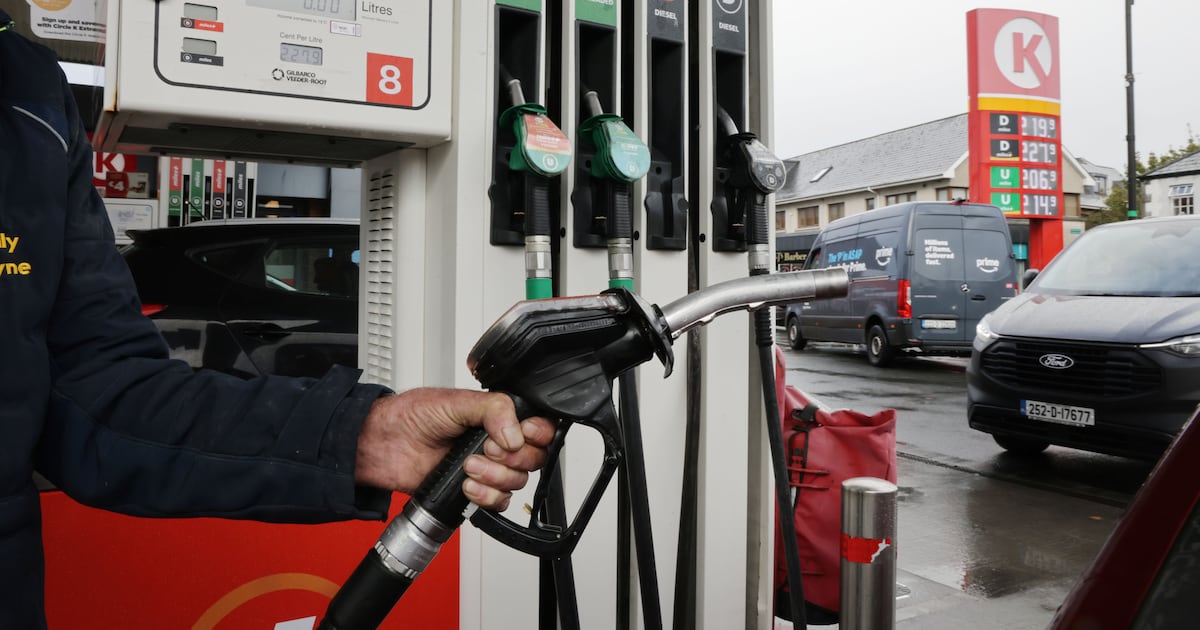
A US ban on diesel exports would significantly exacerbate the current inflation surge, possibly resulting in fuel rationing, with Ireland being hit harder than other countries, Tom Pugh, chief economist with UK consulting firm RSM, has warned.
He also predicted inflation was likely to keep edging up as utility bills reset higher in October and indirect energy effects add to airfares, manufactured goods and food inflation.
This will result in inflation peaking at 4.5 per cent in the new year, Pugh said.
US president Donald Trump has indicated his support for a possible ban on diesel exports to reduce the price of the fuel in advance of midterm elections.
Under pressure from Trump, the G7 nations last week agreed they would release 100 million barrels of emergency oil and diesel stocks, but experts say such a move will only act as a temporary buffer.
“Ireland is uniquely vulnerable because of its reliance on home heating oil,” he said. Home heating oil prices tend to rise alongside diesel prices as both are crude oil distillates.
About a third of households here (more than 700,000) use home heating oil as their primary source of heating, and the price of a standard household tank has already jumped by almost 60 per cent since the start of the Iran crisis in February.
Pugh said Ireland’s strong economy and labour market put it in a good position to weather the current period of high energy prices.
The main risk to the outlook would be if the current energy shock “turned much worse” because of an extremely cold winter or because of a ban on US diesel exports.
[ Oil refiners US and China have the leverage amid rising fuel pricesOpens in new window ]
According to Reuters, Trump has warned France and Germany to release diesel stocks or face a potential US exports ban.
“It depends on how high diesel prices go, but I suspect if this did happen you would probably be quite quickly into rationing,” Pugh said.
Since the ban on Russian energy, Europe relies on the US for between a third and a half of its diesel imports.
The average price of diesel across Europe hit a record high of €2.24 per litre last week, compared with €1.59 before the Iran crisis, according to the European Commission.
Pugh did not discount the possibility that Trump might announce a ban but later backtrack.
He warned that the current spike in energy prices would eventually translate into higher food prices.
“It’s inevitable that we’re going to see another round of food price inflation early next year given all of your input costs have gone up by 50 per cent,” he said.
“I don’t want to be alarmist … I don’t think we’re going back to the kind of 10-12 per cent inflation that we had in 2022 but considering in February we were talking about inflation around the 2 per cent mark and now we’re talking about 4.5 per cent,” he said.
He predicted inflation was on course to peak at 4.5 per cent in the new year, “with the risks skewed to an even bigger rise unless the Government announces further cost-of-living measures in Budget 2027”.
On the wider economy, Pugh said Ireland was insulated more than its peers because of the huge level of corporate tax flowing into the exchequer.
“When I speak to my friends in the UK treasury [about Ireland] the world’s tiniest violin comes out,” he joked.
While the concentration risk of having so much tax flowing from a handful of companies was real, Ireland was still “starting from a much better place than other economies”, Pugh said.
[ Tomorrow’s budget may be the worst since Charles Haughey’s wild spendingOpens in new window ]
On the budget, he said: “When I look at the Irish economy I don’t see an economy that is crying out for a big injection of fiscal stimulus.
“You’ve already got domestically-generated inflation creeping up … the labour market looks close to full employment, you’ve got an economy that is doing very well and is bumping up against those real constraints of infrastructure and labour supply,” he said.
“If you inject a dose of fiscal stimulus into that, all you get is inflation.”
The Government’s proposed €8.5 billion budgetary package for next year represents a near 6 per cent jump in spending, which economists warn is not sustainable.
A lot of Government spending is going into inflation-adjusted budgets, he said.
“It doesn’t feel to me that you’re solving the problem; it feels like you’re just papering over because you have the budget to do it,” he said.
“The risk is, you get into an escalation where, say, inflation is going to be 3.5-4 per cent next year … so if you want to do above-inflation pay rises for the public sector then you need another 7-8 per cent, and you get into this circle rather than addressing the underlying issues of infrastructure,” he said.