
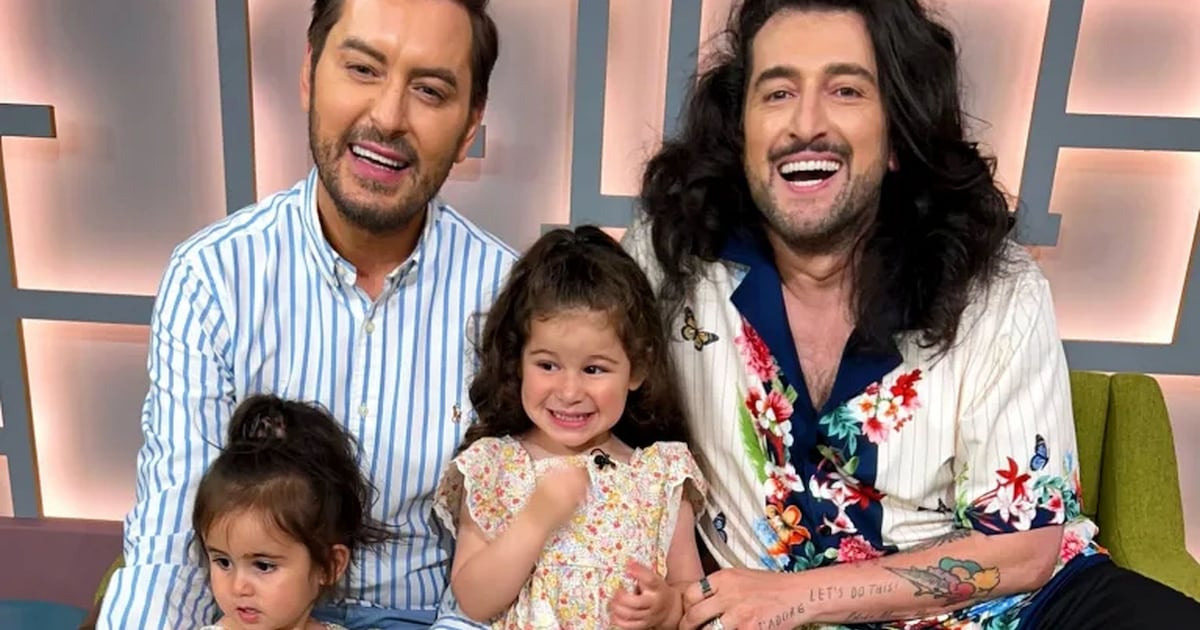
Brian Dowling Gourounlian veers between anger and tearful distress as he chronicles his experiences of social media abuse in the unflinching and moving documentary Toxic Threads (Virgin Media One, Monday, 9pm).
The TV presenter and his husband, choreographer Arthur Gourounlian, have been the target of horrific cyber abuse for being a same-sex couple.
What’s especially hurtful, Dowling Gourounlian says, is the vitriol directed at their young daughters: “They get to act out all their rage online. Then they go home, and they have normal lives.”
The trolling compounded the insecurities Dowling Gourounlian felt because he did not have a direct biological connection to his kids: “What happens when my children are born? Am I going to feel weird holding them? I was really paranoid [and] I was getting all this hate for wanting to be a dad.”
Sometimes it went further than just invective. The family’s address was published online and someone made the spurious claim that he was an alcoholic. “They had a link to the house we rented on Daft. I thought, hang on one second – they know our address.”
Dowling Gourounlian sets out to unmask the trolls and, as he does, Toxic Threads becomes an unlikely detective story. He meets a husband-and-wife private eye team in Dublin, though data protection legislation ultimately means they cannot name his abusers.
He also discovers he is not alone. Journalist Aoife Moore talks about how, as her profile increased, the abuse she experienced escalated to death and rape threats. One important breakthrough, she says, is that she became comfortable with acknowledging that she was a victim.
Dowling Gourounlian agrees. “In the job that we do, we’re not allowed to have feelings,” he says.
He also meets Senator Eileen Flynn, who says that as a Traveller, politician and a mother, she has received every imaginable sort of hate. “Thousands of racist, nasty messages. Attacked because of how I look, how I speak.”
Who are these people and why do they spend their spare time attacking strangers? Part of the answer, says cyberpsychology researcher Dr Nicola Fox Hamilton, is the phenomenon of “online disinhibition”. “If they say it to you, they have to deal with your reaction. Online, they say something, someone else agrees with them and they get to feel good about themselves,” she says.
Dowling Gourounlian invites his abusers to meet him and explain why they hate him so much – but nobody takes him up on his challenge. There is a moderately hopeful conclusion, however, insofar as the details of his home address are finally taken down.
Yet this breakthrough comes far too late – by which time the toll on his psychological wellbeing has been devastating. He says that he is at some level “still that kid in Rathangan back in the 1990s that was a gay kid – I think that shame, not being accepted, never really leaves you”.
He tries to stay in a positive frame of mind throughout this brave and compelling documentary. Above all, Dowling Gourounlian says, he wants to be present for his family. “I know I’m a good person,” he says, becoming overwrought. “I want to be the best version of myself for them.”