
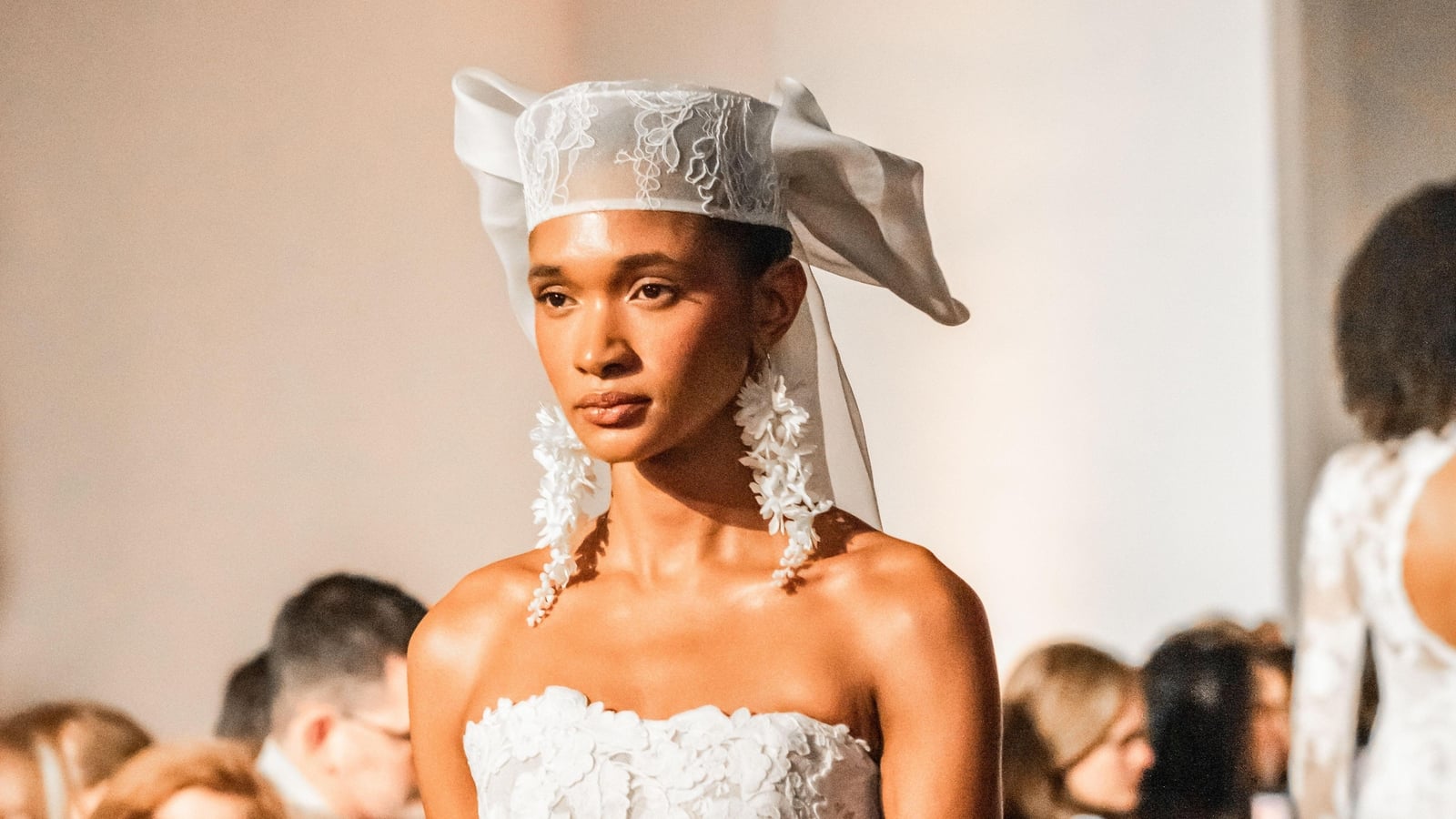
Every April and October, leading bridal designers present their latest collections at New York Bridal Fashion Week, giving brides-to-be and wedding enthusiasts an indication of what will be trending in the coming seasons.
The spring 2027 collections unveiled in April platformed everything from Danielle Frankel’s 2010s-inspired peplums to Ines Di Santo’s corsetry, while October presentations for autumn/winter 2027 showcased long sleeves and gothic silhouettes. And so, here are six trends shaping up to be the biggest statements in bridal fashion.
1. Bows
Bows seemingly came out of nowhere when they boomed in popularity back in 2024, cropping up on invitations, tied around champagne coupes and adorning wedding cakes.
And the bridal industry’s affection for bows shows little sign of subsiding. Rather than a discreet ribbon at the waist or shoulder, bows are now being used to create structure, with oversized versions sitting on the hips of gowns, extending into trains or framing the neckline.
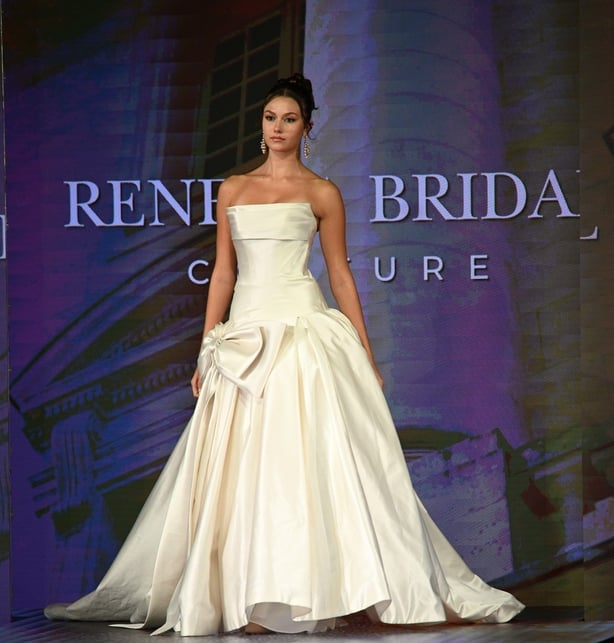
Bows on Renee’s Bridal Couture runway at New York Bridal Fashion Week (Alamy/PA)
Viktor & Rolf Mariage incorporated a dramatic dropped bow into a streamlined gown for 2027, while Lihi Hod was among the designers exploring ribbon and bow details in the spring collections.
The appeal is that bows can be added to an otherwise simple dress, meaning brides can try the trend without committing to an elaborate gown.
A large satin bow clipped over a low bun, for instance, can give a relatively simple gown a more contemporary finish. Alternatively, look for detachable bow details that can be removed between the ceremony and reception.
2. Accentuated hips
While the shift dress was a trend for brides, designers are now focusing on accentuating the waist.
Pointed hips, peplums and basque waists are prevalent in 2027 bridalwear, borrowing from historical corsetry and the hourglass silhouettes of more gothic Victorian and Edwardian dress.
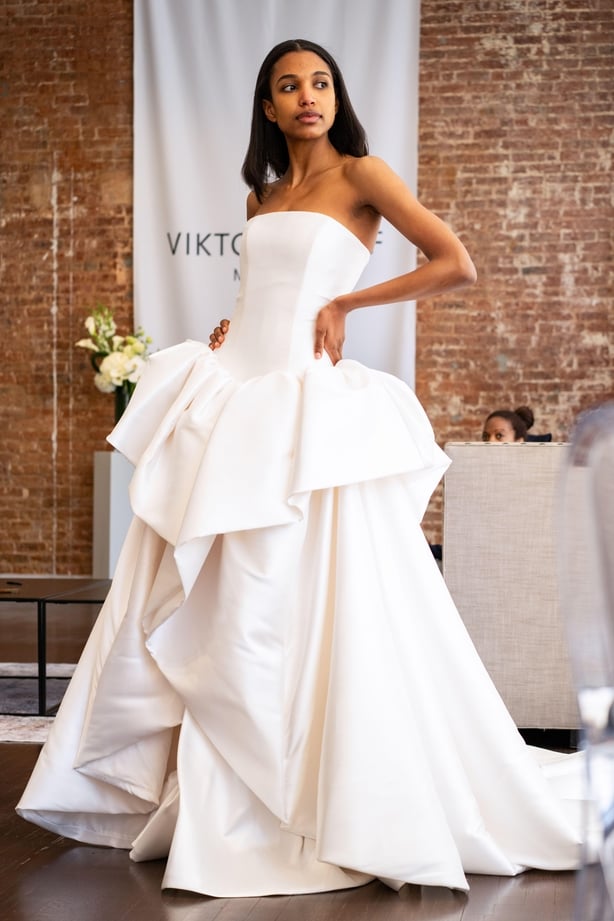
Viktor & Rolf’s spring/summer 2027 Mariage collection featuring accentuated hips and basque waists (Alamy/PA)
Danielle Frankel’s spring 2027 Palma jacket highlighted this, pairing the buttoned, peplum bodice with a column silhouette and pleated detailing. Tel Aviv-based designer Mira Zwillinger also explored the shape through softer, appliquéd constructions.
A basque waist typically extends below the natural waistline into a V-shaped point, while a peplum adds volume slightly further up around the hips. Both can exaggerate the contrast between the waist and skirt.
For brides looking at this silhouette, the dress is already doing most of the work, so accessories don’t need to compete.
A pair of pearl drop earrings or simple satin pumps would complement the shape without adding unnecessary fuss.
3. Appliqué florals
Flowers have always been central to weddings, but bridal designers are increasingly treating them as something to construct rather than embroider.
Three-dimensional appliqués and fabric blooms appeared throughout the spring/summer 2027 ready-to-wear runways, and look as though they’re making their way into the bridal week runways too.
At Lihi Hod, the Noor design incorporated three-dimensional floral appliqués layered over sheer tulle, while Mira Zwillinger continued to explore her signature floral embellishments.
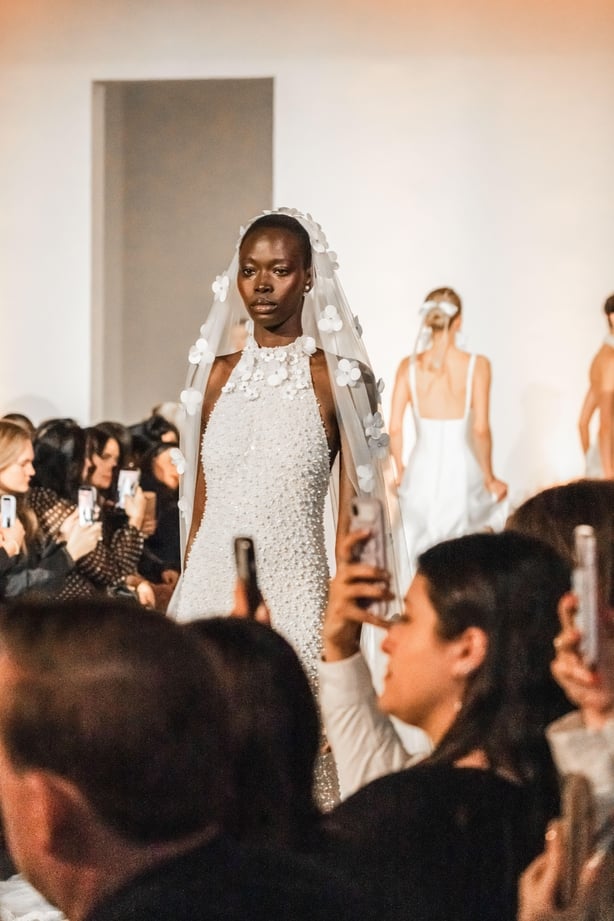
Lihi Hod’s bridal spring/summer 27 collection featured applique floral veils (Alamy/PA)
The more interesting versions don’t necessarily cover the entire gown. A scattering of flowers around the waist, hem or only the veil can introduce texture without overwhelming a pared-back gown.
An oversized flower hair accessory, a floral-appliqué veil or a pair of flower earrings are an alternative for brides who prefer a plainer dress.
4. Corsetry
Corsetry was once hidden under bridal gowns to help create an undetectably perfect silhouette. But this season, designers are getting less concerned about making them invisible.
Exposed boning and sheer corset panels are turning what was traditionally an undergarment into a central part of the design.
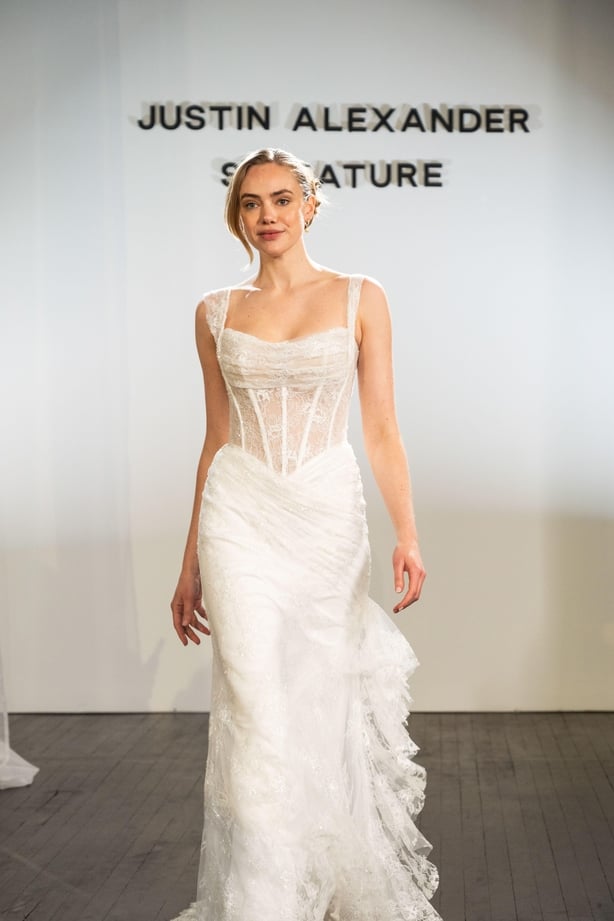
Justin Alexander Signature’s spring/summer 2027 bridal collection featured exposed lace corsetry (Alamy/PA)
Ines Di Santo’s 2027 Verdant gown combined a curved, micro-pleated corset with floral embroidery and a dropped-waist skirt, bringing together several of the season’s strongest trends in one look.
It’s a move away from the entirely smooth, seamless bodices that have dominated bridalwear, with designers appearing more interested in revealing how the dress is constructed.
For a less overt interpretation, sheer gloves can introduce some of the same sense of style without feeling as revealing.
5. Nineties simplicity
Not every bride wants a gown covered in appliqués, boning or bows.
At the other end of the bridal fashion spectrum, Nineties minimalism is making a return, with clean columns, bias-cut slips and simple necklines providing a nice antidote to the more dramatic collections.
Danielle Frankel is known for her simple but elegant designs, and her 2027 Samira gown was among the standouts at New York Bridal Fashion Week, featuring a long, skimming sheath.
Meanwhile, Jenny Yoo, Ines Di Santo and Antonio Del Canto explored loose halter silhouettes reminiscent of Nineties Calvin Klein.
It’s difficult to separate this trend from the enduring influence of Carolyn Bessette-Kennedy, whose minimalist wedding dress remains a reference point for many brides nearly three decades later.
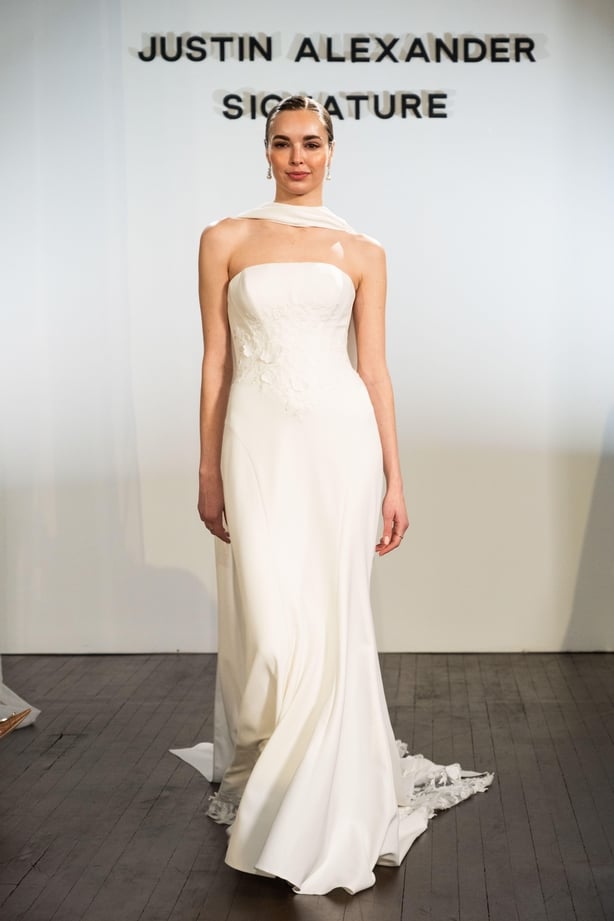
Nineties simplicity on the Justin Alexander Signature spring/summer 2027 runway (Alamy/PA)
The trick is to resist over-accessorising. A simple veil, closed-toe, pointed satin shoes and a pair of small earrings are enough to complement the silhouette.
For a more contemporary interpretation, a narrow silk scarf worn around the neck has been a popular alternative to traditional bridal jewellery.
6. Drop waists
One of the clearest developments in silhouettes for 2027 is the changing position of the waist.
Dropped waists, which sit below the natural waistline and closer to the hips, have been appearing across ready-to-wear collections for several seasons now, and they have finally hit the mainstream for bridal designers who are pairing them with full skirts, corseted bodices or traditional basque-waists.
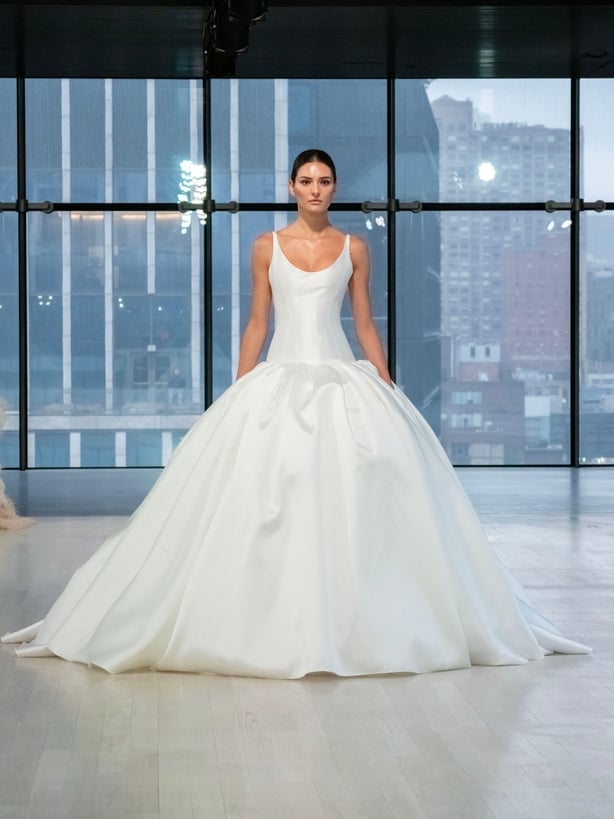
Dropped waists featured in Nicole + Felicia’s autumn/winter 2026 collection (Alamy/PA)
Designers Lihi Hod and Lee Petra Grebenau combined dropped and basque waists with intricate lace and hand-beaded detailing.
Unlike the more dramatic and perhaps less timeless peplum trend, a dropped waist doesn’t necessarily rely on exaggerated volume. Its effect comes from extending the bodice and changing where the skirt begins.
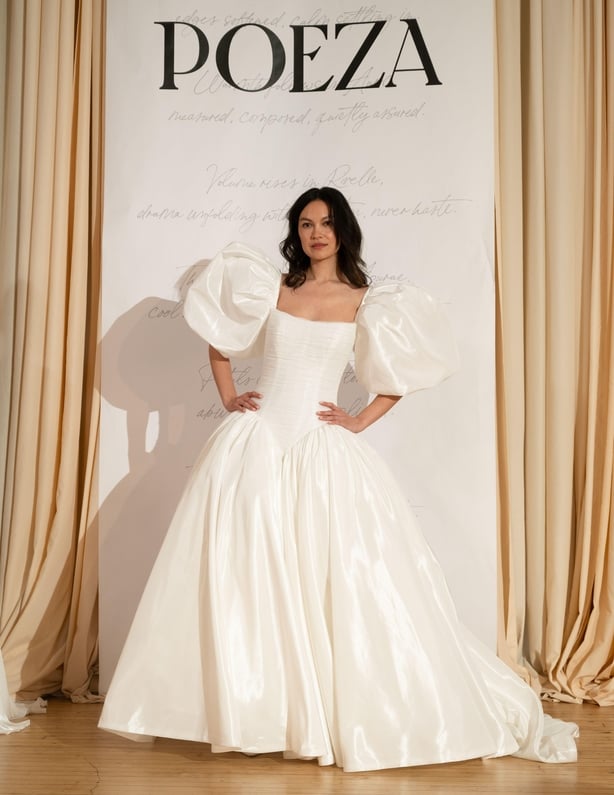
Dropped basque waists featured in Poeza’s spring/summer 2027 bridal collection (Alamy/PA)
It can look particularly striking in plain satin, where the shape is allowed to speak for itself – a fabric most bridal designers opted for this season.
For accessories, a long cathedral veil can emphasise the extended proportions, while simple shoes help keep the overall look from becoming overly ornate.