
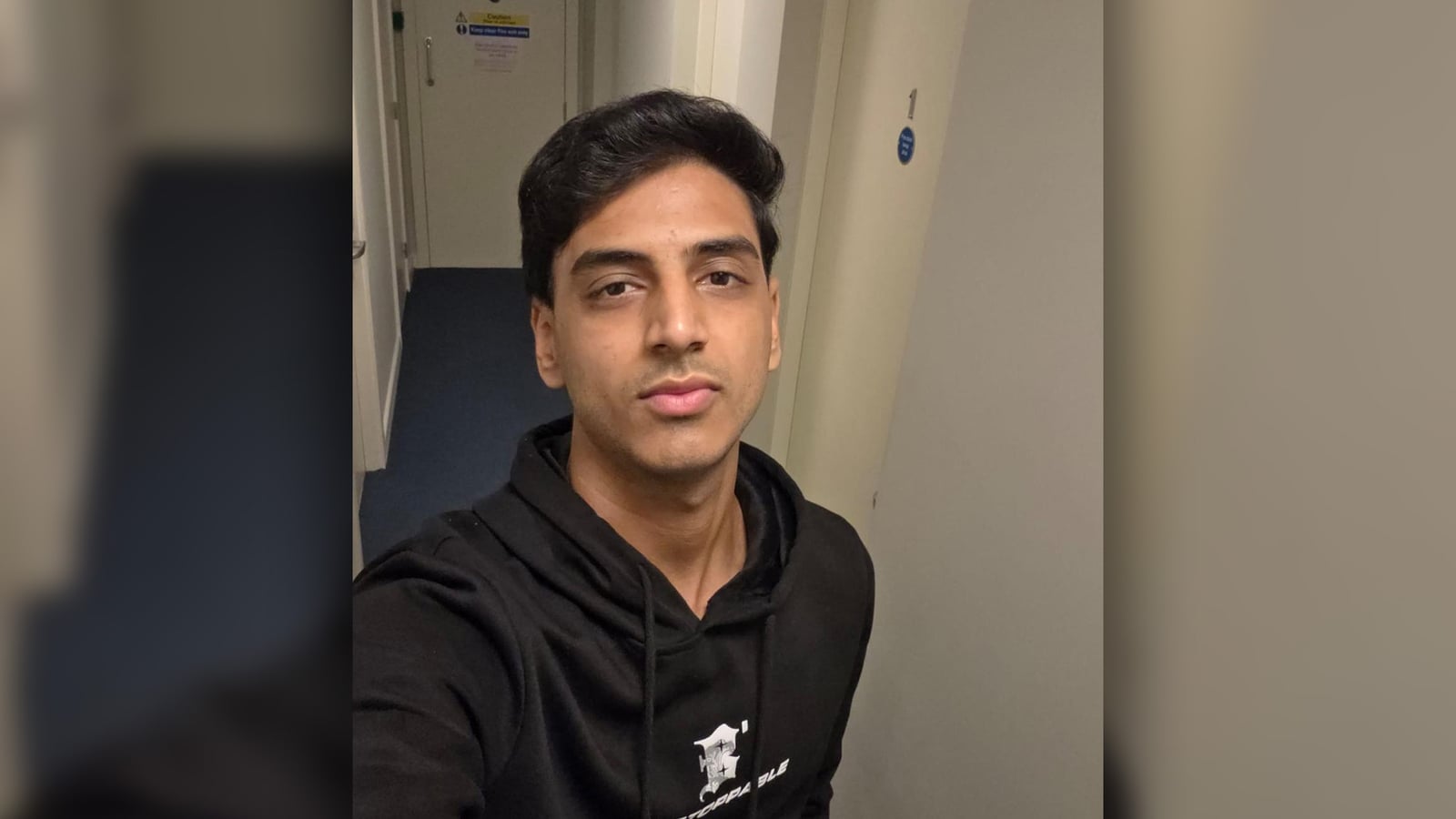
A 20-year-old Palestinian student who successfully appealed a decision to refuse him an Irish visa has arrived in Dublin to begin his studies at Trinity College Dublin.
Hafez Al-Rayyes, originally from Gaza City but displaced eight times since the beginning of the war, was among three students whose visa refusals were overturned last Friday.
He had been awarded a fully funded scholarship to study electronic engineering at Trinity, financed through private donations and fundraising, but was initially refused a visa in July.
Mr Al-Rayyes is one of just three students so far to have their student visa refusals overturned and the first to arrive. One other Gazan student lost their appeal.
He was able to travel to Ireland after previously being evacuated from Gaza with the assistance of the Spanish government, having secured a separate university scholarship in Spain.
The two other students who now also have valid visas to study here are awaiting evacuation from Gaza.
Speaking after his arrival in Dublin on Thursday, Mr Al-Rayyes said he was relieved to have finally reached Ireland but felt guilty about leaving his family behind in Gaza.
“To be honest, it’s a mixed feeling. I’m happy and grateful because I finally arrived after three years of waiting. But I also feel guilty because I left my family in Gaza. I’m the only son and it’s hard to be away from them.”
Mr Al-Rayyes had just begun studying at the Islamic University of Gaza when the war broke out in October 2023.
He said the university was subsequently bombed, prompting him to look for opportunities to continue his education abroad.
“There’s no actual university in Gaza. All of them was bombed. So, there’s a big difference between my university in Gaza and Trinity.”
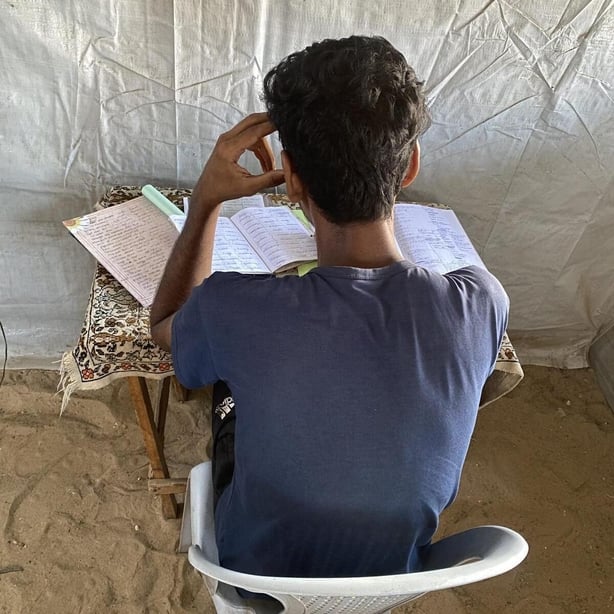
Hafez at his home in Khan Yunis in Gaza before departing for Europe
After completing his final secondary school examinations, Mr Al-Rayyes was accepted onto scholarship programmes in five countries – Romania, Turkey, Spain, the UK and Ireland.
He says he chose Trinity because he “got a lot of support” from the college. Mr Al-Rayyes said he hopes to return to Gaza after completing his studies and use the knowledge he gains at Trinity to help “rebuild my country.”
He is due to begin classes next Monday, a month after the academic year started.
Mr Al-Rayyes said he was shocked by the refusal of his visa application, particularly he said as some of the reasons given related to his financial circumstances, despite having secured a fully funded scholarship and having provided the details on that.
“I think maybe there is a misunderstanding between what they require and what we already provided,” Mr Al-Rayyes said.
He said he was asked to provide a personal bank statement, which he said he could not obtain in Gaza.
“They told me that I should submit my personal bank statement. So, it was really weird for me as a student from Gaza. There is no actual [left] bank in Gaza.”
With the assistance of his legal representatives, he appealed the decision in August, submitting further documentation from the United Nations agency for Palestinian refugees, UNRWA, to support his application.
Mr Al-Rayyes said he had expected to wait at least a year for a decision on his appeal.
However, following a decision to expedite the appeals, he learned last Friday that his visa refusal had been overturned.
He was one of four students who initiated High Court proceedings challenging their visa refusals, with their lawyers seeking an urgent hearing because their university courses had already begun.
The court heard that the students faced a deadline of 2 November to take up their university places, and Israeli authorities required advance notice for a proposed evacuation from Gaza on 26 October.
“I can’t believe how I managed to get here,” he said.
“When the Minister [of Justice] offers to give us expedited results on Friday night, this gave me a lot of hope, and finally it has come true.”
In a statement, the Department of Justice said it does not comment on individual cases and could not comment further on ongoing judicial review proceedings involving study visa applicants.
It said each visa application is assessed on its own merits, regardless of nationality, and that applicants are responsible for providing supporting documentation.
It added that facilitating travel from Gaza remains complex, even for those granted permission to enter Ireland, and requires cooperation between multiple organisations and jurisdictions.
According to lawyers representing the students, there are now over 50 student visa appeals pending.
Legal firms representing Gazan applicants appealing their student visa refusals will attend the High Court this afternoon seeking a new date for the hearing of further cases “at the earliest opportunity” according to Sinead Marmion, partner at one of those firms, Phoenix Law.
Mr Al-Rayyes said he was conscious of how fortunate he was to have been able to leave Gaza and was concerned for the many other young Palestinians whose education has been disrupted by the war.
“It’s really devastating to think about them because at some point I was with them. I was one of them,” he said.
“When I left Gaza I felt a lot of pain because many dreams of young people from my generation are in Gaza in a tent. It’s obviously very small number of students who will be able to get out of Gaza and, hundreds of students who will remain in Gaza”.