
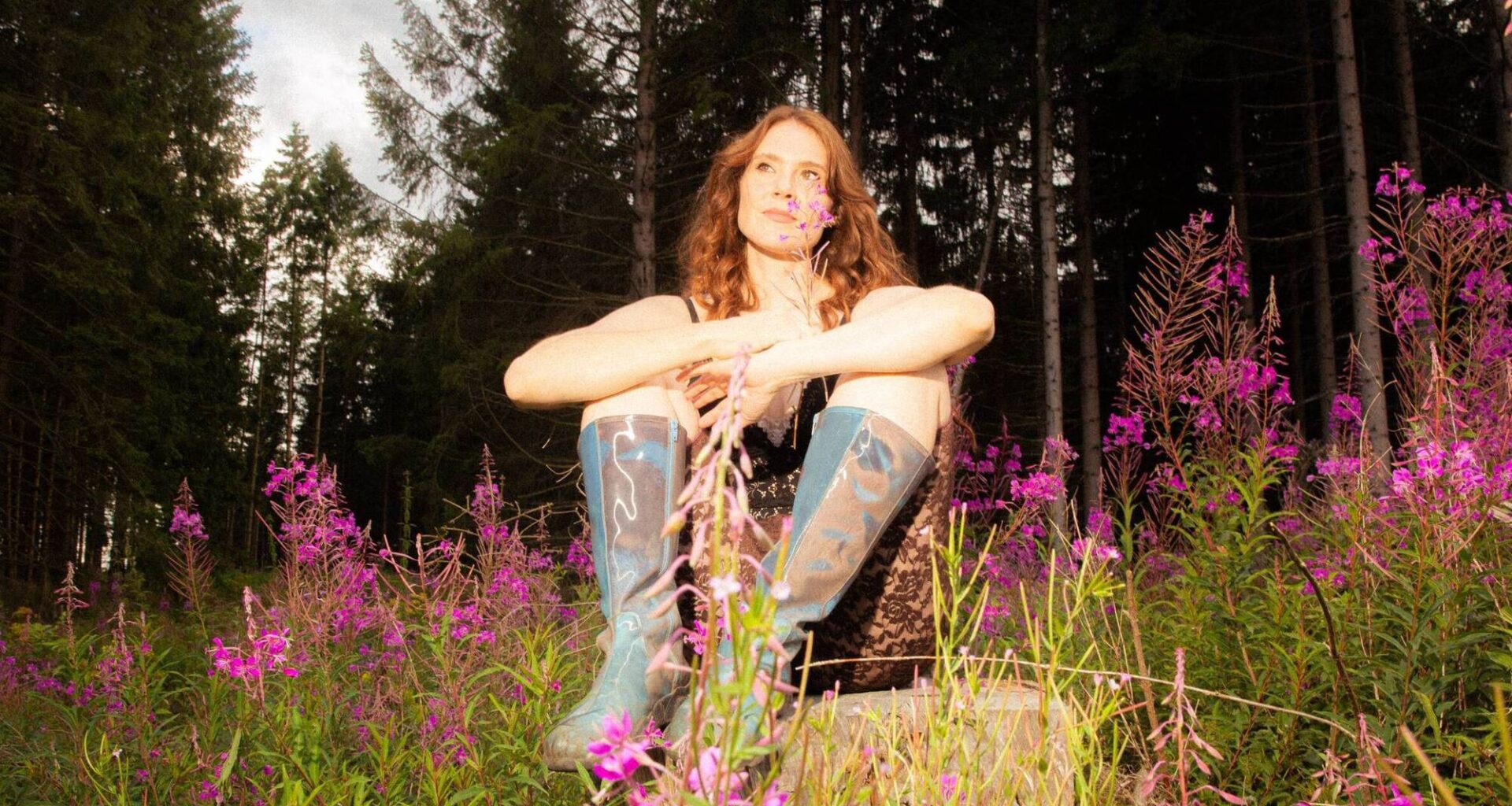
Kate Nash has spent the better part of the past eleven years trying to bypass her stint as a popstar and arrive at a higher calling.

“They’re not different people,” she says of the artist she is now versus the artist that created Made of Bricks, the 2007 chart success that shot her from a relative unknown to a bonafide chronicler of the modern age.

“But that was just me at 16, which is when I wrote most of those songs. Don’t get me wrong, I’m so grateful to that 16-year-old for taking such good care of me. But now,” she says from the corner of the foyer in a Dublin City Centre hotel, “I want to tell the world that I have something to say as a woman. And you need to listen to me.”

Now 39, Nash has been making music for more than half of her life, largely as a way to serve urges both insular and environmental. Foundations, the kitchen-sink realist anthem that gained her comrades of the likes of Lily Allen and Jamie T, boasted a visceral pull that permitted whole demographics to feel seen, while also providing melodies so hummable that most could do so dumbly on the treadmill, in the shower, or on the bus.

Her music, now – Nash has been steadily releasing music since the late aughts; Cailín, her seventh studio album, is scheduled for January – still exists along the same parameters, but the method to get there feels utterly different.

“It costs money to make records,” she says. “We’re in a cost-of-living crisis, and as someone who has a commercially successful record in my catalogue, if I just sat on that and lived off of it, I could earn more than spending like I do on my living.”

What is the point? One might ask, in vain. “Because we have to keep trying.” Nash, in a seaweed-green cardigan and hair in loose plaits, looks softer now compared to her noughties aesthetic. Gone are the belted A-line dresses and primary-hued tights [don’t blame her, blame Topshop] and in is her bare face and whimsical Ríon Hannora designs. Nash’s recent run of intimate Irish shows – members of her team waft in and out of the conversation in merch from Ballintemple’s Coughlan’s to Levis’ in Ballydehob – is speaking to her inner child, the one that spent evenings and weekends in North London playing the tin whistle, Irish-dancing and attending Mass with her Irish mother.

“Being in Ireland makes me cry,” she smiles, wiping a sliding tear. “The venues we’ve been to, they are just amazing. And they’re actually reminding me why I’m doing what I’m doing.”
What Nash is doing is attempting to dismantle the entire arts ecosystem as we know it. An undeniably tall order – most notably in the wake of the Ed Sheeran, Robert Kraft saga – but one that doesn’t begin to scare a redheaded, middle-child who survived late-aughts tabloid media. “The grassroots culture is in crisis, and I am so bored of €700 exclusive merch bundles, and how it’s become normalised to pay a grand to go and see your favourite artist,” she says.

“Shows like these are for the people who attend these venues week in, week out. They are the places where you first receive culture, and we need to look after them and value them in the rise of AI and robots on fashion week catwalks.” She pauses to take a sip of her flat white. “I don’t know if any of these people have ever watched a horror or sci-fi film… but they should know, it doesn’t end well.”

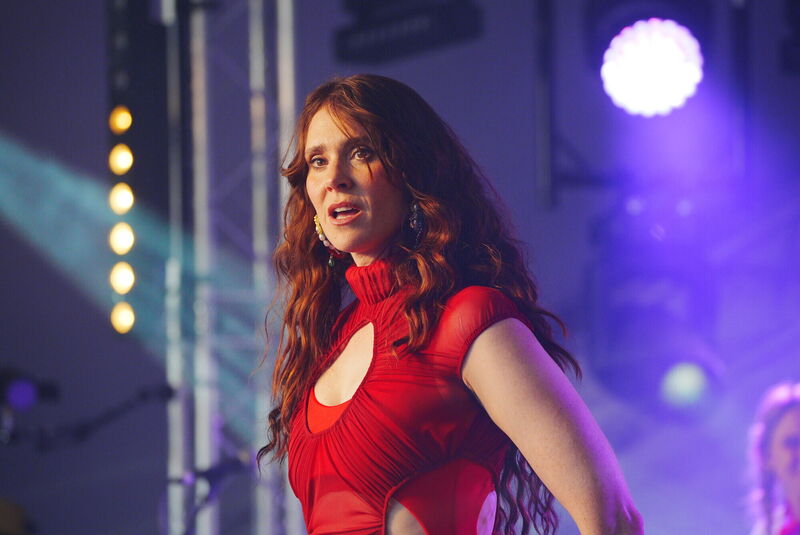
Kate Nash performing on the BBC Introducing Stage during the Glastonbury Festival in June 2025.Kate Nash performing on the BBC Introducing Stage during the Glastonbury Festival in June 2025.
There is a bite to Nash’s voice as she navigates this era, one that demands as much as it offers. In 2024, she announced the launch of a campaign on OnlyFans [an online subscription platform for content creators, that due to its preponderance of adult creators, has become shorthand for adult content] called Butts for Tour Buses. “I’m selling pictures of my arse to pay invoices,” she put it succinctly, on the PoliticsJOE podcast.

“I just got fucking sick of it,” she says now. “Even after saving all of my festival earnings, I was bleeding money touring. And as artists, we’re told not to talk about it. I have friends who are selling their furniture in order to pay their band, and so I just felt like I needed to talk about it. So I did; in the [UK] Parliament twice, in Leinster House and in Stormont.”

The pivot to adult content also didn’t take much from her, really.

My arse is already out in all of the pictures people take of me non-consensually on stage, so I thought, why not? Now it’s given me a marketing budget for this tour.

She pauses. “It’s also got a lot of great puns, which has definitely helped.”

Breaking barriers is core to Nash’s current epoch, one which sees her lean into her Irishness in a way we’ve never quite seen from her before. In recent interviews, she has made use of the pronoun “we” when discussing Irish history, a move that doesn’t always succeed when displayed with a vocalised North London timbre.

“It was actually fine until Ed Sheeran dropped Macklemore,” she laughs. “That has caused some people to say I’m being disrespectful or whatever, which I actually don’t mind, because I think it’s given me the opportunity to explain myself – and we all need to be able to discuss these things and not feel we have to force our opinions on each other to win.”

This perceived disrespect permeated from Nash’s cover of Sinéad O’Connor’s Famine, and its subsequent video which featured a duvet with the embroidery work of artist and activist Tia O’Donnell stating “The English Don’t Know Their History”. Nash was first recommended to record the track by an American producer and friend, a suggestion she thought was “too audacious” to even consider. But after re-examining the traditional folk nature of sharing tunes, and with the blessing of O’Connor’s estate and family, she decided to lean in.

“At the end of the day, the more people who cover that song, the better,” she says. “Because you’re spreading that message to different audiences. If there is ever going to be healing, there has to be remembering and grieving. I’ll always come back to that, with everything I do.”

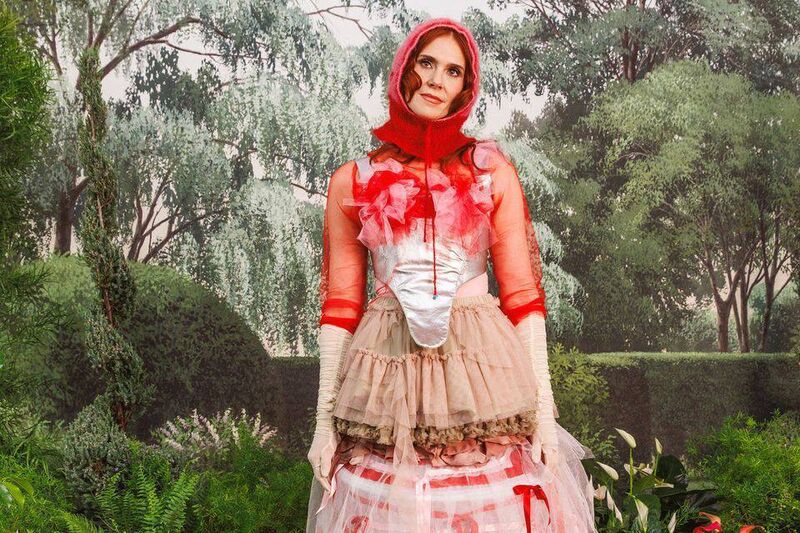
Kate Nash wears, and was styled by, Ríon Hannora for her music video 'Millions of Heartbeats'Kate Nash wears, and was styled by, Ríon Hannora for her music video ‘Millions of Heartbeats’

Nash challenges this history personally, too. “Part of this journey has been me acknowledging my Englishness, too,” she says. “There’s a rise in nationalism in the UK [ Famine’s cover art features a Saint George’s Cross hanging from the window of a first floor home] and acknowledging that, I feel, brings me closer to an England that acknowledges its colonial past. Because at the end of the day, it doesn’t. There’s still a monarchy, the curriculum doesn’t change and I learned nothing about the Famine in school.

“There was a young boy at my gig in Derry the other night,” she smiles, welling up again.

“On his own, which is firstly such a fucking cool thing to do. Secondly, when Foundations came on, he knew every single word.”

She pauses. “We’re all being preyed on in some way at the moment. Boys by the manosphere, and girls by beauty brands that are forcing their insecurities back on themselves. Did you hear that social media platforms apparently have a way to track when teenage girls are feeling vulnerable, like when they delete selfies, and that’s when they serve them beauty advertisements? That is evil, and it’s worth fighting against.

“That’s exactly why we need to be in small venues, because we need to feel connected again. We need to turn off our phones, sing along with strangers and fight what’s worth fighting for. Because if we don’t… life is only going to get much, much harder from here.”

Kate Nash plays Cyprus Avenue, Dolans, Róisín Dubh, The Button Factory and Mandela Hall between February 8 – 14, 2027. Her sixth studio album, Cailín, is out in January.