
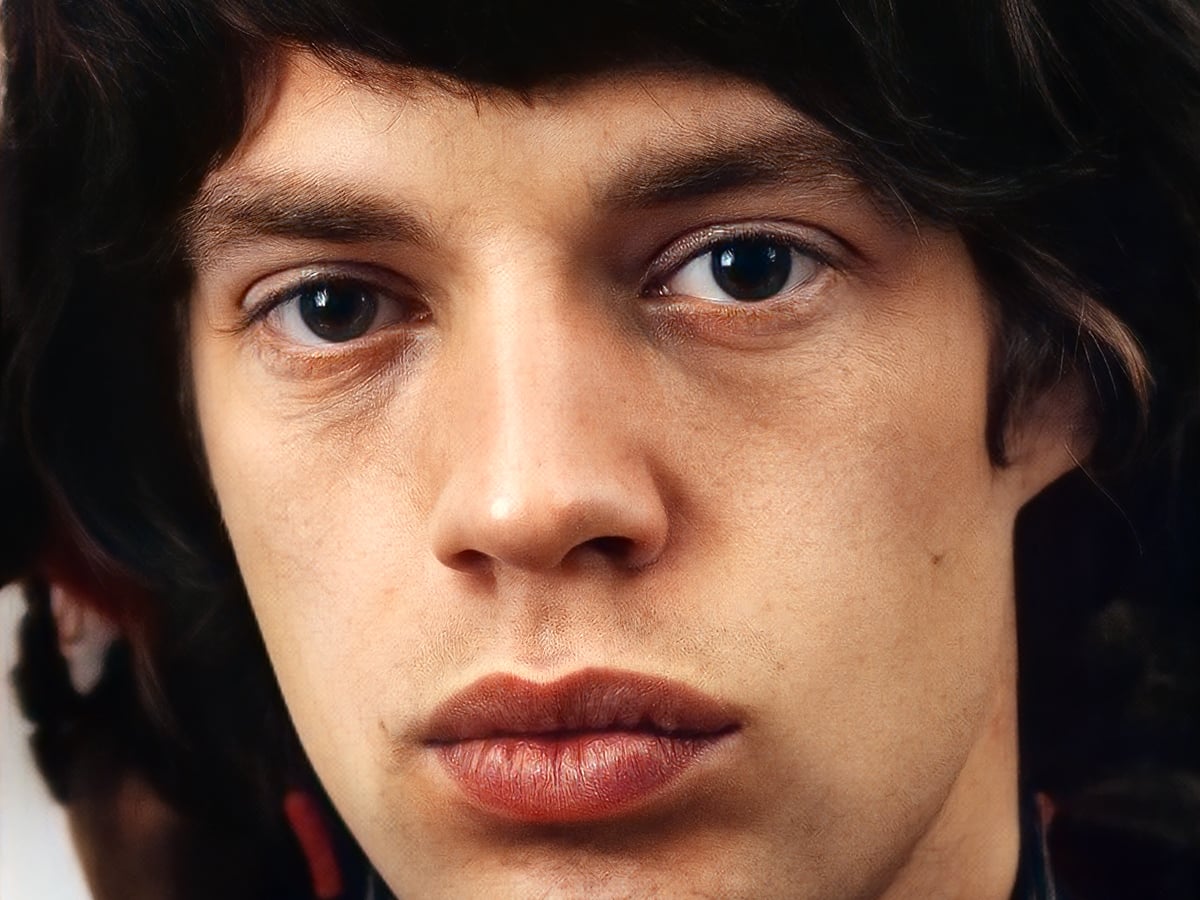
Credit: Bent Rej
Sun 18 October 2026 18:15, UK
Songwriting didn’t come as naturally to Mick Jagger as performing did.
The Rolling Stones frontman will rightly go down as one of history’s greatest ever music performers, for his dynamic stage presence that not only exuded a natural sense of charisma but also showcased a genuinely staggering level of stamina, almost as if he was treating it like a professional sport.
Ultimately, Jagger had to adopt this staunchly committed position because, in comparison to his rivals, he was lacking in what many would consider natural musical talent. He wasn’t the rangy vocalist who could rely on technicality, nor was he an innate songwriter, able to carve out a tune on a guitar like Paul McCartney and John Lennon.
But he was captivating because of how he understood and subsequently brought the art form to life, particularly through the lens of a cover song. The early blues rock covers that The Stones adopted were almost tailor-made for Jagger, for his ability to mould lyrics and lines into his own intonation is ultimately what helped platform a new style of rock and roll in the 1960s.
But this gig couldn’t go on forever. If they wanted to be the biggest band in the world, which they certainly had specific dreams of doing so, they would need to begin writing their own songs and hit ones at that. It was a cautious start for the songwriting partnership of Jagger and Keith Richards, trying to emulate the gritty sounds of their blues rock heroes, but eventually they cracked the code with ‘(I Can’t Get No) Satisfaction’.
From there, the floodgates opened, and The Rolling Stones began carving out their own original niche, spearheaded by Jagger’s voice and Richards’ guitar playing, which, together, blended their beloved worlds of blues and soul. But Jagger’s real growth as a songwriter came on one of their next great tracks, which went a long way towards proving that he could do it all on his own, without the guidance of Richards and without even the help of the remaining rhythm section.
“‘You Can’t Always Get What You Want’ was something I just played on the acoustic guitar.”
Mick Jagger
Jagger described it as “one of those bedroom songs”. A relatively understated view of a song that was eventually arranged into something far more grand and ambitious. But Jagger was proving himself as a songwriter for how he began it all humbly, as great writers should.
Further reading: From The Vault
It was so good, in fact, that it even superseded the skills of his own band. He continued, “It proved to be quite difficult to record because Charlie couldn’t play the groove, and so Jimmy Miller had to play the drums.”
Adding, “I’d also had this idea of having a choir, probably a gospel choir, on the track, but there wasn’t one around at that point. Jack Nitzsche, or somebody, said that we could get the London Bach Choir and we said, ‘That will be a laugh.’”
The hard yards Jagger put in as a performer were beginning to bear fruit, for suddenly he could see a song beyond its original essence and now into how it could be arranged. That was the mark of a true hitmaker, which Jagger eventually became, outgrowing any criticism that labelled him as nothing more than a performer.
ADD AS A PREFERRED SOURCE ON GOOGLE  The Far Out Classic Rock Newsletter
All the latest Classic Rock content from the independent voice of culture.
Straight to your inbox.