
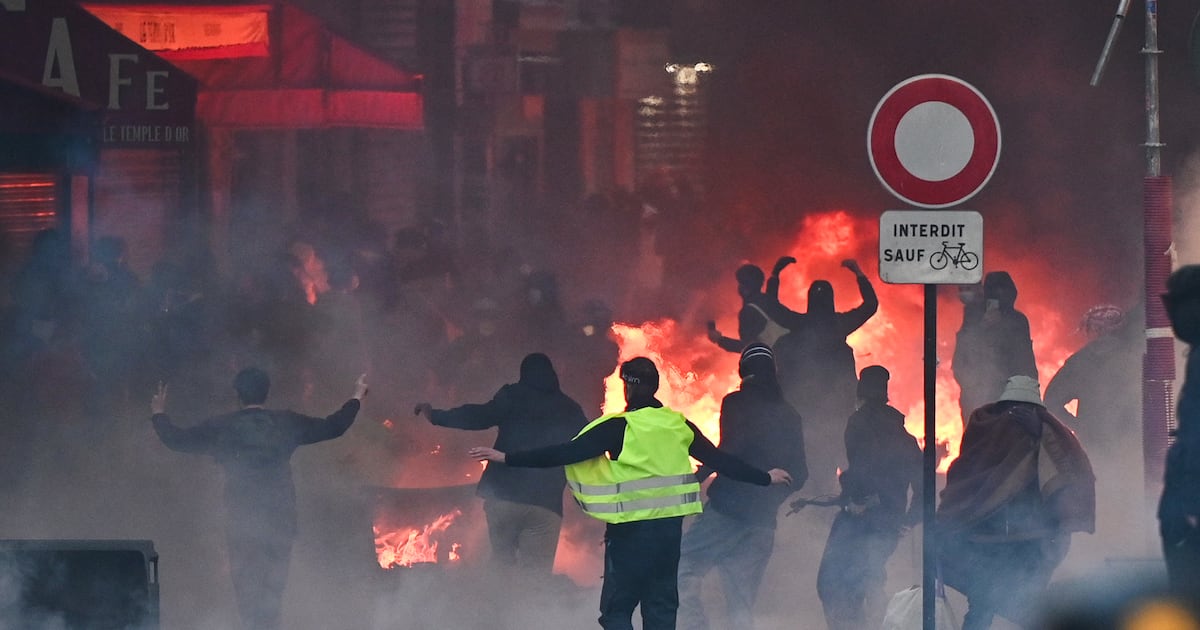
French prime minister Sébastien Lecornu has asked regional governments in France to put in place “partial curfews” in an effort to contain violent protests.
“The prefects will discuss this with the mayors and their local chambers of commerce and industry.”
Lecornu said these curfews would be confined to certain areas of cities, such as areas with “public transport connections, symbolic, emblematic places as well”.
He was speaking after a crisis meeting with government ministers on Monday as they discussed how to respond to volent protests that have rocked parts of France.
Lecornu named the “ultra-left” as responsible for unrest, with “criminal elements” behind the violence later on.
The French prime minister said there would be convictions of those arrested, pledging a “massive investigation” to find those who had so far evaded justice.
[ What’s behind the violence shaking France, and what comes next?Opens in new window ]
Earlier, French president Emmanuel Macron declined interior minister Laurent Nuñez’s offer to resign after widespread weekend rioting, the Elysée presidential office said on Monday.
The demonstrations have been sparked by public anger over rising living costs, faltering public services and also the state of schools.
Macron said Nuñez should stay to ensure a chain of command is retained within the police and security forces, and has also asked Nuñez to set up as quickly as possible new approaches to deal with looters, the Elysée added.
This weekend’s rioting in France highlighted failings with the security services over how they deal with threats posed by far-left protesters, justice minister Gerald Darmanin said on Monday.
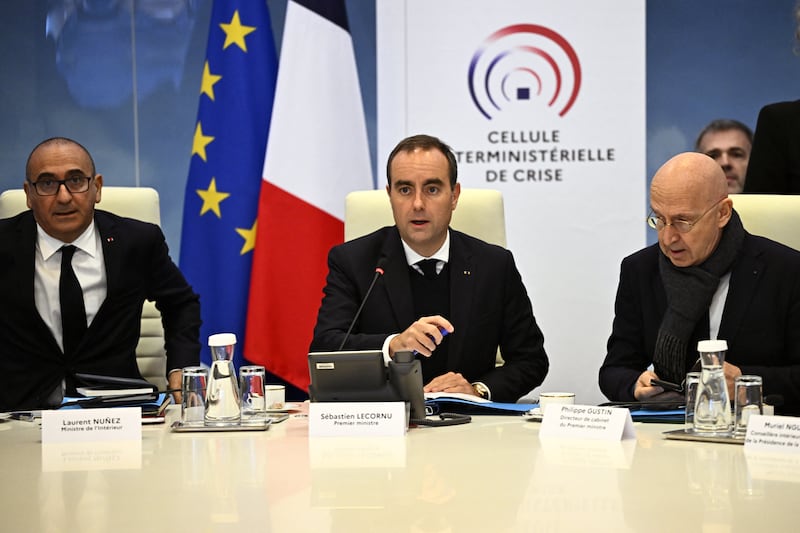 France’s interior minister Laurent Nuñez, France’s prime minister Sébastien Lecornu and chief of staff to France’s prime minister Philippe Gustin. Photograph: Julien de Rosa/AFP via Getty Images
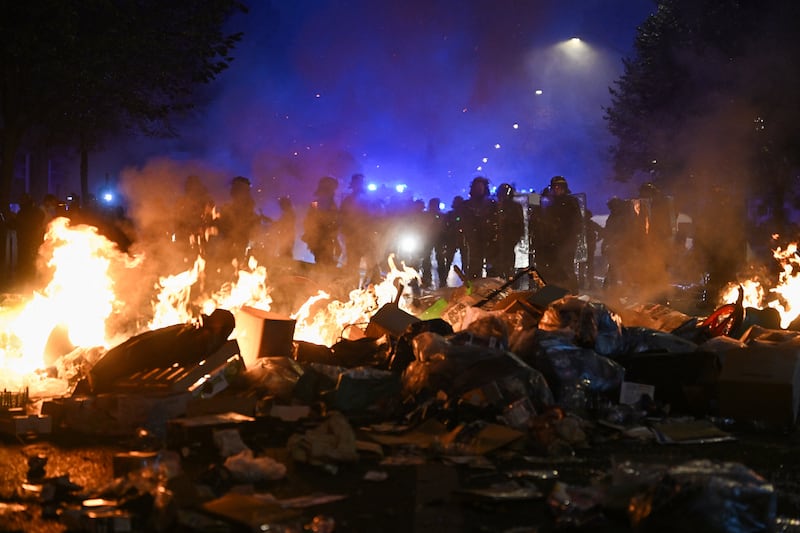 Police officers stand behind a fire near Place de la République following an unauthorised demonstration in central Paris on Sunday night. Photograph: Matthieu Rondel/AFP via Getty Images
Darmanin said the security services were very good at dealing with threats from terrorists and organised crime groups, but less so regarding such far-left protesters.
“Clearly, it is not tackling the far-left effectively,” Darmanin told France 2 TV.
Politicians on the left and right had called for the resignation of Nuñez over the weekend after the government appeared to have been caught by surprise by the scale of violence on Saturday.
Nationwide demonstrations erupted into riots on Saturday, with a town hall torched, shops pillaged and buildings covered in graffiti as violent groups clashed with police in cities.
More clashes also broke out in Paris and Marseilles on Sunday, where riot police intervened to prevent attempts to ransack businesses.
On Sunday evening, by which time more than 2,000 people had been arrested in cities across the country, Macron criticised the “unbridled violence”.
“Watching these images, we have all asked ourselves, how could French people do this to France?” he said in a televised address.
Macron said “nothing justifies” violence, and that local state officials would be able to ban certain street gatherings if they deemed it necessary.
He said a distinction had to be drawn between what he called genuine, peaceful demonstrators making demands over the cost of living and the state of the education system, and others who “destroy, ransack and loot”. He criticised what he called “factious groups from the ultra-left, joined by numerous delinquents”. – Reuters/Guardian
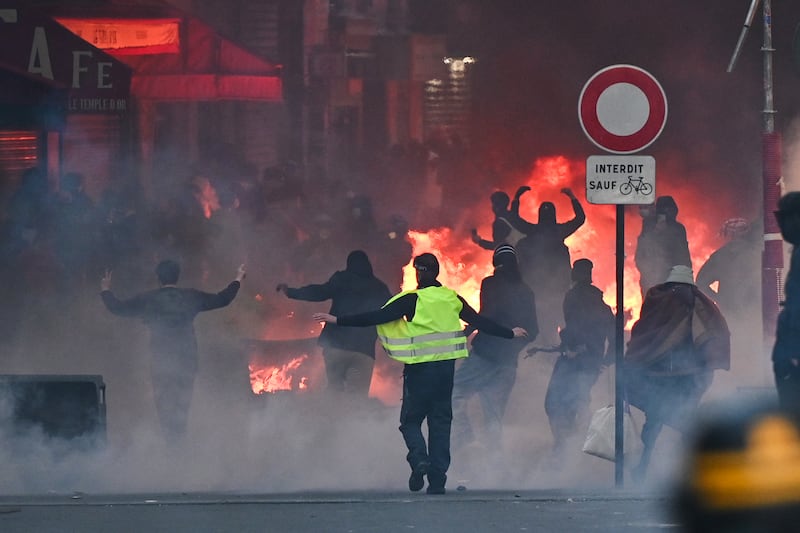 Protestors stand in front of a fire on a street in Paris as clashes erupted following an unauthorised demonstration on Sunday. Photograph: Matthieu Rondel/AFP via Getty Images