

Tax consultant Alma de Bruijn was anxious right from the start of her second pregnancy, because her first had ended in miscarriage.
“I had an almost heightened awareness of how my body felt and what was changing,” she says. When she had lower back pain at 10 weeks, she put it down to being pregnant. However, she did drop a urine sample into her GP surgery to check it was not a urinary tract infection and that came back clear.
She recalls lying on the floor while working at home in south Dublin to get some relief from the back pain. But over the course of that Friday evening, “the pain started to travel down from my lower back down into my groin area, down my leg towards my knee. I had a bit of a weird cold sensation in my leg”.
She also noticed a slight blue tinge.
Overnight the pain worsened and there was a little swelling in one calf. The following morning, their out-of-hours GP service sent a doctor to their house who, based on her symptoms, thought it was sciatica. He advised her to walk around as much as possible and make an appointment to see a physiotherapist.
“It didn’t seem like an unreasonable diagnosis,” says Alma.
Over the weekend she struggled to walk up and down the garden using crutches they had in the house. But the pain was getting worse and there was more swelling in one leg.
On the Monday morning she made an appointment with a physio, but also phoned her own GP, who suggested she come into the surgery as soon as possible. “She straight away pulled up the leg of my trousers and said, ‘I think you have a clot.’”
That possibility had never entered Alma’s mind; she associated clots with long-haul flights or extended hospital stays. But her first concern was what it meant for the baby.
The GP advised her to go straight to the National Maternity Hospital on Holles Street, where she was already booked in under the care of an obstetrician. There she had an injection of blood thinner before being referred to St Vincent’s for a scan of the suspected clot. Her husband Bastiaan, who drove her there, could not come in because it was November 2021 and Covid restrictions were in place.
“I will never forget that ultrasound because as they moved the probe along and had to press it into the leg, it was just excruciating,” Alma says.
When three or four doctors soon gathered at her bed, she knew it was not good news. “They explained that I had a significant clot, deep vein thrombosis, that had originated in the vein in my right calf. It had travelled all the way up my leg and into my vena cava, which, as I understand it, is one of the major veins that makes its way up towards your heart. Their concern was to try and stop it from travelling any further, or from breaking off.”
Ordinarily, the treatment would be a very high dose of blood thinners, but there was a risk this could terminate the pregnancy. “That was really difficult to hear,” says Alma, who asked if there was an alternative or what would the consequence be of not taking that treatment. “They were throwing stats at me like, ‘If you don’t get rid of this clot or try to resolve it, there’s a risk that you could be immobile for life.’”
A vascular consultant at the hospital, who had been conferring with a haematologist colleague and Alma’s obstetrician, said she knew a radiologist at the Mater hospital who had specialised in clot management in the US and the technique of thrombectomy. This procedure would involve going in the back of Alma’s knee and, in lay terms, sucking out the clot. When she was assured there would be no risk to the baby, it was a “no-brainer”, she says, to opt for that.
“At this stage, it was a week on from my initial diagnosis and my leg was huge. I wasn’t able to walk at all.”
[ GLP-1s in Ireland: How weight-loss medications work under the HSE systemOpens in new window ]
She was told it was the first time this type of mechanical thrombectomy, using this particular instrument, had been done in Ireland.
The procedure at the Mater, which was “traumatic enough” for Alma as the pregnancy limited what pain relief she could receive, successfully removed most of the clot. Taken back to St Vincent’s to recover, she was discharged in the run-up to Christmas. “It took me a long time to get back walking longer distances. And there wasn’t just the physical effects of having the clot, there was the psychological as well.”
But the rest of her pregnancy was well monitored and, as she was on blood thinners, a plan needed to be put in place for her labour. “I had a date to be induced two weeks before my due date. I would stop the blood thinners 48 hours before being induced.”
However, after the induction there was concern about the baby’s heart rate. “A decision was made to do an emergency C-section, which again was something I wasn’t mentally prepared for because all along the conversation had been that they wouldn’t want to do a C-section because of the risk of bleeding,” Alma says.
But their son, Zander, was born safely and “it was one of the best days of our lives”.
 Alma with her son Zander and husband Bastiaan. Photograph: Bryan O’Brien / The Irish Times
Alma continued on blood thinners, and also the wearing of compression stockings that go from her toes almost up to her hip for the next six weeks. However, when she stopped wearing the stockings, her affected leg became painful and heavy. “My vein is damaged, so the decision was made that I would wear a compression stocking long term and I still do.”
[ How can runaway spending in the health service be reined in?Opens in new window ]
She takes blood thinners before a long-haul flight and also after any surgical procedure.
Looking back, she says: “I had simply no idea that simply being pregnant increased your risk of getting a clot.” If she had, she does not know if it would have made any difference, but “maybe I might have got an earlier diagnosis”.
However, she considers herself very lucky. “I owe a lot to my own GP who acted so quickly,” says Alma, who is using her experience to raise awareness, as a patient representative on the thrombosis council within the Irish Heart Foundation (IHF).
Blood clots are the leading cause of maternal death in the western world, says consultant haematologist Dr Denis O’Keeffe, national clinical lead for venous thromboembolism (VTE), but such deaths are very rare, he stresses. The risk of developing a clot is raised during pregnancy, but is at its highest after the baby is born. In evolution, the most common reason women died in childbirth was because of bleeding, he says, so their blood clotting system increases in the post-partum period as a protective factor. This elevated risk of a clot issue can be heightened by factors such as a Caesarean section, or if the mother is unwell and immobilised for any reason.
The combined contraceptive pill (ie oestrogen and progesterone, as opposed to the progesterone-only mini pill) is also associated with a higher risk of clots, as is hormone replacement therapy (HRT) in menopause. However, with the newer option of getting HRT through skin patches, rather than orally, the risk is very low, says O’Keeffe, who is based in University Hospital Limerick.
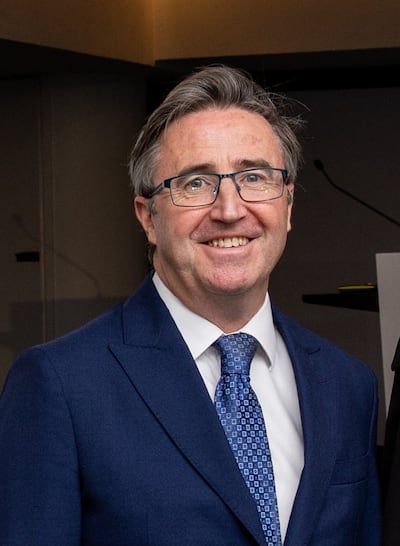 Dr Denis O’Keeffe says once VTE is diagnosed, the treatment is very effective and straightforward
Each year, about 6,000 people in Ireland are affected by VTE, ie a blood clot forming in a deep vein, usually the lower leg, but parts of it may break off and become lodged in an artery in the lungs, causing a pulmonary embolism. It is the third most common cause of death from cardiovascular disease, after heart attack and stroke.
Up to 50–60 per cent of all VTE cases occur during or after hospitalisation. Last year, the HSE launched clinical guidelines to improve diagnosis and care for patients with blood clots. They are known as “Eve’s Protocol”, in memory of Eve Cleary (21) from Corbally, Limerick, who died at University Hospital Limerick in July 2019, just hours after she had been discharged from the hospital following admission for a suspected foot fracture.
An inquest in 2021 found the cause of her death was cardiac arrest, secondary to extensive blood clots in the lung. Returning a verdict of medical misadventure, coroner John McNamara said it was clear that there had been “missed opportunities”.
Once VTE is diagnosed, the treatment is very effective and straightforward, says O’Keeffe. For most people, it would be an anticoagulation tablet; a thrombectomy would be extremely rare. “Here in the Midwest and Limerick we might have four or five patients a year that would meet the criteria for needing that treatment,” he says.
Long-haul flights of more than six hours are a minor risk factor but for people with multiple risk factors, “that may well be the final trigger”, he says. Those other factors include: smoking, being overweight, cancer and a family history of clots.
Women should know their risk factors, particularly going into pregnancy, says Emily Bury, an advanced nurse practitioner specialising in thrombosis at St Vincent’s University Hospital in Dublin. It is really important that they ask their GP or healthcare provider early on, “Should I be worried?”
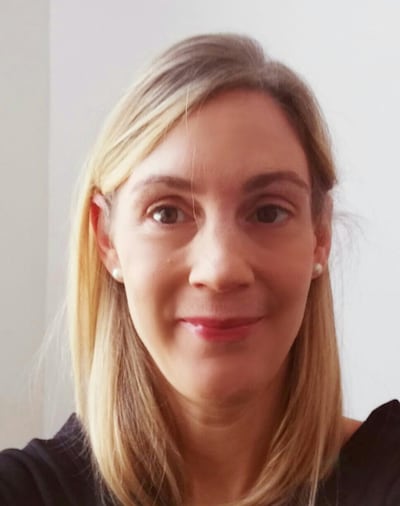 Emily Bury is chair of the Irish Heart Foundation’s thrombosis council
Up to five in every 1,000 women will have a clot during pregnancy but that rises to 20 in 1,000 post-partum. “The strongest risk is there until the 13 weeks post-partum period and then it begins to abate,” she says.
While there have been strong, public awareness campaigns around stroke and sepsis, says Bury, who is chair of the IHF’s thrombosis council, “I think we’re lagging behind in terms of our thrombosis campaign”.
It is a situation they are trying to rectify, now that the IHF has taken over patient support in this area since the winding up of Thrombosis Ireland last year. “I think a lot of people don’t know that thrombosis is the leading cause of hospital-acquired, preventable death,” she says. Patients remain at increased risk for up to 90 days after discharge. The advice is to stay as mobile as possible, she says, to keep hydrated and wear compression stockings if prescribed.
The IHF has developed a “blood clot alert card”, which details signs and symptoms, to be given to patients leaving hospital.
It is also encouraging people to make sure they are risk assessed for thrombosis within 24 hours of being admitted to hospital. The IHF runs a nurse-led helpline for anybody with a clot-related concern or who is seeking further information.
Meanwhile, after Alma and Bastiaan sought medical advice about having a second baby, they decided not to try. Not only was the risk of getting another clot in pregnancy very high, says Alma, but if it happened in the same leg, she might not be able to have a thrombectomy again because the vein was so damaged.
The risk of permanent immobility was also increased.
“For that reason and for the risks,” she says, “we decided that our one was perfect for us.”
IHF helpline: 01 668 5001; email support@irishheart.ie.
Explainer
Key signs to look out for
Problematic blood clots can affect anyone, regardless of age or health status. Early diagnosis and treatment can significantly reduce the risk of severe complications and save lives.
Signs of deep vein thrombosis include:
Swelling in one leg or armPain or tenderness, often in the calfWarmth, redness or discolouration of the skin
Signs of a pulmonary embolism include:
Sudden unexplained shortness of breathChest pain, especially when breathing deeplyRapid heartbeatCoughing up bloodFeeling faint or collapsing
Source: HSE