
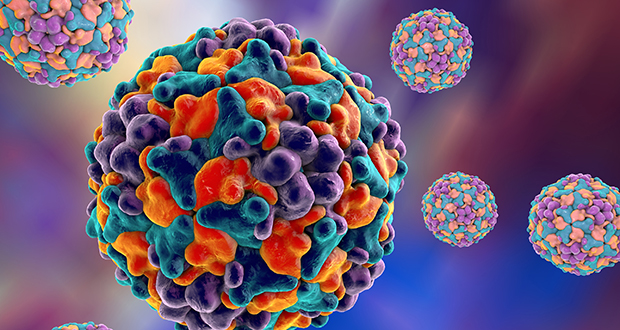
Recent cases reiterate the importance of maintaining polio vaccination coverage above 95 per cent in every district or community, writes Dr Catherine Conlon
Survivors of polio gathered this week to mark the 70th anniversary of the final and one of the worst outbreaks of a disease that ravaged the country for over 15 years from the early 1940s.
The first warning followed a case in Waterford in February 1956 followed by a case in Tralee, before the disease hit Cork in June. Within a month, St Finbarr’s Hospital was reporting four new cases a day. Inevitably, panic followed. Soccer matches were banned, as was swimming in the Lee. The city was shunned. Schools postponed reopening at the beginning of September, and the All-Ireland Football and Hurling Finals – both tournaments for which Cork had qualified for the final, were postponed.
The 1956 epidemic officially involved 499 patients (220 of them in Cork) with 20 confirmed deaths. For every case, there could have been up to 200 other potential carriers.
 Major polio outbreaks occurred in many parts of the world in the 1940s and 1950s, notably in the US, the UK and other industrialised countries, often peaking in the summer months. The largest occurred in the US in 1952 with over 57,000 cases recorded.
Similar patterns occurred in Europe and other industrialised countries, including Canada and Australia. In many countries the disease was most common in children, and often spread in urban areas with crowded living conditions. Many people avoided crowds and public gatherings, including sports gatherings, fairs and swimming pools.
In 1952, virologist and medical researcher at the University of Pittsburgh School of Medicine, Dr Jonas Salk developed the first live attenuated polio vaccine that was licenced in the US in 1955. At that time, about 16,000 cases of paralytic poliomyelitis occurred each year in the US. In 1956, the vaccine was trialled in Ireland, with dramatic success.
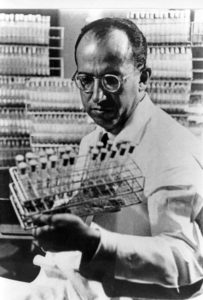
Jonas Salk, who developed the first live attenuated polio vaccine
In 1961, Albert B. Sabin, a medical researcher at the University of Cincinnati Children’s Hospital, Ohio develop a second, inactivated polio vaccine, followed by a third one in 1963. Combinations of these vaccines in subsequent decades caused polio cases to plummet. Polio was considered eliminated in North and South America in 1994.
The last case of poliomyelitis notified in Ireland was more than four decades ago in 1984, underpinning again the huge contribution that vaccines make to public health. Worldwide, polio cases have decreased by over 99 per cent from an estimated 350,000 cases in more than 125 endemic countries since 1988, the World Health Organisation (WHO) have reported.
Ireland, along with the rest of the WHO European Region was declared polio-free in 2002.
Global health alert
In 2022, the discovery of poliovirus in wastewater systems New York State, London, and Jerusalem triggered a global health alert. The virus found in these regions derived from oral polio vaccine used in some countries. Two cases of polio-related paralysis were reported – one in Jerusalem and one in New York. This was the first case in the US in almost a decade.
Genomic sequencing linked the virus across the three countries, prompting emergency vaccination campaigns, and a stark reminder that polio-free nations remain at risk. The genomic sequencing confirmed that viruses found in wastewater from New York State, London and Jerusalem, were linked – evidence of international spread through communities with sub-optimal vaccination coverage.
Polio causes irreversible paralysis in less than one-in-200 people infected, so cases of paralysis suggest the virus is circulating widely.
Wild polio virus circulates in only two countries – Afghanistan and Pakistan. Vaccine-derived poliovirus appears sporadically elsewhere – particularly in Asia and Africa. These cases come from the oral polio vaccine that causes live, weakened virus that can mutate to a more virulent form that can infect the nervous system.
Oral polio vaccine is not used in the US or the UK. It was discontinued in Ireland in 2001, replaced by the inactivated polio vaccine. The inactivated virus can keep the virus from infecting the nervous system, but is not as effective at reducing viral shedding and preventing transmission.
Polio vaccines are given as part of the routine childhood schedule at two, four and six months of age with a booster at 4-5 years of age.
A study published in the Lancet (2025) found that 91 per cent of children here were vaccinated in 2023, well below 95 per cent levels required to achieve herd immunity. Alarmingly, the study found that almost 5,000 children had not received a single vaccination. Ireland was reported to have the second lowest level of vaccination coverage in Western Europe.
“The virus is very, very good at finding unvaccinated individuals” said Walter Orenstein, quoted in Nature, 2022.
Following the discovery of poliovirus in UK wastewater systems in 2022, the UK Health Security Agency (UKHSA) declared a national incident. In response, the Joint Committee on Vaccination and Immunisation (JCVI) recommended a supplementary inactivated polio vaccine (IPV) booster campaign targeting all children aged 1-9 years across London. A catch up campaign for children aged under five was also introduced.
No human cases of polio were reported in the UK during the incident and the last detected case of the virus in London sewage linked to this event occurred in November 2022.
Meanwhile, poliovirus was consistently detected in wastewater systems in Rockland County, New York between April and August 2022. A case of vaccine derived poliomyelitis was confirmed in an unvaccinated individual in July, who presented with paralysis. The individual had no recent history of international travel.
 Following the clinical case and wastewater detections, US health authorities launched aggressive vaccination campaigns targeting under-vaccinated communities.
The New York case exposed a critical vulnerability: communities with vaccination coverage well below the 95 per cent threshold needed for herd immunity can sustain poliovirus transmission even in high income countries that primarily use the inactivated polio vaccine. The virus originated from the oral polio vaccine, used in many countries, which contains a live, weakened virus that can mutate and regain neurovirulence in under-immunised populations.
Understanding Vaccine-Derived Poliovirus
Vaccine-derived poliovirus is a well-documented phenomenon. The oral polio vaccine (OPV) contains a live, weakened form of polio virus. On rare occasions, when replicating in the gastrointestinal tract, OPV strains mutate and may spread in under vaccinated communities. The lower the population immunity, the longer the virus survives, and the more genetic mutations occur. In very rare instances, the vaccine derived virus can genetically change into a form that can cause paralysis.
According to WHO/ UNICEF estimates, vaccine coverage for three routine doses of polio vaccine in children aged 12 months was 93 per cent in the UK and 92 per cent in the US in 2021 – below the 95 per cent threshold WHO recommends at the district level to prevent community transmission.
The detections in London and New York served as a stark reminder that until polio is globally eradicated, polio-free countries remain at risk of re-infection.
These recent events reiterate the importance of maintaining polio vaccination coverage above 95 per cent in every district or community. Secondly, the use of wastewater surveillance is a critical tool – even in nations that have eliminated the disease.
Environmental monitoring provided the early warning tool that allowed authorities to act before widespread transmission with potential devastating consequences could occur. 
Author
Dr Catherine Conlon is a public health doctor in Cork.