
Women are “sick and tired of being exported” every time the health service is unable to meet their “essential healthcare needs”, and the necessary specialist care should be in place in the State.
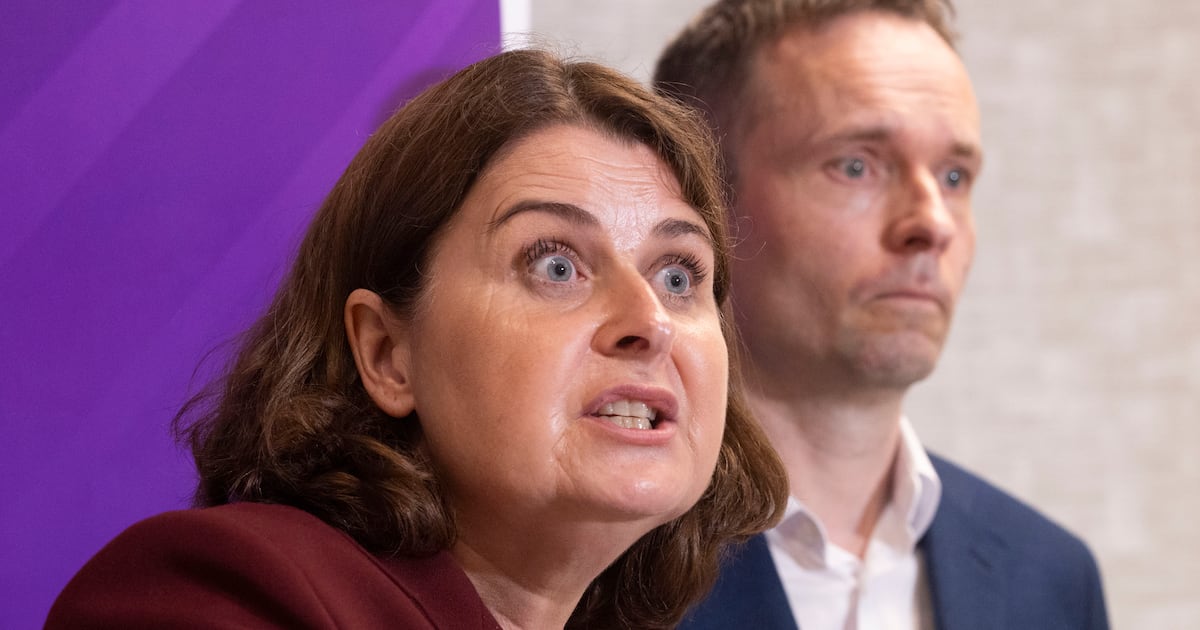
Social Democrats TD Jennifer Whitmore railed against the treatment of women by the medical profession, whom she claimed are “gaslighting” female patients. She called for a “cultural shift” in the approach to women’s health problems and said this “has to come from Government”.
The Wicklow TD also called for a system adopted in the UK to be implemented here where if a woman presents to her GP three times in any 12-month period with the same symptoms, the doctor would “reflect, review and rethink” the case.
 Viral ‘hugging grandparents’ ad: did Jim O’Callaghan need to intervene?
She acknowledged the investment in women’s healthcare and endometriosis by Minister for Health Jennifer Carroll MacNeill. In October last year, however, €16 million funding was announced for endometriosis care, but “as of September, only one of those staff was in place”.
The Wicklow TD highlighted the experience of some of the 300,000 women here suffering from endometriosis, the debilitating and chronic illness where tissue similar to the lining of a woman’s womb starts to grow outside the uterus.
The figure represents one in seven women, but “many in the medical profession seem to have barely heard of it. How else can we explain why it takes a woman an average of 14 years to get a diagnosis?” she asked.
Raising the issue in the Dáil, she referred to last week’s “harrowing” Virgin Media documentary – Health Hysteria: Are Women being Gaslit? – which featured women “who spent years in excruciating pain before eventually being diagnosed with conditions like endometriosis and premenstrual dysphoric disorder”.
Their healthcare concerns “were repeatedly dismissed or minimised by doctors”, and women had to travel abroad for surgery because specialist care is not available in the State.
She also highlighted the recent RTÉ Prime Time programme featuring Dr Rachel O’Connor, who had to take out a large loan to travel to Poland for surgery. “She was told if she had not had that surgery, she would have died.”
The Minister admitted it is a “shame on me and everybody else that a doctor in our health system used her HSE salary and a loan to get emergency surgery in a different jurisdiction”.
[ Health staff face sweeping promotion restrictions under spending controlsOpens in new window ]
Surgery abroad is being funded on an emergency two-year basis, but “we are trying to develop longer-term surgical pathways”, including a relationship with a specialist clinic in Bordeaux.
Irish surgeons are being trained abroad, and there will be a “continual series of fellowships for surgical training and endometriosis”. In the interim, “we are trying to recruit specialists as best we can”.
She acknowledged the “medical gaslighting” and said women have been treated differently in the system, with research on men sometimes applied inappropriately to women.
Carroll MacNeill said the chief executive of the HSE and she wrote to “every single GP to try to raise awareness that this impacts one in seven women”.
A programme was introduced to fund emergency surgeries abroad, and in the last quarter of 2025, 143 surgeries were conducted in the State, as the health service builds a specialist surgery system here.