
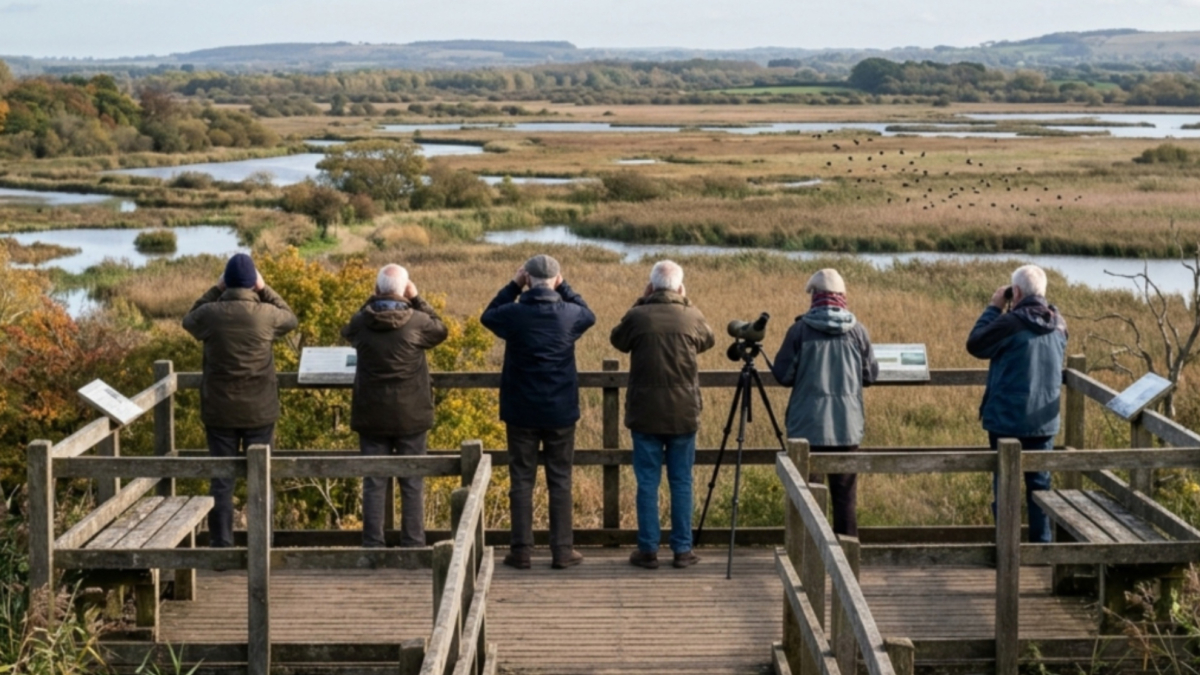
Birdwatching is one of the hobbies that has endured over the years. A peaceful hobbie, but one that also keeps you active, because you have to pay attention to every movement and behavior of the different species.
This is something especially interesting for older people. First, because it is a way for them to pass the time. But also because it can bring them multiple benefits on many levels. In fact, according to the BBC, groups have been created in nursing homes in the United Kingdom, Germany, and the United States.
It also helps them stay connected. To experience positive emotions and even to keep their memory capacity active despite the passing of the years and to slow cognitive decline. However, it seems that things are now going a step further: there is new research that has analyzed the way in which the organization of the brain improves.
Viral Earth video shows it appears to have a heartbeat in incredible natural phenomenon
The research that analyzes the benefits of birdwatching
According to the cited outlet, this work shows that observing birds has the ability to reshape the brain. Something very similar to what happens with playing sports or even playing an instrument. What’s more, it is added that it can help slow down brain aging.
In the laboratory, this practice is also being investigated. The identification skills have already been assessed to determine who was an expert and who was a novice, and then their brains were examined. To their surprise, the experts realized that the structure of their brains was different from one another.
That was how they came to understand that, in some way, birdwatching could slow age-related decline. Why? Because the brain remains more organized.
Erik Wing led this research at Baycrest Academy for Research and Education in Toronto (Canada). The process initially consisted of comparing the experts’ brain MRIs with those of the beginners. And he realized that those with more experience had brains wired differently in regions important for functions such as attention, visual perception, and visual recognition.