
KALAMAZOO, Mich. — Early intervention is key to fighting breast cancer, but there are some factors that make detection harder for women.
Testing for cancer isn’t a one-size-fits-all approach. It depends on a number of things, including family history, age, and breast density.
“This is something that is very important for people to understand,” Dr. Mazen Mislmani, division chief of radiation oncology at the West Michigan Cancer Center, said. “There’s a lot of factors that go into the optimal screening strategy.”
Breast density essentially refers to the amount of fibroglandular tissue there is in the breast compared to fatty tissue.
Having breasts that are considered ‘dense’ also creates a two-fold problem.
“The first one is that it actually increases the risk of developing breast cancer in the first place,” Dr. Mislmani said. “And then the second problem is that it makes it more difficult to interpret the mammogram.”
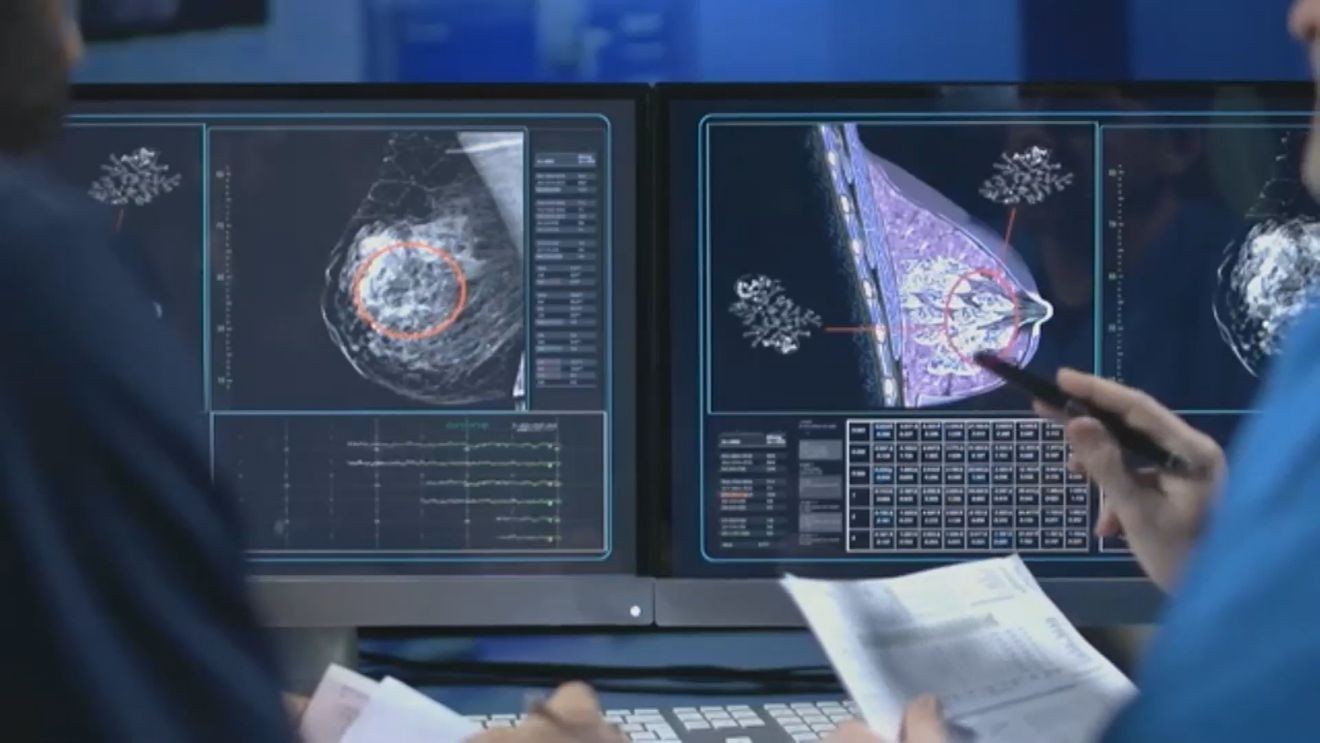
On a mammogram, fatty issue appears dark, which makes any sign of cancer stand out.
“A small tumor is like a white circle on a dark background,” Dr. Mislmani said. “So in a fatty breast, it’s easy to see that.”
But, dense tissue also appears white.
So, in a dense breast, there’s a collection of white within the dark background that’s part of the normal tissue makeup.
“The more of those white areas you have on that mammogram, the more difficult it becomes to see a cancer that is supposed to also look white because it blends in,” Dr. Mislmani said.
Breast density can be broken down into four categories:
A – Almost completely fat, and the easiest mammograms to readB – Scattered densities in the breastC – Heterogeneously dense, which is the cutoff for when doctors started calling breasts ‘dense’D – Extremely dense
About half the population has dense breasts, said Dr. Mislmani, so it isn’t uncommon.
If doctors are concerned about a patient being high risk and they feel the mammogram isn’t providing enough comfort, they’ll move into supplemental testing, such as MRIs or ultrasounds, to be sure of their findings.
“Early detection is enormously important,” Dr. Mislmani said. “Talk to your doctor. Know yourself. Know your risk. Know your density.”
As part of the Michigan Breast & Cervical Cancer Control Navigation Program, free mammograms, clinical breast exams, and more are provided to eligible women. Click here to learn more.