
The Netherlands will not participate in next year’s Eurovision Song Contest, its broadcaster NPO has said, citing “sensitivities” over Israel’s participation.
The 2027 contest will take place in Burgas, Bulgaria, with the Grand Final being held at Arena Burgas on 15 May.
The semi-finals will take place on 11 and 13 May.
The contest has recently seen a wave of boycotts over Israel’s participation, in protest at the country’s offensive in Gaza, which was sparked by Hamas militant attacks in 2023.
NPO, the Dutch national public broadcaster, had stepped in when AVROTROS, which had previously selected the Dutch entry and broadcast the show, pulled out, saying the event could “no longer be considered neutral” given divisions over the Gaza war.
Earlier this month, the Czech public broadcaster also pulled out, but it cited spending cuts as the reason.
Ireland had already announced it would not be taking part, while the head of the Spanish public broadcaster has come out in favour of a boycott.
Announcing Dutch broadcaster NPO’s decision, its media director, Jurre Bosman, said in a statement: “We have known for some time that Israel’s participation elicits various reactions in society and causes discussion and division… therefore, after consultation with the Board of Broadcasters, the NPO has decided to forgo participation in 2027.”
Jet de Ranitz, NPO’s executive chairman, acknowledged this would disappoint many Dutch Eurovision fans and stressed that the contest would still be aired on the public channels.
However, he said: “We must conclude that it is currently too early to participate in the Eurovision Song Contest in 2027.”
“Due to the sensitivities surrounding the themes currently at play, we have decided to take a step back for the time being,” added de Ranitz.
‘Bangaranga’
In August, Eurovision organiser the European Broadcasting Union (EBU) announced it was excluding any country involved in an armed conflict from hosting the competition.
But that has not prevented withdrawals, including Ireland.
Next year’s contest, the world’s biggest live televised music event, will be the first time Bulgaria has hosted the contest.
Bulgarian singer Darina Yotova, known as DARA, won this year’s contest in the Austrian capital Vienna with Bangaranga.
The 2026 competition was watched by 131 million viewers, down 35 million on the year before after five countries boycotted it over Israel’s participation.
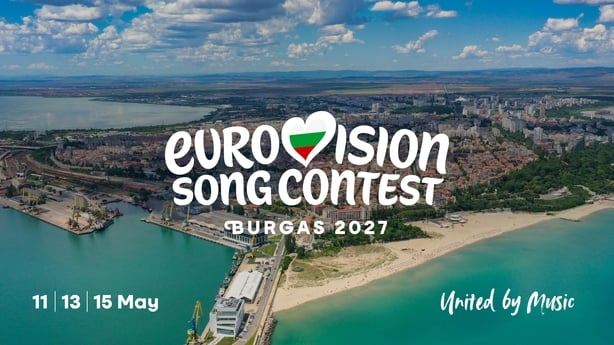
2027 will be the first time Bulgaria has hosted the Eurovision Song Contest
Ireland, The Netherlands, Iceland, Spain, and Slovenia all pulled out of the 2026 contest – with Ireland, Spain, and Slovenia refusing to broadcast the show at all.
The Dutch took part in the very first Eurovision Song Contest in 1956 and have won on five occasions.
Their most recent winner was Duncan Laurence, whose song Arcade won the contest in 2019, going on to top charts globally.
It became the first Eurovision entry to reach one billion streams on Spotify, according to the Eurovision website.
The director of Eurovision for the EBU, Martin Green, said he was “deeply sorry” that the Netherlands would not be taking part in 2027.
“We understand their decision, and we respect the strength of feeling behind it in the Netherlands,” he said in a statement.
“At the same time, we believe the Eurovision Song Contest matters in a divided world.”
Source: AFP