
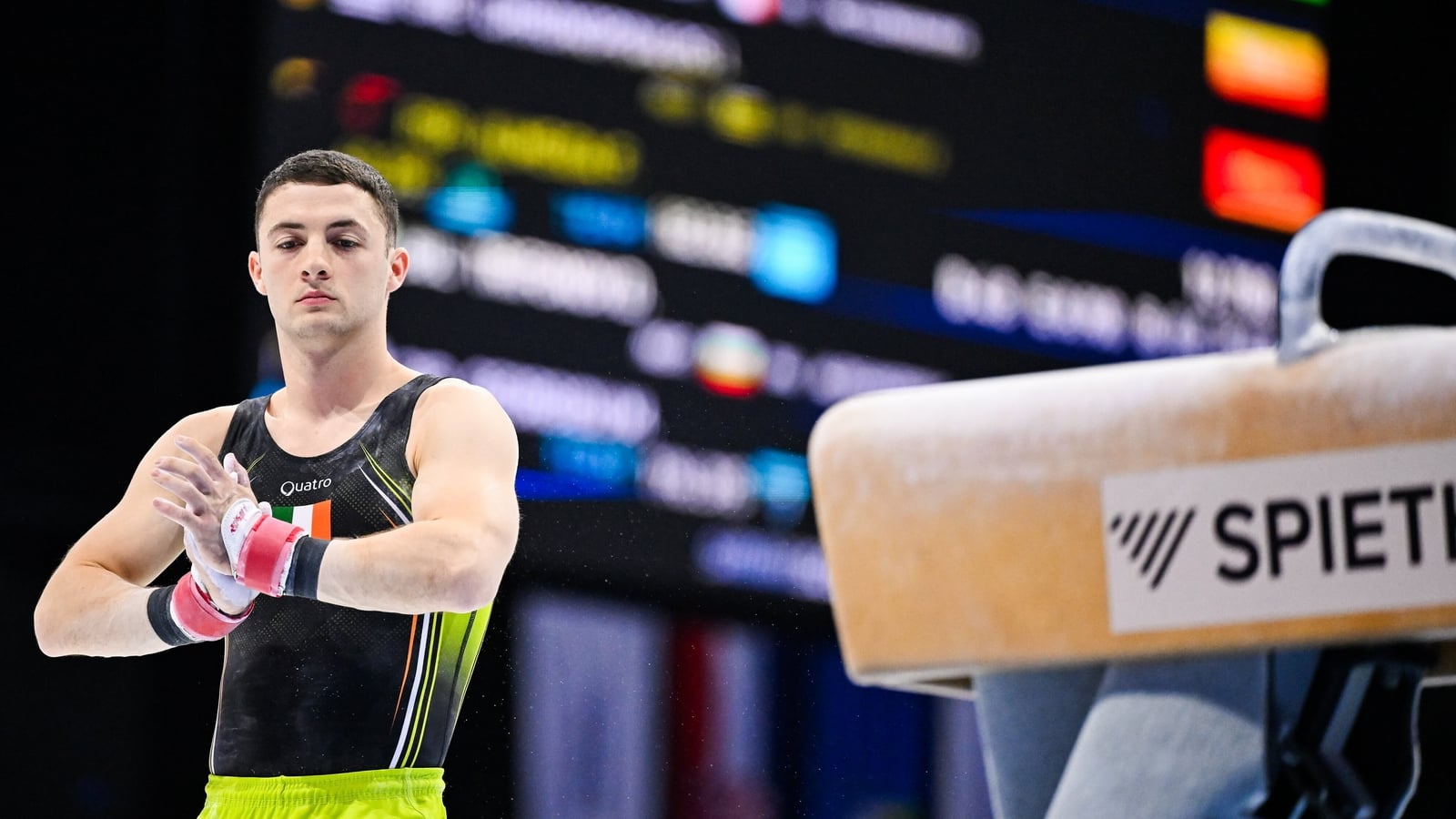
Rhys McClenaghan was forced to watch from the sidelines during last week’s pommel horse final at the World Artistic Gymnastic Championships in Rotterdam.
McClenaghan’s 14.400 score in qualifying landed him just two places outside of the final but the unfortunate position of second reserve did allow for closer observation of the competition, who will likely want to claim his Olympic crown in two years’ time.
“I don’t really watch other competitors and kind of prevent myself from learning from other people, because my job is to do my routine… You almost get the luxury out there, making the best of a bad situation of being a reserve, and I can be out there, be in a training mindset, and kind of look around me, learn from the other guys and take motivation from it,” Red Bull athlete McClenaghan told RTÉ Sport.
So what did he learn from watching teenage world champion, Hamlet Manukyan, in the Netherlands?
“The amount of numbers and repetitions they do,” he said.
“I think that’s something that I can definitely bring into my own training, not be scared to do a lot of numbers and maybe injuries in the past have prevented me from pushing too much in the gym, but at the same time I’m here to do consistent, great gymnastics and that’ll come with repetitions.”
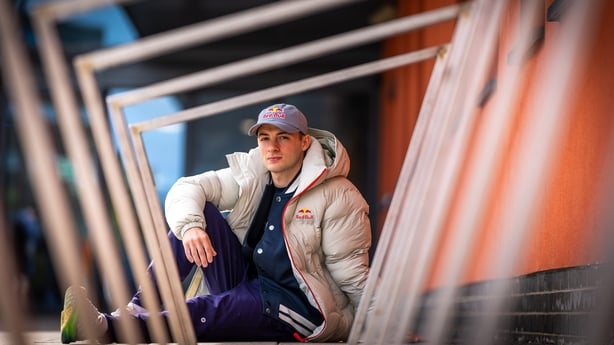
Rhys McClenaghan watched the pommel final in Rotterdam from the sidelines
McClenaghan’s year after winning Ireland’s first Olympic gymnastics medal was probably not what he expected.
The County Down man swapped the gym for the ballroom for RTÉ’s Dancing with the Stars but it was an almost two-year wait to hear the much coveted line – “reigning Olympic Champion” – when being introduced in the gymnastics arena.
After missing all international competition in 2025 following surgery for a shoulder injury McClenaghan returned to competition at the Commonwealth Games in July, where a repaired shoulder wasn’t the only change he had to contend with.
The International Gymnastics Federation introduced a big change to apparatus scoring across most events in 2025, where only eight elements will count towards difficulty scores, rather than the previous ten.
“It takes a bit of time to get used to competing again. I think no matter how long you’ve been in the sport, if you take a chunk of time out, then you’re going to have to dust off the cobwebs a little bit.
“Just trying new routine constructions, new skills in those routines. That’s a very new experience for me. Even when I was a junior gymnast, I was learning the skills that I had in my Paris routine at the Olympics.
“They were in those routines as a junior gymnast, so I knew that Paris Olympics routine inside out. Now I’m reintroducing some new skills and new constructions of routines, so it’s a new experience.”
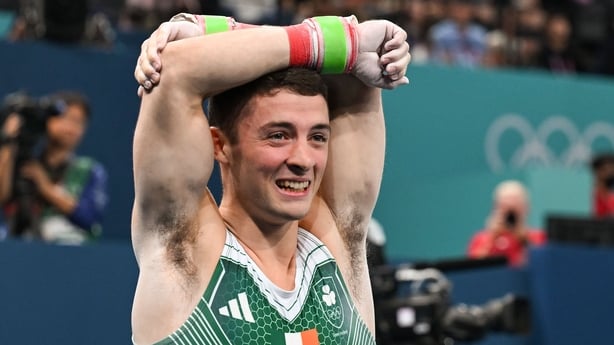
The County Down man won Ireland’s first Olympic gymnastics medal in 2024
Despite the shifting landscape this year, the 27-year-old welcomes the changes in the discipline which have resulted in high scores.
“The pommel horse standard is probably at an all-time high, if I’m honest. The rule changes, the scoring system, these are all contributing factors to the standard being really high, and then also just the gymnasts are good.
“The rule changes, particularly moving from 10 skills to eight skills, means that people that would have maybe struggled in the past with endurance through the routine, or adding two really high-valued skills, which I would be very good at, they don’t need those two high-valued skills anymore, so it brings the competition very close together.”
If McClenaghan is right the podiums in the pommel will continue to be tight at the top, with only 0.3 separating the medalists in Rotterdam.
The scoring in gymnastics can seem like a bit of a minefield and McClenaghan explained why the scores were so high in the recent World final.
Real-time judging was used for the first time in the sport, but as it was for finals only, the Olympic champion didn’t get to see how his routine fared under the new system.
“They’re not putting pen to paper anymore, they’re using a remote controller to tap when the deductions are,” he explained.
“What that does is it holds them accountable to making the right calls on deductions. what they’re doing now is that tap judging tells the higher-up judges exactly where they’re taking deductions.
“So when they review all of the routines, they’ll say, why did you take this deduction here? There was no deduction. So that’s why the scores are a lot higher now. They only used that tap judging in finals.”
Pen and paper judging could soon be a thing of the past in Gymnastics
The judging system is moving to a boxing-like format but still scores from individual judges remain a mystery which may help to make the sport more robust.
“I would almost like more transparency, if that’s the route that they’re going down.
“What it kind of does is hold those judges accountable.
“It’s great that there is more transparency there. I would almost like to see even more transparency and almost have the judges’ deductions be televised or at least shared after the finals. I think that would really be exciting for everyone watching.
“It would be nice for me to get feedback on my routines. But I think it’s a positive direction that gymnastics is being taken. It’s becoming less and less subjective.
“And I think if this moves in the right direction, then we’ll reduce the amount of bad decisions made in the sport for sure.”
Artificial intelligence is also finding its way into gymnastics, but currently pommel isn’t one of the disciplines under the Judges Support System which deducts difficulty for certain skills based on angles and coordinates.
“I would welcome it to be in pommel as well, because I’m always aiming for the best possible shapes and positions to be in. And in the past, especially, I felt like I wasn’t entirely rewarded with that in contrast with other athletes.
“So having computer-generated systems in place would definitely show the differences.”
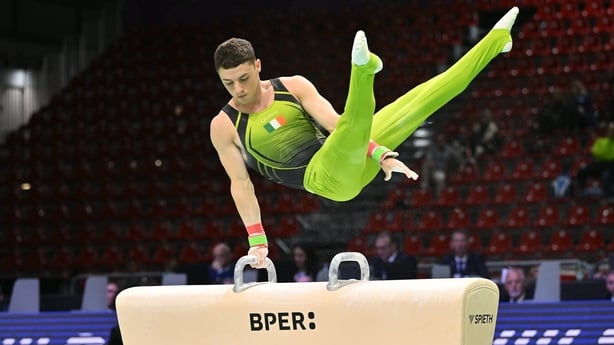
The Olympic Champion would welcome the use of more technology in his discipline
For now, it’s time to literally get back on the horse and put what he has learnt into practice. With only a five-day break planned, McClenaghan will get back into the gym on Friday, where all eyes will be on defending his Olympic title.
“I guess I’m really looking forward to just training. It doesn’t feel like work to me, training. It’s difficult, it’s challenging.
“I’m exhausted at the end of the day, but it doesn’t feel like I have to do gymnastics. I get to do gymnastics. I get to wake up and be an athlete as my job and as my career.
“And I’m in such a privileged position to be able to say that. So although there’s challenges, disappointments, I’m so grateful to be in the position I am.”