
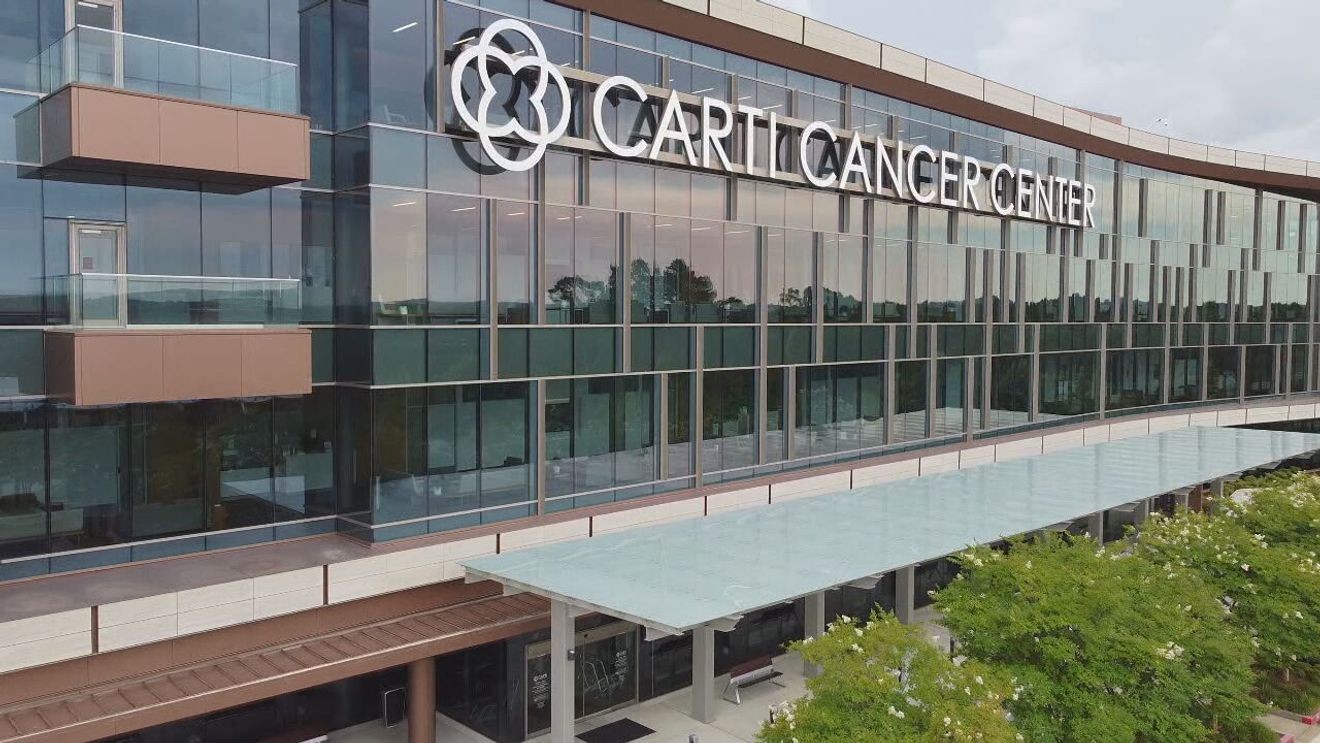
LITTLE ROCK, Ark. (KATV) — As Breast Cancer Awareness Month winds down, doctors are urging women to keep the conversation going year-round, starting with understanding personal risk and breast density, which can affect both the likelihood of developing cancer and the type of screening that may be needed.
“The number one risk factor is being a woman,” said Dr. Stacy Smith-Foley, breast imaging specialist at CARTI. “So all women have a level of risk, regardless of whether or not they have family history.” She added, “If you have breasts and you have birthdays, you have risk.”
Smith Foley said women at average risk for developing breast cancer should begin screening at age 40. She noted the commonly cited statistic that “one in eight women in the course of their life will be diagnosed with breast cancer.”
But she said conversations about risk should start much earlier. “So ideally, women should start that conversation by the time they’re 25,” Smith Foley said, encouraging young women to talk with a primary care doctor or gynecologist about family history. Identifying higher-risk patients can lead to earlier screening, she said, while women without a family history can typically wait until 40 to begin routine screening.
Smith-Foley also emphasized breast density as a key factor. “So breast density is an independent risk factor for developing breast cancer,” she said. Dense tissue can make cancer harder to detect on a mammogram because both appear white. “Breast cancer is white on the mammogram, and dense tissue is white, so it’s like looking for a snowman in a snowstorm,” she said.
Because of that, Smith-Foley said women with dense breast tissue often need more than a standard mammogram. “Women who have dense tissue need some form of supplemental evaluation. For those women, the mammogram is not enough,” she said. Options include ultrasound, contrast-enhanced mammography and MRI. She said MRI is typically reserved for patients at the highest risk — defined as a “20% or greater estimated lifetime risk” — while ultrasound can be used for women at intermediate to average risk. She called contrast-enhanced mammography “a promising new technology that has improved cancer detection.”
Smith-Foley said the breast center at CARTI was the first in Arkansas to offer contrast-enhanced mammography. “That is correct,” she said, adding, “I was actually the first woman in the state of Arkansas to have the test performed personally.”
For women who feel anxious about mammograms or the possibility of being called back for additional imaging, Smith Foley said callbacks are relatively common but do not usually mean cancer. “If we screen 1000 women, about 10% are called back,” she said. Of those, she said about a third can be determined to be benign, about a third are followed over time, and about a third receive a biopsy. “And out of those approximately 33 women, we might find seven cancers in total out of screening 1000 women,” she said.
“The goal with doing the mammogram is to find breast cancer when it is small and more easily treated,” Smith Foley said.
As October ends, she said awareness should not. “So for for us here at CARTI Cancer Center, cancer is 365 days a year. It’s 12 months out of the year, and it never stops,” she said. She said she hopes Breast Cancer Awareness Month encourages people to pay attention to changes in their bodies, talk with a doctor if they notice changes, and get screened when they are at an appropriate age.