
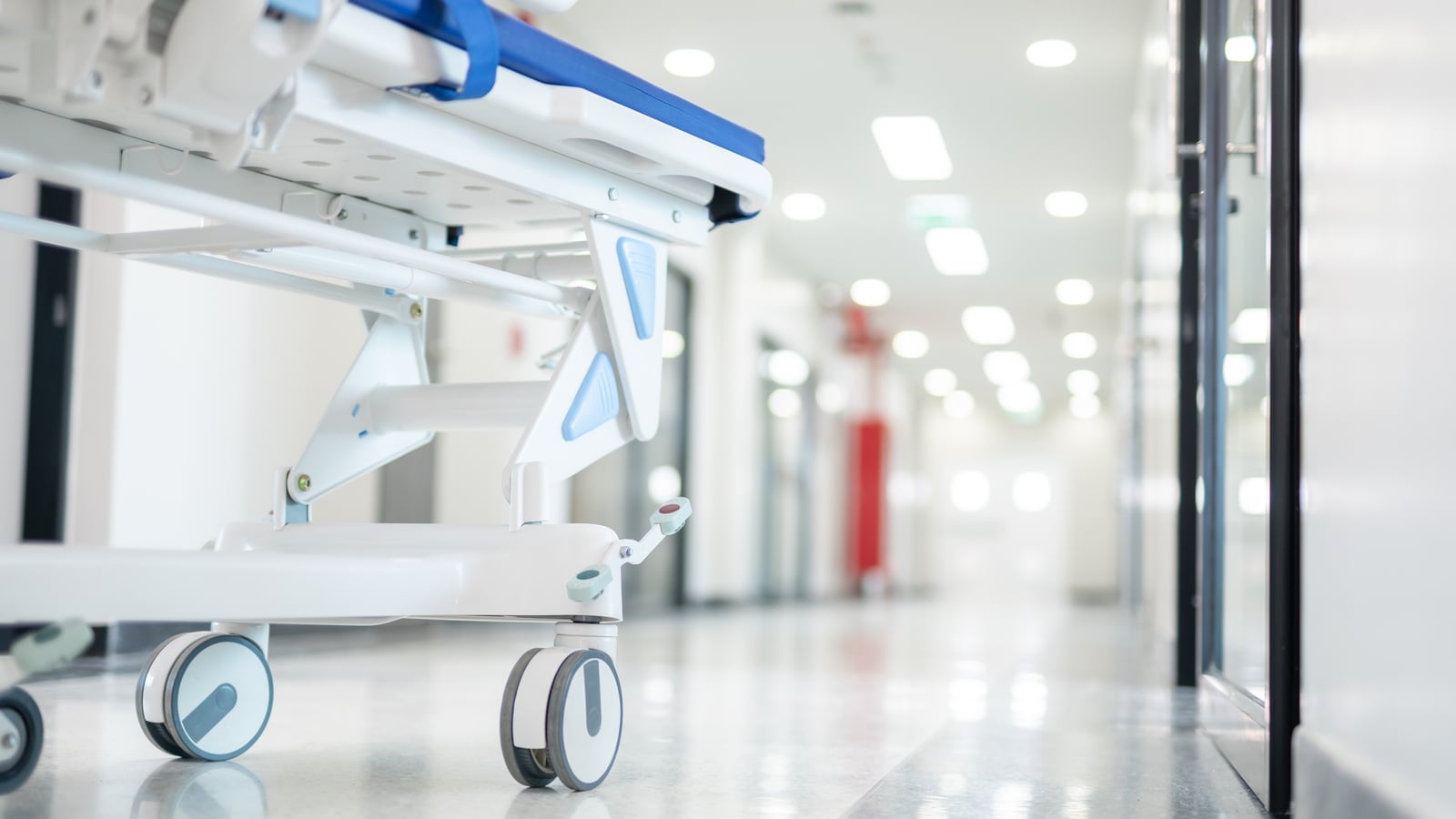
Analysis: Overcrowding in emergency departments has been normalised in Irish society and patients now tolerate prolonged waiting times for urgent care
Traditionally, each winter as temperatures start to fall, the number of patients waiting in hospital emergency departments starts to rise. Multiple factors contribute to the winter surge, including flu season. However, this year for the first time, overcrowding has not begun this winter because, in reality, it never ended.
The trolley crisis is now a year-round issue, continuing unabated in Irish hospitals throughout the summer. In July over 10,000 patients were treated on trollies nationally. After almost 1,000 patients attended the emergency department in University Hospital Limerick over a three day period in July, the hospital iadvised patients to “consider the most appropriate healthcare service for their needs”. While relatively common in winter, an advisory of this type during summer is unprecedented (and was unrelated to the hot summer).
We need your consent to load this rte-player contentWe use rte-player to manage extra content that can set cookies on your device and collect data about your activity. Please review their details and accept them to load the content.Manage Preferences
From RTÉ Radio 1’s Morning Ireland in July 2026, University Hospital Limerick experiencing exceptionally high demand for its emergency department
Research from the University of Limerick investigated the factors why people go to emergency departments in Ireland. A key finding from the study was that less than half of the patients (48%) attending actually considered their condition to be an emergency. While a potential service gap does exist, we concluded that a combination of physiological, psychological and social factors impact the decisions of patients to go to the emergency room.
The emergency department acts as a societal “safety net” and overcrowding is symptomatic of complex and connected challenges across the health system. The numbers of people presentating at emergency departments are increasing annually, driven by demographic transitions. Our population is ageing and the proportion of older adults over 65 years of age has increased by 37% over the last 10 years. Chronic illness has also increased: a recent World Health Organisation (WHO) report stated that “multi-morbidities are the norm rather than the exception” in Ireland.
Another factor is workforce issues in General Practice, as delays in routine medical appointments can drive hospital attendance. Similarly, staffing is also a concern: the Emergency Medicine Consultant workforce is 3.6 per 100,000 population (compared to 6.4 in New Zealand) which will need to approximately double by 2038.
We need your consent to load this rte-player contentWe use rte-player to manage extra content that can set cookies on your device and collect data about your activity. Please review their details and accept them to load the content.Manage Preferences
From RTÉ Radio 1’s Brendan O’Connor Show, emergency department doctor Emily O’Conor on her experience of burnout
But arguably the most significant contributor to overcrowding is hospital capacity. In comparison to 30 countries in the OECD region where the average is 4.2 beds per 1,000 people, Ireland has one of the lowest bed densities at 2.9 per 1,000 population. The state has the second-highest bed occupancy rate internationally at 87% (the average is 71%), meaning capacity is extremely limited when surges occur.
There have been some positive efforts to address the issue. This includes the development of alternative care pathways by the National Ambulance Service (such as community paramedicine), expansion of diagnostics in primary care settings (including mobile x-rays), and the launch of telemedicine initiatives such as “virtual wards”.
But building capacity in a health system takes time, and infrastructure targets are still consistently not being met. Over a quarter of the acute care beds planned for construction in Irish hospitals last year were not delivered and almost half of the planned community beds were not built, meaning hospital discharges can be delayed due to lack of step-down care. We are swimming against the tide, not even keeping pace with current health service demand, much less future-proofing the needs of a population which is projected to increase by another 15% by 2050.
We need your consent to load this rte-player contentWe use rte-player to manage extra content that can set cookies on your device and collect data about your activity. Please review their details and accept them to load the content.Manage Preferences
From RTÉ Radio 1, Liam O’Brien on spending four days on a trolley in University Hosipital Limerick waiting for treatment
If overcrowding were a disease, it would now be described as endemic, meaning that it is consistently present. Influenza is an example of an endemic disease in Ireland and 264 flu deaths were registered last year. As a preventative measure, the Winter Vaccination Programme provides free flu vaccines to vulnerable groups such as children and older adults.
In terms of public health policy, we could also compare hospital overcrowding to road safety. In 2025 fatal collisions on Irish roads resulted in the loss of 184 lives. The Road Safety Authority (RSA) has a long-term goal of eradicating road deaths by 2050 and aims to halve the number of deaths on Irish roads by 2030. No such preventative strategies have been implemented for emergency department crowding, although international evidence estimates that it causes 350 excess deaths in Ireland annually – the equivalent of almost one patient a day, and based on emerging research this is likely a conservative estimate.
Statistics don’t capture the suffering of every patient in an overcrowded emergency room at a time when they are at their most vulnerable
The Emergency Medicine Programme Model of Care from 2025 states that “it is imperative to eliminate crowding in EDs”. But last year emergency department attendances increased by 4% to over 1.6 million people and 114,029 of these patients were treated on trollies. The current record for single day crowding stands from 2023 at 931 patients, but looks set to be broken this winter. In 2006, then Minister for Health, Mary Harney declared hospital overcrowding a national emergency when 384 patients were waiting on trollies in emergency departments yet successive governments have failed to resolve the issue 20 years later.
It is beyond time for overcrowding in emergency departments to be prioritised as a national public health issue, but it has become normalised in Irish society. We’ve become desensitised to the trolley crisis and now routinely tolerate prolonged waiting times for emergency care. The statistics don’t capture the suffering of every patient who experiences a lack of privacy and dignity in an overcrowded emergency room at a time when they are at their most vulnerable. We need an end to trolley counts in Irish hospitals.
Follow RTÉ Brainstorm on WhatsApp and Instagram for more stories and updates
The views expressed here are those of the author and do not represent or reflect the views of RTÉ