
Follow us
Add us as a preferred source on Google
Newsletter
Subscribe to our newsletter
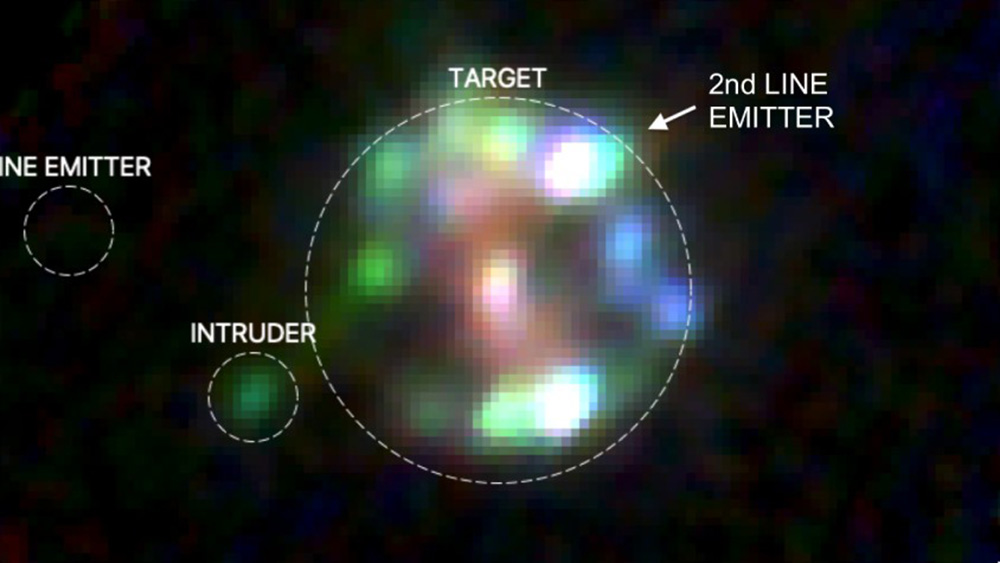
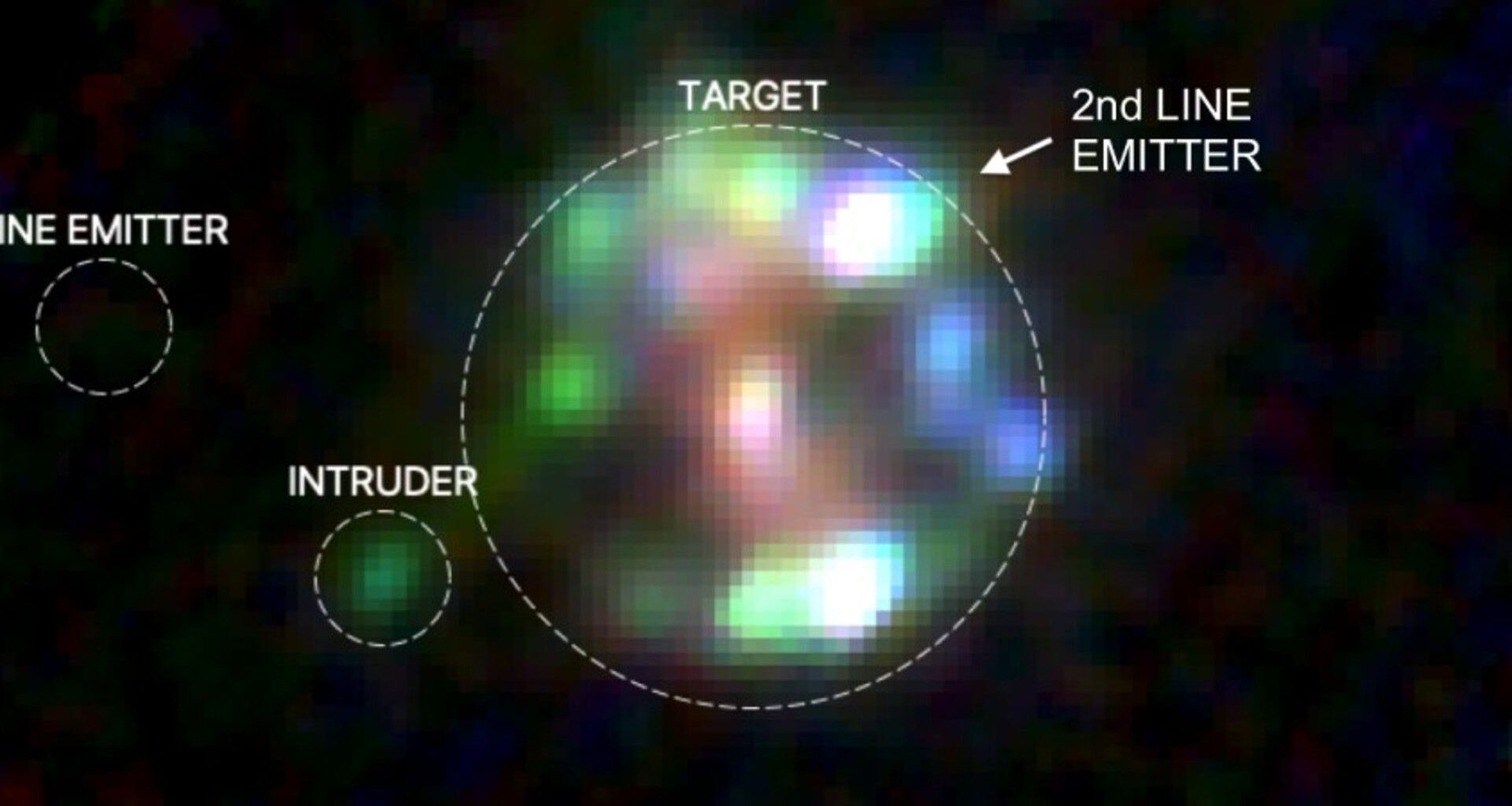
A view of the possible ring galaxy GS18660 as seen by the James Webb Space Telescope. New observations hint that the ancient galaxy may have been created by a collision with an ‘intruder’ galaxy.
(Image credit: Perna et. al/ Astronomy and Astrophysics)
Latest Videos FromLive Science
A surprising discovery
You may like
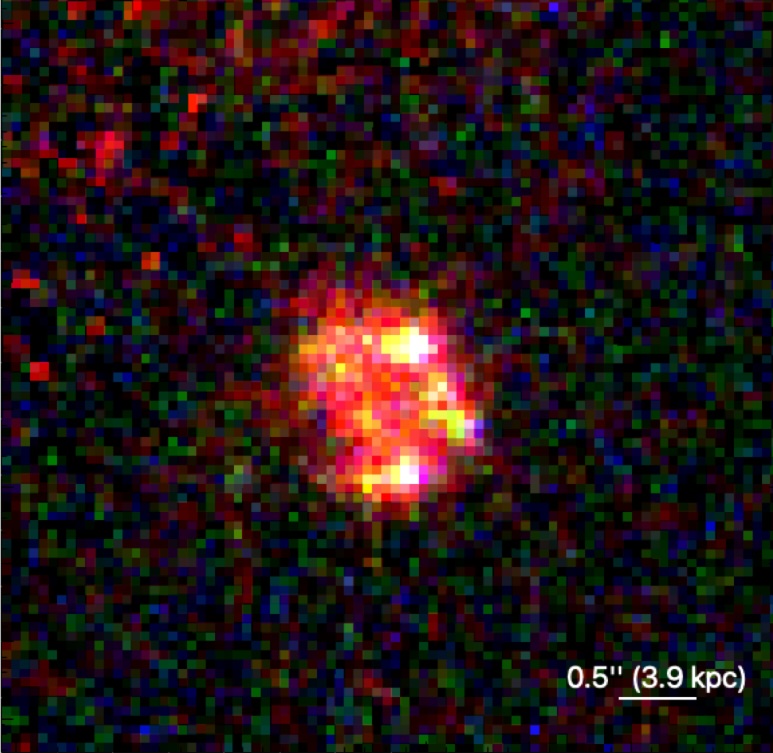
Another view of GS18660 as seen in an earlier Hubble Space Telescope survey.
(Image credit: Perna et. al/ Astronomy and Astrophysics)
Intruder-driven rings
What to read next
Backed by stars
Another explanation?
Editor’s note: This article was updated on Oct. 29 to correct a typo. In the image caption, the lead researcher’s surname was mistakenly written as “Pera,” rather than “Perna.” This has been corrected.
Perna, M., Arribas, S., Costantin, L., Pérez-González, P. G., Prieto-Jiménez, C., Rodríguez Del Pino, B., D’Eugenio, F., Lamperti, I., Mannucci, F., Übler, H., Cresci, G., Böker, T., Bunker, A. J., Carniani, S., Charlot, S., Maiolino, R., Bertola, E., Ceverino, D., Circosta, C., … Venturi, G. (2026). GA-NIFS: The highest-redshift ring galaxy possibly resulting from a head-on collision. Astronomy & Astrophysics, 713, A86. https://doi.org/10.1051/0004-6361/202659562
TOPICS