
Generational families have no choice but to accept the erasure of their ancient Indigenous settlements. “The mountain is more than land. It is our identity, our history. The water spirits we worship inspired our folk songs and Indigenous wisdom, and polluting means you are being disrespectful to the water spirits,” says Lhazom. “It’ll be a challenge to convince the people to live in safer places, but I don’t want them to be in a place that could kill them.”
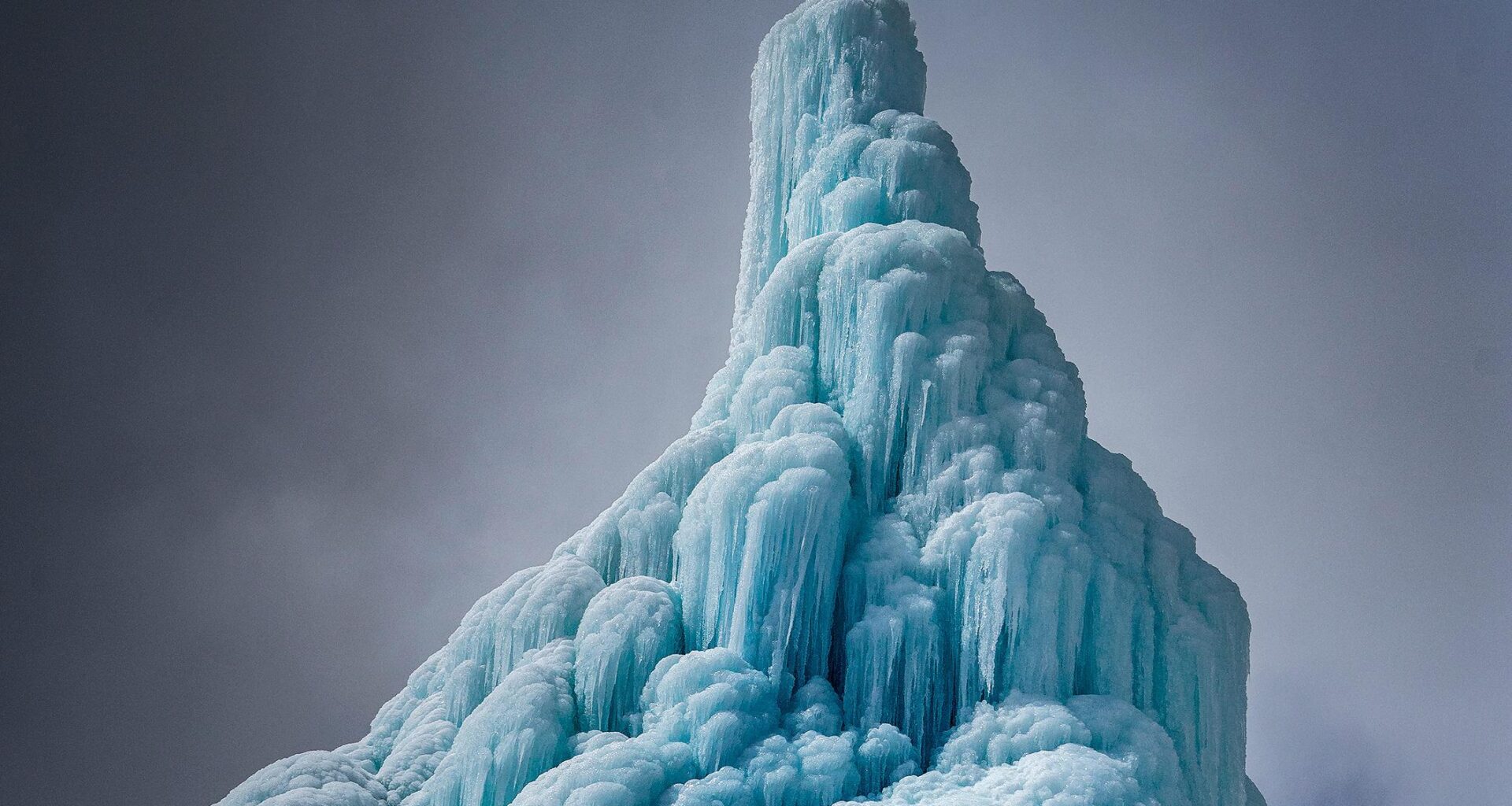
Growing Artificial Glaciers
Northwest of Lhazom’s home, in Ladakh, India, where –40°winds whip through a remote desert on an 11,500-ft. shelf in the shadow of the Himalaya’s highest northern peaks, the people rely on a single water source: melting glacial ice, now covered in soot from vehicles carrying adventure tourists acclimating in its capital of Leh.
The region’s unbearably beautiful and dry glacial-dependent settlements could become the next Himalayan ghost villages—joining the 2,000 already abandoned from drying glaciers, water scarcity, drought, and unpredictable monsoons in places like Spiti and the Uttarakhand, India, and the Upper Mustang of Nepal.