
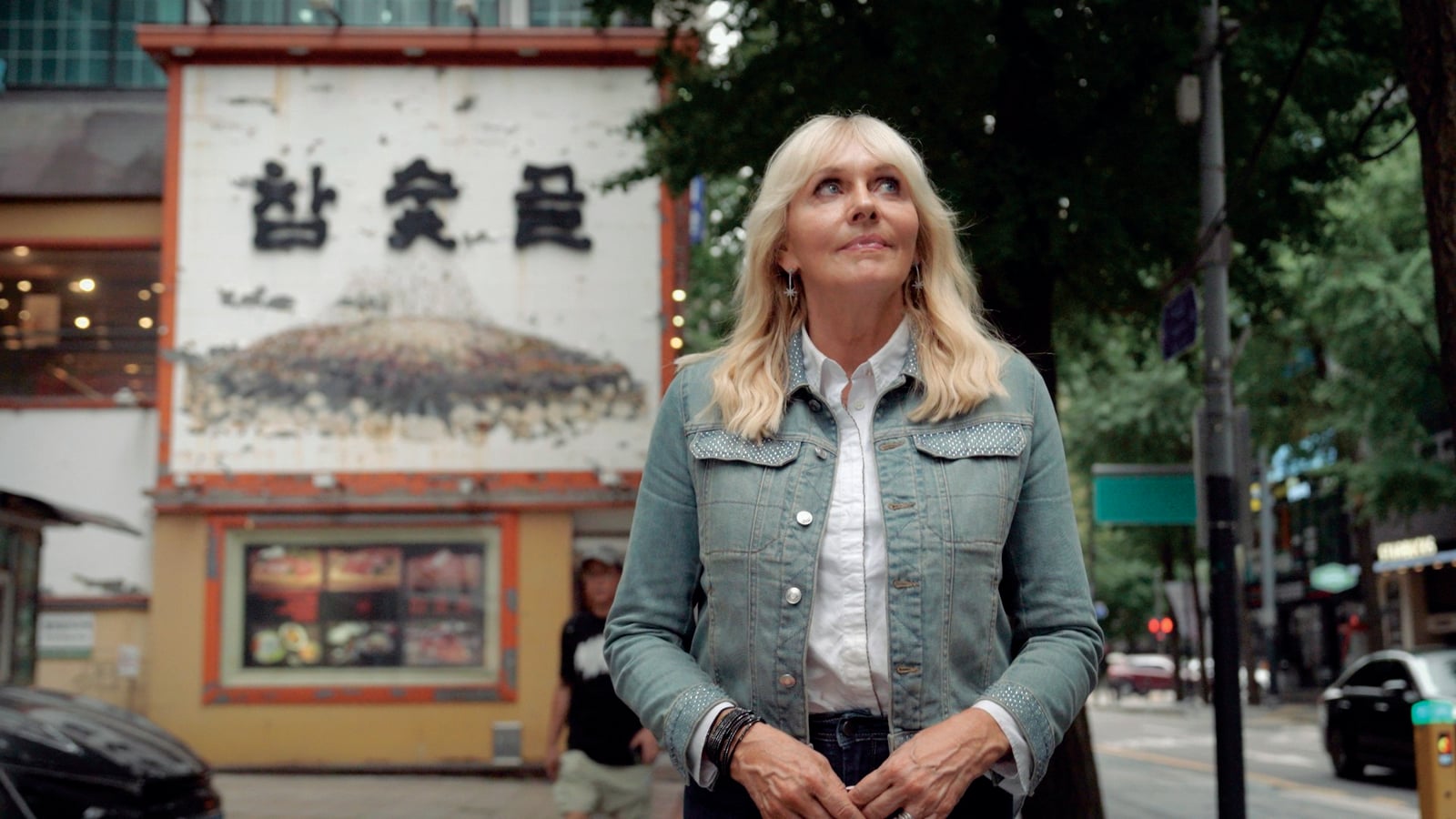
With no intention of slowing down, Miriam O’Callaghan is adding a new documentary to her busy work schedule. In the two-part show, Ireland’s Population Crash, the veteran broadcaster takes a look at the forces creating the country’s birth rate decline.
She talks to Janice Butler about gratitude for her own children, her can-do attitude, and being a force for women in the workplace.
I meet Miriam O’Callaghan at RTÉ TV reception for our chat. She’s bang on time (a little early if anything) and having a friendly conversation with the receptionist when I arrive. She looks immaculate in a velvet waistcoat and blazer, hair in her trademark waves and carrying a Joanne McNally Anxious Preoccupied bag (a must for Irish women nowadays).
“I had something on earlier,” she explains why she’s dressed up. “I’m busy, always busy,” she laughs. While she may have had something on, Miriam always looks well, part of her brand and general outlook on life: if she looks well, she feels well. It’s something she wrote about in her memoir, Life, Work, Everything, published last year.
“I like to look well for myself. I love clothes and glamour. And why not? You can be glamorous and intelligent – they’re not mutually exclusive, as we now know,” she laughs.
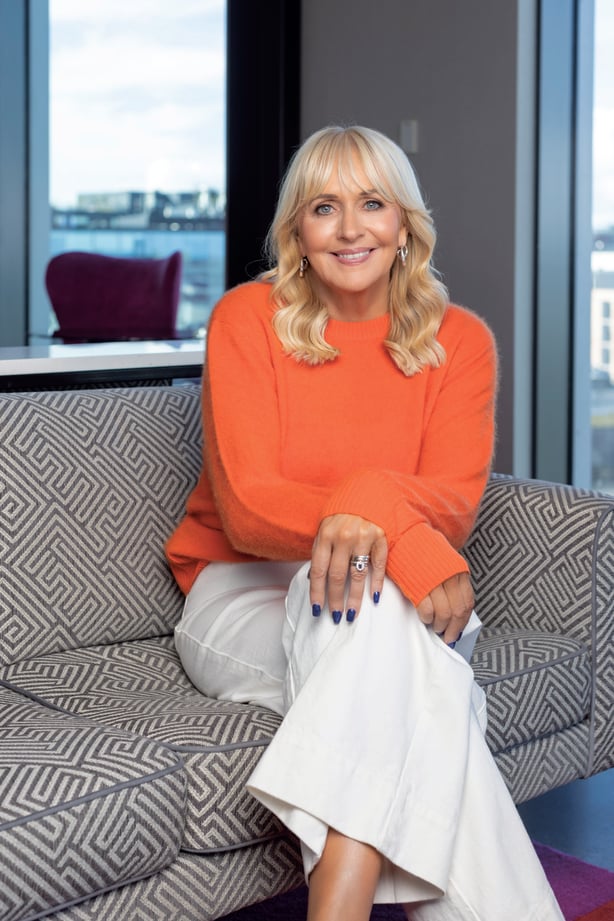
Being in her 60s, she’s regularly asked about retirement, but she’s going nowhere. In fact, she’s as busy as ever with Prime Time, her weekend radio show and now a new documentary, Ireland’s Population Crash, a two-parter that explores the forces behind collapsing birth rates and shifting demographics that are quietly transforming the Ireland we thought we knew.
“I totally respect people who want to retire. I don’t even like the thought of it; the idea of it is like retiring from life,” she laughs. “There are 24 hours in every day, and I live life to the full, always have, always will. I find every day exciting. I’d say I’m very annoying to live with – they don’t say I am, but I’m sure I am.”
The documentary is compelling, showing that Ireland is on the brink of a population crash. With collapsing birth rates and the fastest ageing population in Europe, what are the repercussions for future generations?
As a mother of eight children, Miriam was interested in why people are choosing to have smaller families or no children at all.
“I was interested in the topic of the documentary because a lot of women are choosing not to have children, and I find that fascinating. I suppose as someone who has eight, I think, my goodness, but I understand all the reasons. Having a child, you need a house, and that is really expensive.
“They keep costing a lot of money as they get older and it’s a huge responsibility,” she comments. “So it’s a whole mixture of reasons. It’s not just about money; it’s also lifestyle choices – women are studying really hard, going to college, working in great careers, and it seems mad to a lot of women to stop all that, so they’re putting off motherhood, which I totally understand too.
“I agreed to do the documentary, but I didn’t want to be this zealot saying ‘Everyone should have eight children’. I was fascinated by just meeting people and understanding their choices,” she adds.
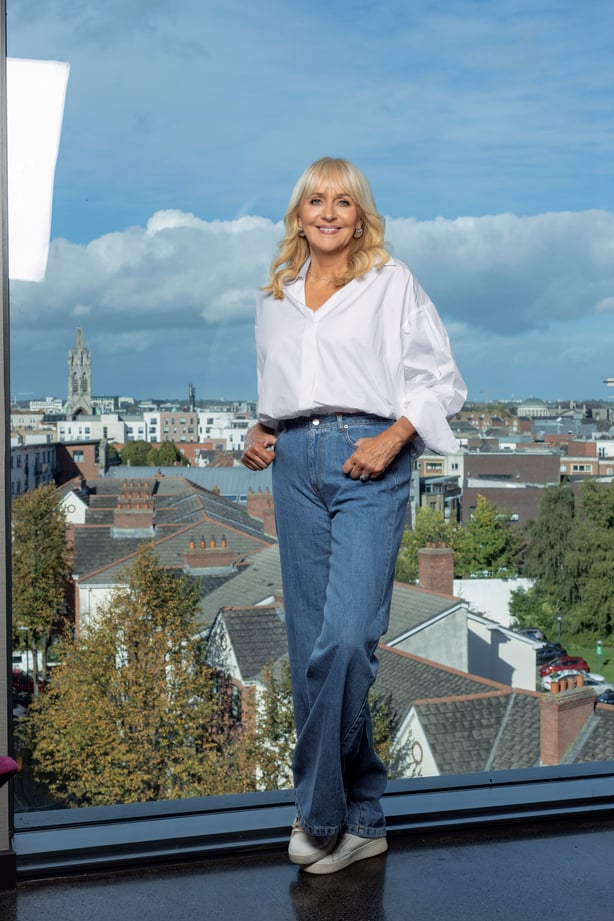
Given her status as Ireland’s most famous mother of eight (four girls with her ex, Tom McGurk and four boys with husband Steve Carson), it’s surprising to learn that Miriam never mapped out her large family. “No, I never thought of it,” she smiles. “I never thought about having even one child. It’s just how I live my life: I never plan anything. I was eight when my brother Jim was born, and there are loads of pictures of me with him on my hip when he was a baby. Apparently, I loved babies,” she adds.
For decades, the media has used the size of her family as a convenient shorthand to define her.
“There was a time when it annoyed me,” she admits. “You’d rarely get a man being introduced by the number of children he had, but now I’m more chilled about it. I don’t mind. I understand that it’s really unusual nowadays to have that many children. Sure, I read it sometimes and go, ‘She must be mad in the head,’ and then I realise it’s me!” she laughs.
Recalling the early days of balancing a high-profile broadcasting career with a chaotic household with young children, she says she needed a serious poker face. “You had to sound and look like you were on top of everything at home and at work. I would come into the studio and there would be a big crisis in the world economy, and all I could think about was nappies or that one of them was sick. But you just had to keep your nerve. Having young children is beautiful, but it’s exhausting,” she says.
“But I feel like I’ve won the lotto, because I have eight healthy, happy children and there isn’t a morning that I don’t wake up and I’m grateful for that. I think that attitude really helped me over the years,” she adds.
She refers to her children as the “gang”, and that gang is growing now, with partners, and she’s now a grandmother to a four-year-old girl and a two-year-old boy, born to her eldest daughter, Alannah. “It’s a lovely experience for the whole family. All my boys and girls love being aunts and uncles. It’s lovely when you have your children young, and then you’re relatively young when you have your grandchildren. You get the time with them and get to hand them back”, she laughs.
In her career, Miriam has always tried to encourage other women and is often referenced by other female broadcasters for supporting their career and family life ambitions. “There’s always this view that if you’re in the business a long time, you’re going to be threatened by younger, talented women coming along, but I’ve never thought like that. And that’s not me being arrogant. It’s a big space, there’s so much room for everyone, and I love to encourage other women,” she says.
Despite being in the business for almost 40 years (she started her career in UK television as a researcher on ITV’s This Is Your Life before joining the BBC as a producer in 1987), Miriam is still fiercely determined and ambitious. Her career independence took centre stage when her brother, Jim O’Callaghan, began his political career and subsequently became Minister for Justice in 2025, prompting critics to ask if Miriam should step back from political broadcasting to avoid a conflict of interest. Her response, which she addresses in her book, remains uncompromising.
“I have two paragraphs in the book about that and it’s a really important point about the patriarchy,” she answers. “I worked my butt off from the age of 16, when I went to university as a law student, right up until today in my mid-60s. I’ve always worked incredibly hard. And the idea that a man, any man, no matter who it is – and I love my brother – would come along and his career is more important than mine? No way. The patriarchy is dead,” she says vehemently. “It doesn’t mean I don’t adore my brother, but this is my career and I’ve worked so hard at it.”
Currently pulling double duty on our screens and airwaves, Miriam remains deeply fulfilled by her work. “I still love Prime Time. Sometimes it can be very serious, but when it’s good, it’s great. And I love the radio show. It’s the fifth most listened-to radio show in Ireland, and I’m delighted about that. It’s a lovely show where you get proper chats with people about their lives.”
Some of those chats, however, have tested her decades of experience. Most notably, her interview with Ryan Tubridy earlier this year regarding the RTÉ payments controversy was a challenge. “It was a difficult one, if I’m honest,” she reflects. “Because I wanted to be very fair to him, but I also wanted to be really fair to the staff here. I wanted to do well by both, to represent the views of some of the staff who felt strongly about what happened, and be fair to Ryan. I think I handled it well, but it was difficult,” she adds.
Key to Miriam’s longevity is her commitment to staying positive, a tool she developed during a vulnerable time in her youth when she battled an eating disorder. “When I spoke about the eating disorder I had as a teen in my book, a lot of young women came up to me and said they appreciated me sharing my story and the fact that I overcame it.”
Her resilience is rooted in daily practice. “Whenever I felt tired, I would turn things on their head and say, ‘I’m so lucky,’ and that does work. I was practising gratitude before people thought it was cool,” she laughs.
With a hit radio show, a flagship current affairs programme, a new documentary, and whispers of a new book on the horizon (“It won’t be another memoir, but people are interested in how I live my life and how I’m so positive, so something along those lines,” she teases), Miriam is operating at the peak of her powers. Ireland’s demographics may be changing rapidly, but she isn’t slowing down for anyone.