
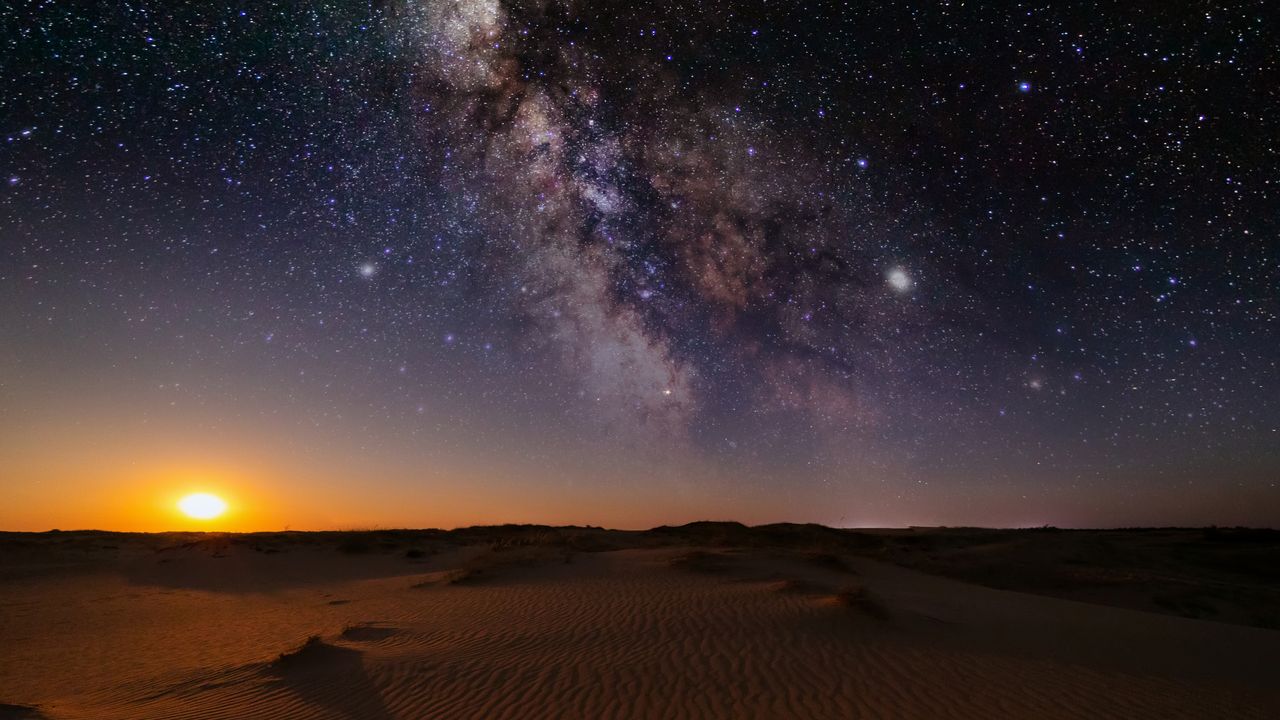
But first… what causes a meteor shower?
A shooting star can begin as about as large as a grain of sand, or a pea. Shed by a comet and left travelling around the Sun, that small piece of debris becomes visible to us only when it enters Earth’s atmosphere. At enormous speed, it heats up and disintegrates, producing a streak of light that can briefly outshine much larger, more distant objects in the sky. That streak is a meteor. Any fragment that survives to reach the ground is a meteorite.
Meteor showers give these otherwise scattered encounters a seasonal rhythm. Earth crosses particular trails of debris at roughly the same point in its orbit each year, bringing familiar showers back to our skies. A widely dispersed trail can take weeks to pass through; denser concentrations produce the stronger activity described as a shower’s peak. This is why there is usually some flexibility around the date in your calendar.
The names offer a clue to what we see from the ground. Trace the Leonids’ streaks backwards across the sky and they appear to lead towards Leo; the Taurids’ trails lead towards Taurus. Astronomers call this apparent starting point the radiant. The constellations serve as distant markers, while the comet debris responsible for the meteors is within our own solar system.
When do November’s meteor showers peak in the UAE?
November’s three main meteor showers reach their strongest activity over the first half of the month and into its third week. The Southern Taurids peak around 5 November, followed by the Northern Taurids around 12 November. The Leonids’ regular maximum is predicted for approximately 3.45am UAE time on 18 November, making the night of 17–18 November the one to plan around.
A peak marks the period when Earth encounters a richer concentration of debris, in comparison to the beginning or end of a shower. Meteors can appear on either side of these dates, and the Taurids have particularly broad maxima. If the forecast is poor on peak night, a neighbouring night may offer a clearer view.
The best observing hours also differ. For the Taurids, aim for late evening into the early hours, particularly around midnight. For the Leonids, favour the hours after midnight and before dawn on 18 November, when Leo climbs higher and the moon has set. In Dubai, moonset is expected at approximately 12.14am, leaving several hours of darker sky ahead of the predicted maximum.
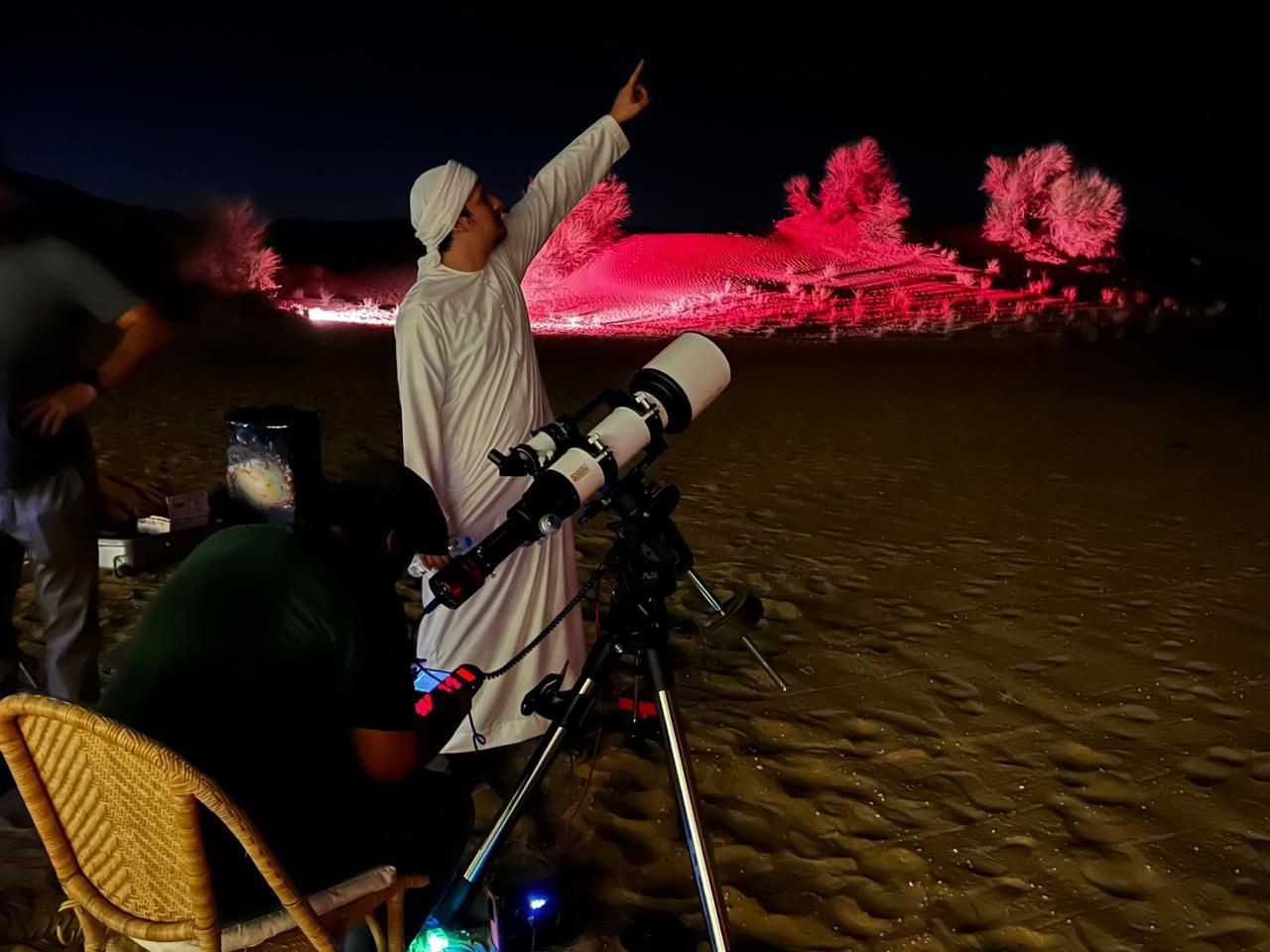
Dubai Astronomy GroupCourtesy Dubai Astronomy Group