
 7 min read
Chia seed water is a TikTok darling thanks to how easy it makes reaching your daily fiber goals. But despite all the hype surrounding it, chia seed water isn’t a new thing—some dietitians have been fans for years.
“I recommend this to patients and clients a lot,” says Jessica Cording, R.D., C.D.N., author of The Little Book of Game-Changers. “I drink it too, especially when I travel.”
But for all of the attention surrounding chia seed water, this drink isn’t perfect—or even for everyone. While all that fiber is a major perk for some, it can be overwhelming for others. And there are some potential risks and side effects, including medication interactions, to be aware of before you just start gulping down this buzzy beverage.
With that in mind, here’s what dietitians want you to know about chia seed water, plus how to actually make it.
Meet the experts: Jessica Cording, R.D., C.D.N., is the author of The Little Book of Game-Changers; Lindsay Malone, R.D.N., M.S., is an instructor in the Department of Nutrition at the School of Medicine, Case Western Reserve University; Sonya Angelone, Ph.D., R.D.N., a nutritionist and registered dietitian based in San Francisco; Keri Gans, R.D., author of The Small Change Diet.
What is chia seed water and how does it stack up nutritionally?
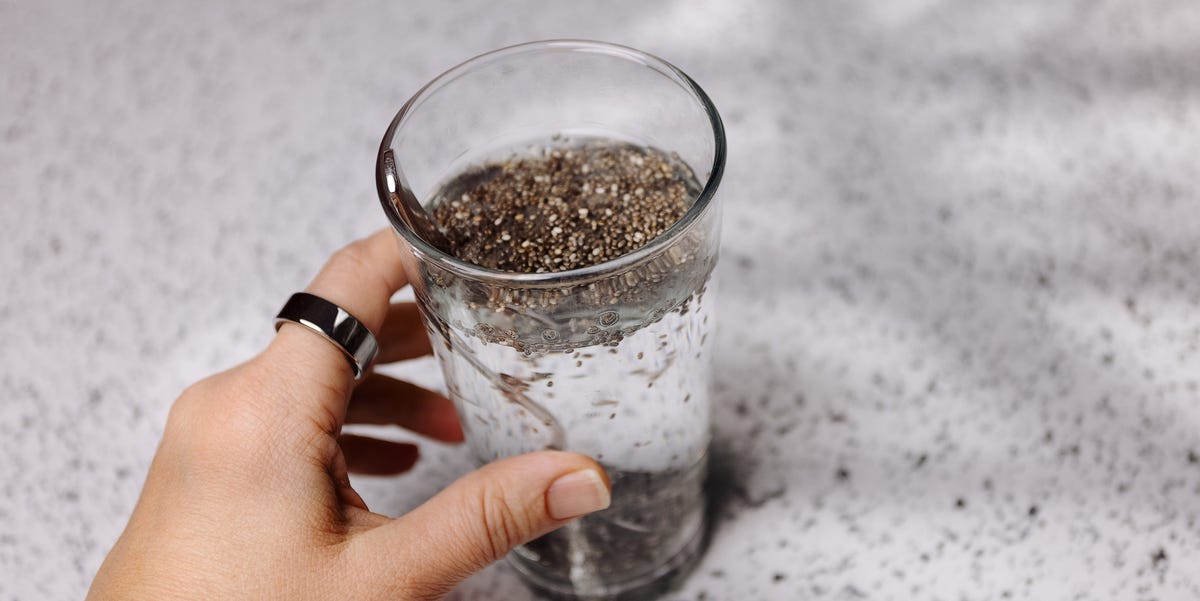
At baseline, chia seed water is just chia seeds mixed with water and given some time to settle into a slightly gelatinous concoction.
For such an easy drink to make, it packs a big nutritional punch. Here’s an exact nutritional breakdown of chia seed water with a one-ounce serving (2.5 tablespoons) of chia seeds, per the United States Department of Agriculture:
Calories: 138Protein: 4.7 gramsFat: 8.7 gramsFiber: 9.8 gramsCarbohydrates: 11.9 grams
Fiber is a big nutrient in chia seed water, and usually the main reason why people drink it. But there’s more to this concoction’s health benefits: Chia seeds offer plant-based omega-3 fatty acids, a serving of calcium equal to a small glass of milk, and enough potassium to rival that of a small banana, says Sonya Angelone, Ph.D., R.D.N., a registered dietitian based in San Francisco.
“They also contain antioxidants, including chlorogenic acid, caffeic acid, and quercetin, which help protect cells from oxidative damage,” says Keri Gans, R.D., author of The Small Change Diet. How much you get of all this good stuff varies, though, depending on the amount of the main (only!) ingredient—chia seeds—you add to your water, she adds.
Benefits of chia seed water you should know
There are a few reasons to consider adding chia seed water to your routine.
It’s a convenient source of fiber
Most Americans don’t get the recommended 25+ grams of fiber a day, but chia seeds provide an easy way to bridge that gap. “I’m most likely to recommend chia seed water if somebody is trying to boost their fiber intake,” Cording says. “For some, it’s more convenient to have fiber in a liquid form.” Cording points out that chia seed water is especially helpful when you’re traveling and it’s harder to eat healthy. “It’s a convenient way to get in some extra fiber,” Cording says. And, it’s the fiber content that is primarily at play in many of chia seed water’s other potential health benefits including…
It can help keep you regular.
This is a big perk that keeps floating around on social media, and some dietitians say it’s legit. “One of the things I love about chia seeds is their ability to gel in liquid,” says Lindsay Malone, R.D.N., M.S., instructor in the department of nutrition at the School of Medicine, Case Western Reserve University. “Because they are high in fiber and absorb many times their own weight in water, they are a great bowel regulator.”
Now, if you’re dealing with chronic digestive issues, it’s always a good idea to check in with your doctor or registered dietitian for more personalized advice that may or may not involve fibrous foods like chia seeds. That said, whether you experience occasional constipation or looser stool, chia seeds may be able to help regulate things, Malone says. (Just make sure you drink plenty of water—in addition to the chia seed water—to avoid dehydration, which could actually cause constipation, Malone says.)
Cording adds that there are people who might find themselves running to the bathroom in 30 minutes after they drink this, but others won’t have that extreme effect. “Each person’s digestion is really unique,” she says.
It may support blood sugar management.
The fiber in chia seed water can help to reduce blood sugar spikes, Malone says, because they can help slow down digestion. When you consistently have adequate amounts of fiber in your diet, your blood sugar will also be more consistent over time.
Blood sugar spikes can cause fluctuations in energy levels and food cravings, Malone adds. So, filling up on chia seed water can also help keep your mood stable, your energy levels consistent, and tamp down on those cravings.
It can help you feel full.
Chia seed water isn’t meant to be a meal replacement, but it’s heartier than your average drink. (Again, it contains 138 calories, 8.7 grams of fat, which is primarily polyunsaturated, and almost 10 grams of fiber.)
So it’s no surprise that this drink can help fill you up when you’re between meals, Cording says. That’s why she will usually have chia seed water as a snack while traveling if food isn’t readily available. “The fiber and fluid is magic together,” Cording says.

Add Prevention as a preferred source in your Google search results.
Use your Google account to add this to your settings.

Add to Google settings
It supports hydration.
Chia seed water still contains, well, water, so it ultimately contributes to your overall daily fluid intake to help you reach your hydration goals, Gans says. When chia seeds are added to water, the seeds simply absorb some of the liquid to form a gel-like consistency, she explains. That water doesn’t evaporate—it simply takes on a different form, Gans explains.
“That doesn’t prevent your body from using the water,” she says. So the amount of hydration you get from chia seed water ultimately depends on how much H2O you add to it.
How to DIY chia seed water
This drink is easy to make. Just add one to 2.5 tablespoons of chia seeds to eight ounces of chilled or room temp water. (Pro tip: If you’re not used to consuming a lot of fiber, start on the low end and work your way up.) Stir the mixture and let it sit for about five minutes so the seeds soak up the water and form a gel, Malone says. (Don’t skip the soaking step—dry chia seeds can be a choking hazard!) Then, drink it up.
“It doesn’t have a strong taste,” Cording says. However, she says you can also add a squeeze of citrus for extra flavor if you prefer.
If you’re not sure how chia seed water will affect you, she suggests testing it out when there’s a bathroom close by, just to be safe. “I don’t recommend trying it out for the first time on an eight-hour car trip,” she says.
Other ways to use your chia seeds
Dietitians rave about chia seed pudding (which is usually made by combining chia seeds and milk). “But you can also add chia seeds to smoothies and oatmeal,” Malone says. Cording says chia seeds are “great in yogurt,” too.
The texture of chia seeds isn’t for everyone, but Malone says you can use a high-speed blender or coffee grinder to break down the seeds before soaking them, if you prefer.
Potential risks and side effects of chia seed water
While chia seed water is a great way to get your fiber fix, it’s not perfect.
For starters, there’s a risk of bloating and gas if you drink too much chia seed water, especially if your fiber intake has been low in the past. “Whenever you increase fiber, you need to increase it gradually,” Malone says.
Since chia seeds absorb liquid, constipation is also a risk. That’s why Malone reiterates the importance of making sure that you drink plenty of regular water along with your chia seed water to keep things moving.
There’s also a risk of choking if you try to drink chia seeds before they’ve had time to expand. “It’s very important to give those seeds a little time to soak,” Cording says.
If you’re trying to address any nutritional deficiencies, dietitians say it’s important to be aware that chia seed water may interfere with nutrient absorption. “Chia seeds contain phytic acid, a naturally occurring compound that can bind to minerals such as iron, zinc, and calcium, potentially reducing how much the body absorbs,” Gans says. (For that reason, Angelone suggests spacing out your chia seed water from your supplements.)
What’s more, chia seeds can have “mild interactions” with certain medications, Angelone says. “Research has found that chia seeds can help lower blood pressure,” she says. So, if you’re taking blood pressure-lowering medication, it’s important to be aware that chia seeds may lower things even more. (She suggests monitoring yourself for symptoms like dizziness.)
A similar effect can be seen with blood sugar. “The soluble fiber in chia seeds can slow the digestion of carbohydrates, which might help lower blood sugar after a meal containing chia seeds,” Angelone says. “If someone is taking medication to lower their blood sugar, they should monitor the level after meals, especially if they contain a lot of chia seeds.”
If you plan to have a small amount of chia seeds in water here and there, this is unlikely to be an issue. But if you’re thinking of adding chia seed water to your daily routine, and you’re taking any of these medications, Gans recommends checking in with your prescribing doctor, just to be safe.
Finally, if you have an underlying gastrointestinal condition where seeds aren’t recommended, Cording says it’s best to avoid chia seed water.
Bottom line
Chia seed water can be a great way to get more fiber into your life, but Cording says it’s not the only thing you should be doing for your health. “It’s important to eat a wide variety of fiber sources,” she says. “Chia seeds are just one of them.”