
Rabat – Morocco’s government has decided to establish an interministerial committee to monitor price fluctuations and take measures to protect the purchasing power of citizens.
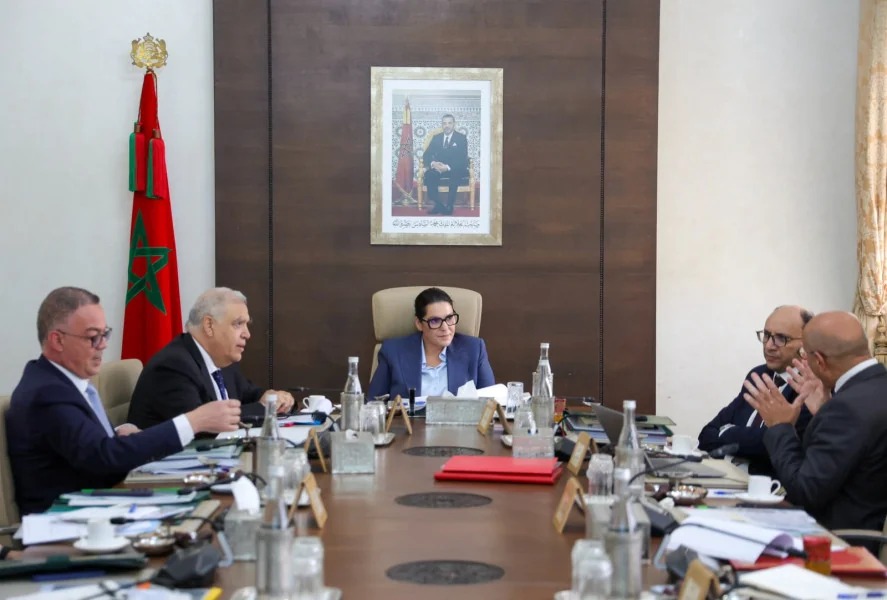
The decision came during a meeting chaired by Head of Government Fatima Ezzahra El Mansouri in Rabat on Tuesday to discuss the national economic situation and the impact of changing prices on Moroccan households.
The committee will bring together the government departments concerned and hold regular meetings to follow price developments and identify the measures needed to protect consumers.
It will pay particular attention to products that experience increased demand during certain periods, especially the holy month of Ramadan, when household spending on food and other essential goods typically rises.
During the meeting, El Mansouri acknowledged the economic pressures facing Moroccan households, particularly low-income and middle-class families.
She stated that protecting purchasing power and maintaining social cohesion are priorities for the government, adding that the authorities are committed to taking practical measures to reduce the impact of rising prices on citizens’ daily lives.
The government also plans to work toward maintaining price stability and ensuring the regular supply of essential goods to the domestic market.
The meeting brought together several government officials, including the Minister of Interior, the Secretary-General of the Government, the Minister of Economy and Finance and Public Performance, the Minister of Agriculture, Fisheries, Rural Development and Water and Forests, the Minister of Industry and Trade, and the Minister of Transport and Logistics.
The decision comes amid continued concerns over the cost of living and household purchasing power. Data from the High Commission for Planning (HCP) show that 76.3% of Moroccan households reported a deterioration in their living standards over the previous 12 months, according to its third-quarter 2026 household confidence survey.
The survey also found that 95.9% of households believed food prices had increased over the same period, while 77.9% expected further increases over the next 12 months. Meanwhile, 39% said they had to borrow money or draw on their savings to cover their expenses.
Public dissatisfaction has also led to several protests in recent years, denouncing rising prices, declining purchasing power, and the government’s social policies.
Consumer protection associations have similarly called for stronger market oversight, accusing some market operators of taking advantage of weak price controls and urging the government to address speculation and unjustified price increases, particularly ahead of Ramadan.