
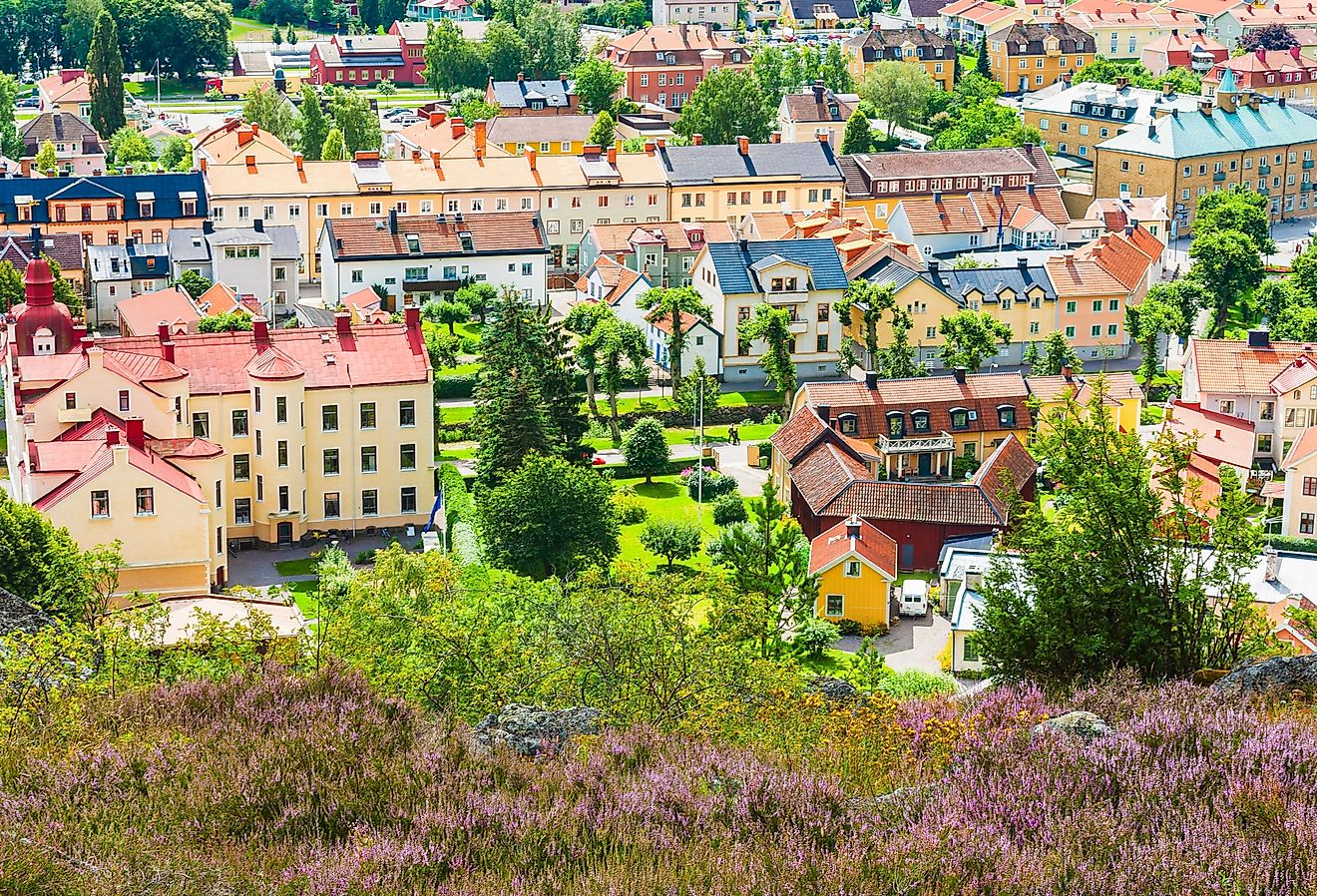
Safety in retirement involves more than low crime. For older adults, access to medical care, pedestrian-friendly surroundings, emergency support, and programs that help residents remain independent can be equally important. Using 2025 reported-crime data from the Swedish National Council for Crime Prevention (Brå), these eight municipalities all recorded rates below the average across Swedish municipalities. Their additional advantages range from round-the-clock emergency departments to fall-prevention visits, personal safety alarms, and community check-in programs.
Vaxholm
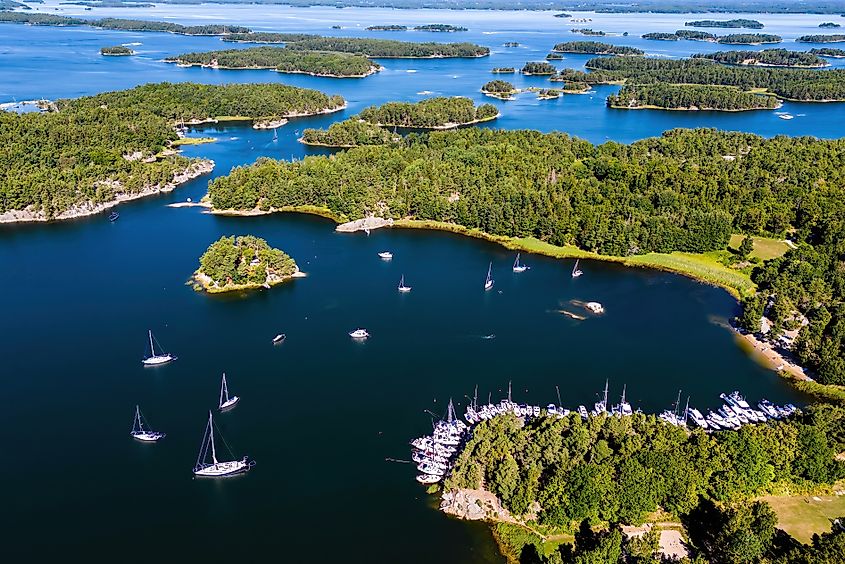 The Stockholm Archipelago, reachable by ferry from Vaxholm.
Vaxholm combines one of Sweden‘s lower reported crime rates with access to the services of the Stockholm region. The municipality recorded 5,653 reported crimes per 100,000 residents in 2025. Its crime profile was reassuring in categories relevant to everyday security as well: reported public-space violence stood at 43 per 100,000 residents, compared with 216 per 100,000 nationally, while residential burglary was 68 per 100,000 residents versus 259 per 100,000 across Sweden.
Medical care is available locally at Familjeläkarna Vaxholm, whose services include home healthcare and a dedicated reception for patients aged 75 and older. More serious hospital care is available through the wider Stockholm regional system. Seniors can spend quieter days strolling the compact harbor and colorful wooden streets, visiting Vaxholm Fortress, or taking one of the ferries that make the Stockholm Archipelago accessible without a car. Eriksö provides another option for waterside walks close to town.
Säter
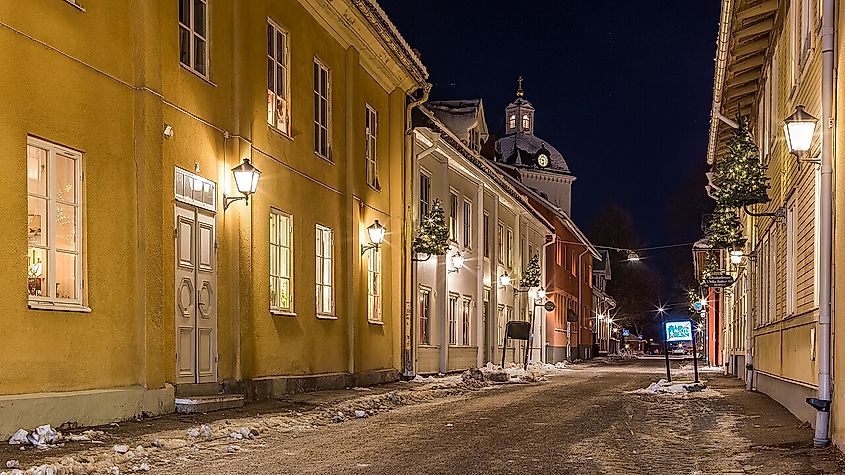 Main Street in Sater, Sweden. Image credit: Calle Eklund, CC BY-SA 4.0, via Wikimedia Commons
With 6,621 reported crimes per 100,000 residents in 2025, Säter was among Sweden’s lower-crime municipalities. Its compact scale also concentrates much of everyday life around a small historic center rather than spreading services and attractions across a larger urban area.
Vårdcentral Säter provides local primary care and rehabilitation, including services intended to maintain functional ability and independent living. For acute hospital treatment, residents can access Falu Lasarett, whose emergency department operates around the clock with specialists in fields including internal medicine, cardiology, surgery, and orthopedics. Closer to home, Säter’s preserved wooden streets provide an easy setting for regular outings. Residents can walk along Storgatan, stop around Rådhustorget, explore the greenery and ravines of Säterdalen, or spend time beside Lake Ljustern.
Söderköping
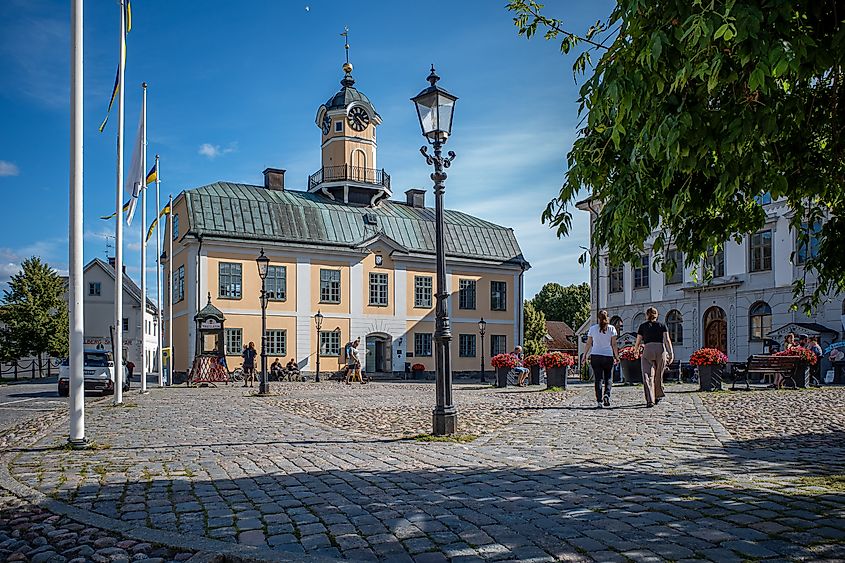 Rådhustorget in Söderköping’s historic center. Editorial credit: Rolf_52 / Shutterstock
Söderköping recorded 6,820 reported crimes per 100,000 residents in 2025, but some of its most useful senior-safety measures address risks that crime statistics cannot capture. Residents aged 75 and older can obtain a personal safety alarm through a simplified process without an individual needs assessment. The alarm service operates around the clock, and applicants are offered a free home visit that includes fall-risk screening and advice on preventing accidents.
Primary healthcare is available locally, while Vrinnevisjukhuset in nearby Norrköping provides hospital services and is connected to Söderköping by direct bus. The town itself lends itself naturally to slower outings. Seniors can walk along the Göta Canal and its harbor, explore the historic center, visit the medieval St. Lawrence Church, or head to Ramunderberget for a more active excursion. The canal makes several of these activities easy to combine into one waterside routine.
Höganäs
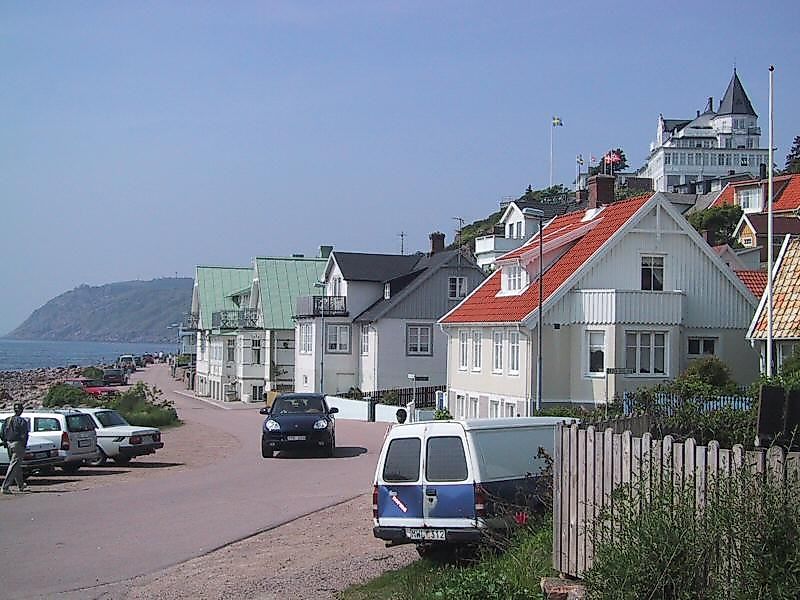 Mölle harbor beneath Kullaberg on the Kullen Peninsula in Höganäs Municipality. Image by Abelson, CC BY 2.5, via Wikimedia Commons.
Höganäs recorded 6,985 reported crimes per 100,000 residents in 2025, while its municipal services address another major source of injuries among older adults: falls. Through the free Fixar-Malte service, seniors can receive help with simple household tasks that might otherwise involve climbing or other fall risks. Residents aged 75 and older can also obtain a personal safety alarm without first undergoing an individual needs assessment.
Municipal rehabilitation services provide further guidance on fall prevention and assistive equipment. When more serious medical care is necessary, Helsingborg’s emergency department operates around the clock. Everyday recreation in Höganäs can be considerably gentler. Residents can walk around the harbor and waterfront, explore the town’s longstanding ceramic tradition, or visit local galleries and shops. More active seniors can venture farther along the Kullen Peninsula toward the coastal landscapes around Kullaberg.
Nora
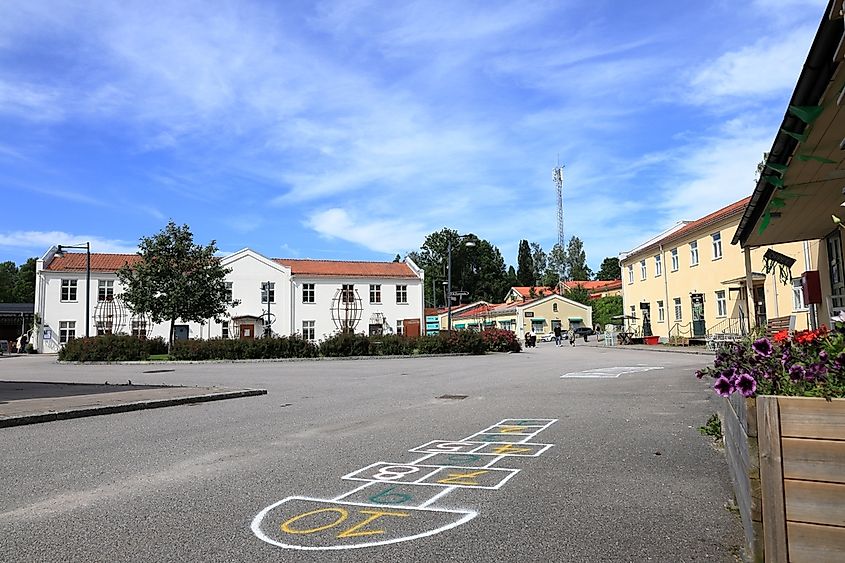 Small Swedish town of Nora. Editorial credit: Martin of Sweden / Shutterstock.com
Nora pairs low reported crime with unusually proactive support for older residents. The municipality recorded 7,316 reported crimes per 100,000 residents in 2025. Residents aged 80 and older who are not already receiving regular municipal assistance can be contacted about available support and issues such as fall prevention. People in that age group can also obtain a personal safety alarm without an individual needs decision, with alarms answered around the clock.
For serious illness or injury, nearby Lindesbergs Lasarett has a 24-hour emergency department. Nora itself provides plenty of reasons to remain active closer to home. Its preserved wooden center makes for leisurely walks between shops and cafés, while the shore of Norasjön provides waterside scenery. Seniors can also explore the historic railway environment or visit Pershyttan, where preserved buildings and mining remains recall the region’s centuries-old iron industry.
Piteå
 Islands in the Gulf of Bothnia, the stretch of coast Piteå looks out on.
Piteå recorded 7,376 reported crimes per 100,000 residents in 2025, but its strongest advantage for senior safety may be having substantial emergency medical infrastructure directly in town. Piteå Hospital’s emergency department operates around the clock, while its emergency-care organization also includes ambulance and intensive-care services.
Traffic safety receives systematic attention as well. When evaluating measures along pedestrian and cycling routes, the municipality considers vehicle speeds, traffic volumes, accident records, and hazardous crossings. Seniors, therefore, have both acute medical capacity and traffic-safety planning close to home. Leisure can begin around historic Rådhustorget before continuing toward the waterfront or Piteå Museum. Cultural events provide an indoor alternative, while the coast around Pite Havsbad offers beaches and views across the Gulf of Bothnia when residents want a longer outdoor excursion.
Hjo
 A flower shop on the square in Hjo’s compact center, via Lasse Johansson / Shutterstock.com
Hjo recorded 7,401 reported crimes per 100,000 residents in 2025, but one of its most distinctive safety measures is designed for older people living independently. The municipality’s free Ringkontakten program provides scheduled weekday telephone check-ins. If a participant does not answer, a designated relative, friend, or neighbor can be contacted to check on the person’s welfare.
Hjo provides additional support at home. Residents aged 70 and older can obtain a personal safety alarm without an individual needs assessment, while a fix-it service assists older residents with household tasks that could otherwise increase fall risk. Local health centers provide primary care, with hospital treatment available elsewhere in the region. Outside the home, the Lake Vättern waterfront creates a natural walking route linking the harbor, town park, and Hjo’s characteristic wooden buildings. Hjo Church and the compact center provide further stops along an everyday outing.
Mora
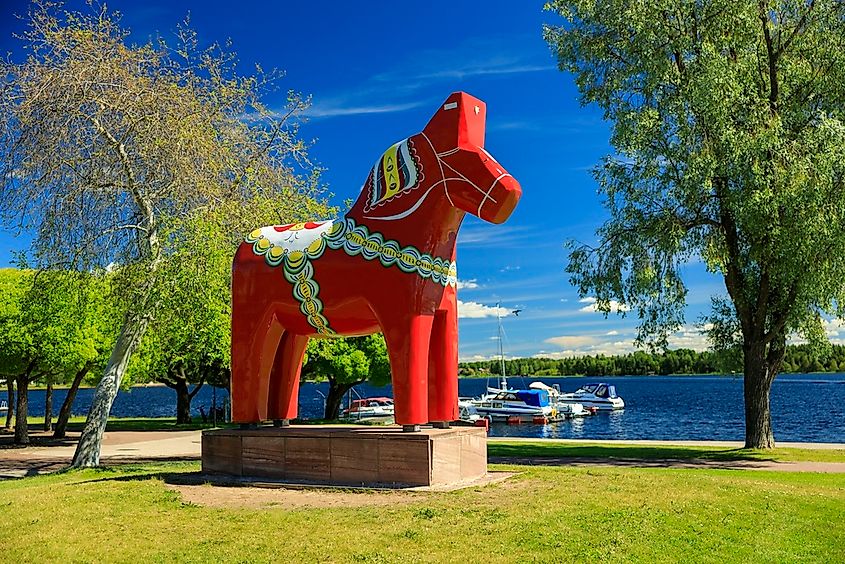 Vibrant Dala horse in Mora, Sweden. Editorial credit: AndreiZu / Shutterstock.com
Mora recorded 8,023 reported crimes per 100,000 residents in 2025, higher than the other towns on this list but still below the average across Swedish municipalities. Its particular strength for senior living is medical access. Mora Lasarett provides acute hospital care directly in town, reducing the need to travel to another municipality for serious illness or injury.
Mora also offers considerable cultural and recreational variety. Seniors can walk along Saxviken beside Lake Siljan, visit the Zorn Museum to see works by Swedish artist Anders Zorn, and tour nearby Zorngården, the home he shared with his wife, Emma. The town is also closely associated with the Vasaloppet, the famous long-distance ski race that finishes in Mora. Together, the waterfront, museums, and central streets provide several ways to remain active without depending on strenuous outdoor recreation.
Safety That Supports Independence
These Swedish towns demonstrate why senior safety extends beyond crime statistics. Vaxholm combines particularly low reported crime with access to the Stockholm region, while Piteå and Mora put acute hospital care directly in town. Söderköping and Höganäs address fall risks, Nora makes emergency alarms easier for older residents to obtain, and Hjo checks directly on seniors living independently. Across all eight, these measures help older residents remain active in their communities while providing additional support when they need it.