
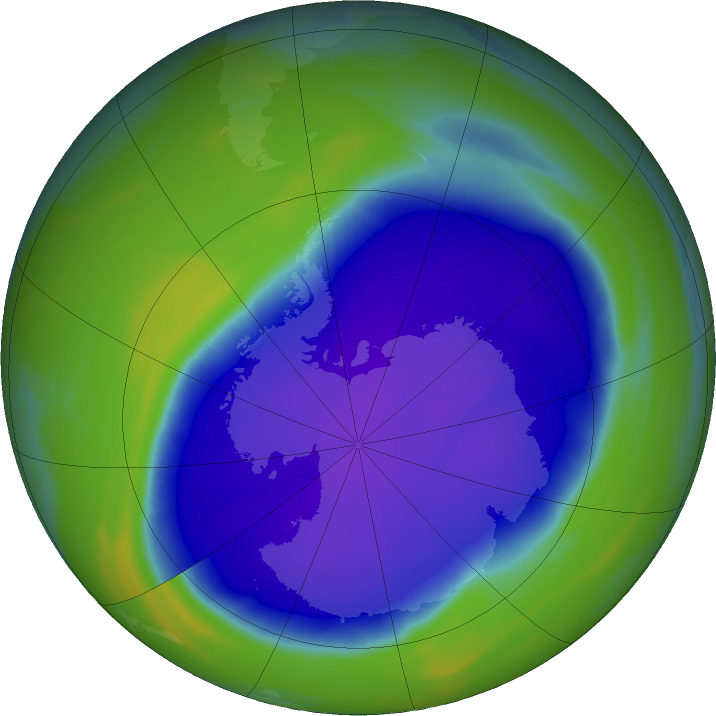
The gash in Earth’s protective sunscreen has logged a worrying new data point—but scientists say the long game still looks good. A joint NOAA-NASA report finds the Antarctic ozone hole in 2026 swelled to its biggest size in 10 years and the seventh-largest since tracking began nearly five decades ago. At its peak on Sept. 18, it spanned about 10.5 million square miles, roughly 90% of the record set in 2000. Researchers blame an unusually strong and long-lived polar vortex that kept frigid air locked over Antarctica and prolonged ozone destruction, ABC News reports.
Even so, they stress that the global phaseout of chlorofluorocarbons is working: The hole likely would have been up to 2 million square miles larger without those curbs, and models still project a mostly healed ozone layer by the 2070s. “The annual ozone hole has been forming later in the season in recent years, which tells us the ozone layer is healing,” said Paul Newman, longtime leader of NASA’s ozone research team at the Goddard Space Flight Center, per a NOAA release.