
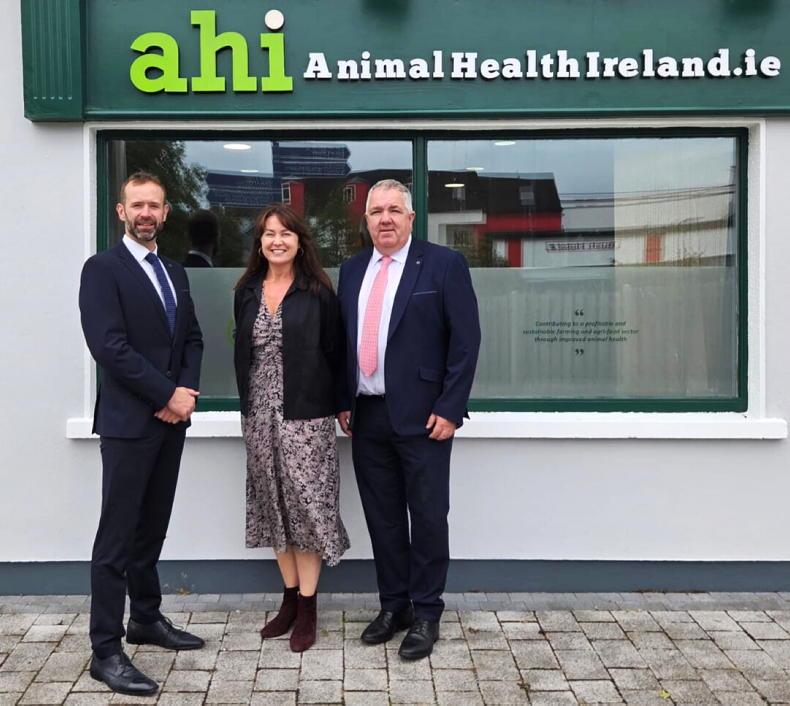
It has been almost 20 years since Animal Health Ireland (AHI) was founded. For many farmers, when you mention AHI they think of the bovine viral diarrhoea (BVD) eradication programme.
The BVD eradication programme has been criticised over the years, with many farmers pointing to the fact that compulsory tagging and BVD testing of calves was envisaged to be completed in a matter of a few years.
This has turned into 14 years, after which testing is still taking place on farms, and Ireland has yet to attain BVD-free status.
That’s not to say the programme hasn’t delivered huge benefits to Irish livestock farms. There has been a 97% reduction in BVD positive herds since 2013. Animal Health Ireland has just launched its 2026-2030 strategy.
The strategy sets out a five-year strategy to improve livestock health and strengthen disease prevention.
It includes plans for a new national sheep health programme and the development of a voluntary IBR control programme.
The latter is of critical importance to our live export trade, with Ireland now lagging behind in terms of implementing an IBR control programme.
The last few years have seen new challenges like bluetongue and Shamonda virus. Animal health also has a critical role to play in meeting our climate change targets.
AHI can’t achieve anything on its own and relies on industry stakeholders and farmers to work together. This can sometimes mean difficult decisions need to be taken with one eye on future challenges and issues arising five to ten years from now.