
//php echo do_shortcode(‘[responsivevoice_button voice=”US English Male” buttontext=”Listen to Post”]’) ?>
Ahead of the World Quantum Festival 2026 in Cannes, France, quantum investors weighed technical bottlenecks, commercial timing, and customer adoption, with healthcare offering a revealing test.
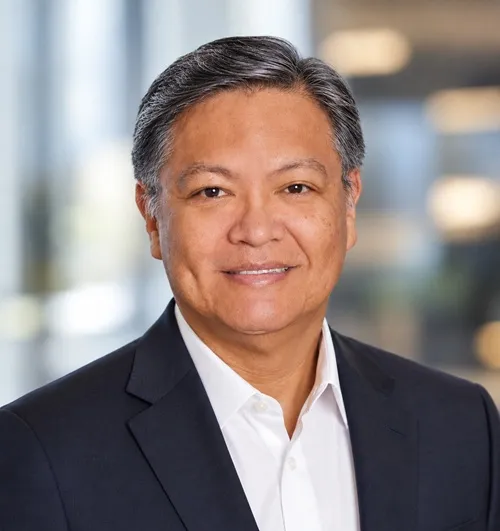 Nardo Manaloto
, managing partner of Qubits Ventures, asked the founder of an unnamed startup for a commercial roadmap. The startup was building a photonic quantum computer and had said it would need a decade to deliver its ultimate product. Manaloto wanted to know what the company could sell along the way.
The startup proposed a sequence beginning with a photon detector, followed by a chip, before progressing toward the computer itself. For Manaloto, each intermediate product must solve a customer problem and have commercial value on its own while advancing the company’s long-term technology roadmap.
“The roadmap also extends to the business side,” he told EE Times.

By Christopher McGrady 11.05.2026

By ABLIC 11.04.2026

By USHIO INC. 11.03.2026
That requirement captures a central challenge in quantum investment. Scientific progress can make a technology promising, but building a valuable company also calls for judgments about customers, financing, and timing.
Finding the bottleneck
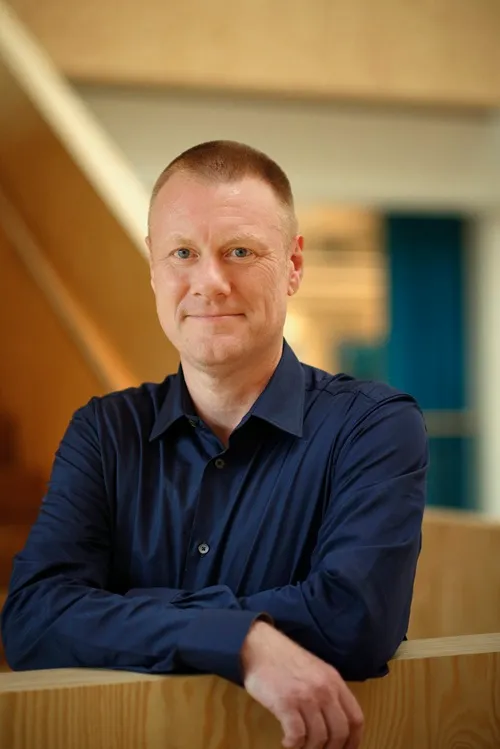 Owen Lozman
, managing partner of Copenhagen-based quantum investment fund 55 North, draws on his experience in semiconductor investing. He looks for startups that can solve an industry bottleneck by the time customers urgently need a solution.
“Generally in deep tech, we’re not looking for, ‘Does the invention work?’ but, ‘Does it solve a problem at the time at which it’s going to be needed by the customer?’” he told EE Times.
In quantum, that can mean helping system developers move from laboratory assemblies to reliable, reproducible equipment. Lozman cited 55 North’s investment in Monarch Quantum as an example: Optical modules that can be manufactured consistently become increasingly important as quantum companies professionalize their supply chains.
Lozman distinguished three types of quantum businesses, each with different commercial challenges and measures of progress:
Component suppliers: They must supply reliable, reproducible equipment as quantum computer builders scale production. Investors can examine revenue growth, production costs, and profitability. Lozman said he favors technologies serving multiple qubit architectures and several potential customers.
Quantum computer developers: They must move from demonstrating individual qubits to building useful, scalable systems. Investors assess their technical differentiation and approach to scaling, including whether they must build manufacturing capacity themselves or can use existing semiconductor infrastructure.
Software and applications companies: They must understand customer problems and prepare solutions for when suitable quantum hardware becomes available. Investors look for evidence of customer willingness to pay and a credible fit between the product and customer needs. Timing matters: Expanding before the hardware is ready can leave a company burning cash without sufficient revenue.
Value before revenue
Early sales provide evidence of demand, but they are not the only way a quantum company can become valuable. “In a lot of deep tech, the revenue is rarely the exit trigger,” Lozman said, referring to what prompts an acquisition or another opportunity for investors to cash out. “Technology is often the exit trigger.”
A system developer may lack a capability that a smaller company has developed. Bringing them together could create substantially more value than either business holds separately. Manaloto likewise sees value in defensible intellectual property, specialized engineering capabilities, strategic partnerships, and technologies that address critical industry bottlenecks—even before substantial revenue arrives.
Some companies pursuing complete quantum systems may ultimately merge or become component suppliers themselves, Lozman said. Their technology could remain important even if their original business model changes.
For applications companies, however, timing creates a particular danger. They need close customer relationships and a clear understanding of product requirements, but expanding before suitable hardware exists can leave them spending heavily without the expected revenue.
“If you’re a year or two early and you’re burning too much cash, it’s very, very difficult to sustain your company,” Lozman said. “Survivability will be a key kind of KPI for a lot of the assets in this space.”
Manaloto’s demand for intermediate products addresses that financing challenge. The objective is to build revenue and company value while progressing toward the final technology. But an intermediate product still needs a customer and a credible market.
Healthcare’s data opportunity
Healthcare is an application area that particularly interests Manaloto. His experience includes work with Kaiser Permanente’s innovation group and technology fund, where he encountered the difficulties of detecting disease earlier and obtaining useful biological information.
He sees opportunities in quantum sensing instruments that could reveal additional information about cellular processes. Unlike applications that depend on future quantum computers, some sensing businesses could commercialize instruments and measurements sooner, he argued.
Qubits Ventures has invested in Probius Bio, a Stanford spinout developing a quantum electrochemical spectroscopy platform. Manaloto described a system that captures molecular vibrational signatures from biological samples and converts those measurements into biochemical datasets that could support biomarker discovery, drug development, and biological research.
He is also evaluating an investment in an unnamed company developing diamond-based quantum sensing technology to investigate free radical activity and oxidative stress within living cells. Such measurements could help researchers and pharmaceutical companies study cellular behavior, disease mechanisms, and drug responses, he said.
For Manaloto, the opportunity extends beyond selling instruments. The greater potential lies in translating biological measurements that have been difficult to obtain into information that researchers, pharmaceutical companies, and eventually healthcare providers can act on. Research applications could provide an initial market before diagnostic or therapeutic uses are established.
“What do I do with that data? How do I translate it? How can pharma use it?” Manaloto said.
Those questions expose the distance between producing an unfamiliar measurement and delivering a useful product. A researcher needs to understand what the measurement reveals about the biological sample. A clinician needs evidence that it informs a decision. The technology must fit the way they already work—or offer enough benefit to persuade them to change their practices.
Integration with existing systems and compliance requirements add further work before a healthcare organization becomes a repeat customer, Manaloto said.
Capturing the benefit
Lozman identified another hurdle: The company selling a sensor may be separated from the organization receiving its greatest economic benefit. “It’s hard making money out of a sensor,” he said. “It’s hard to get people to recover the value if the buyer and the beneficiary are not close in the value chain.”
A measurement could improve a downstream process while leaving the instrument supplier struggling to capture a sufficient share of the benefit. The business model must connect the product’s price to an outcome the customer recognizes and will pay for.
In pharmaceutical research, Lozman sees potential opportunities in instruments that simplify drug discovery, improve toxicology assessment, or support better clinical-trial endpoints.
Qualification can be slow. Drawing on his experience across electronics and healthcare, Lozman noted that customers have strong reasons to protect processes that already work. A new technology must solve a sufficiently important problem to justify its introduction.
The same caution can benefit a company once its product is established. “Once you’re in, it’s very hard to get displaced,” Lozman said.
Both Manaloto and Lozman will attend the World Quantum Cannes Festival on November 17–18, where quantum technology providers, investors, and potential customers will meet to discuss applications and commercialization. For investors, those conversations offer an opportunity to hear how prospective users define their problems—and what they might be willing to pay to solve them.
For quantum investors, that’s where scientific promise must lead: a capability that solves a consequential problem, reaches the market at the right time, and gives its developer a defensible business. The roadmap to that outcome can matter as much as the eventual machine.
Read also:
Quantum Roadmaps Are Finally Meeting Reality
Why Quobly, STMicro, Soitec See Quantum as a Manufacturing Challenge
The Sovereign Quantum Race Starts Before Quantum Advantage
From Qubits to Workflows: Rethinking Quantum Computing
DRUG DISCOVERY, HEALTHCARE, PHARMACEUTICAL, QUANTUM COMPUTING, QUANTUM SENSING, STARTUPS, VENTURE CAPITAL