
The stock market is flashing a rare omen that has historically pointed to a coming recession, Ned Davis Research says.
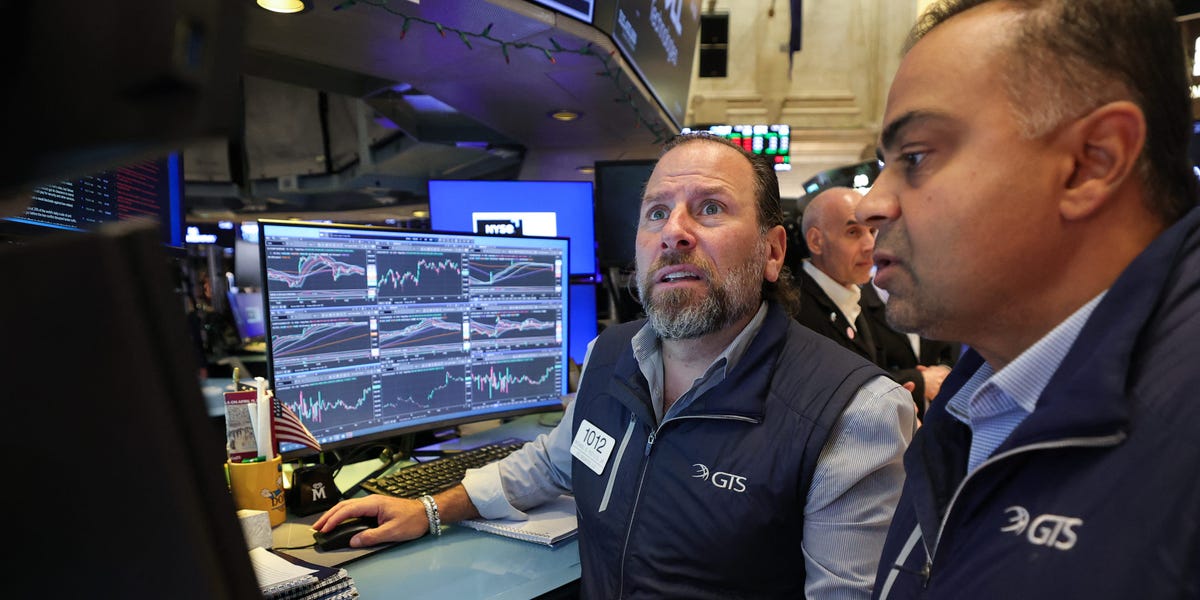
US stocks were down sharply on Thursday, with the Nasdaq 100 plunging more than 4% on as investors fled the AI trade. The Dow, which surged 1,500 points on Wednesday, gave back most of that gain by Thursday morning, while the S&P 500 dropped 3%.
But even before the big post-election move down, another bearish signal was flashing that’s rarely seen: the S&P 500‘s price-to-forward earnings ratio, a valuation metric that measures the price of the S&P 500 relative to the 12-month forward earnings expectations for companies in the index, has dropped sharply, falling by 4.4 points in the year through October, NDR wrote in a note to clients.
The S&P 500’s forward P/E ratio stands around 18.8x, the research firm said on Wednesday. The ratio is down from the 23.2x recorded last year, which marked the index’s most expensive valuation by forward earnings since the pandemic stock boom.
A decline of that magnitude is rare, having only occurred six times since 1983, Ed Clissold, NDR’s chief US strategist, said. In five out of those six instances, the S&P 500 was in an “echo bear market” — a bear market that happens within a few years of the last recession — or the US economy was already in the midst of a recession, Clissold said.
The only exception is when the P/E ratio plunged in 1998. Back then, the economy was expanding, though the P/E measure had plunged as a result of the 1987 stock crash, he added. The US would enter a recession about two years after the signal flashed in 1988.
Moreover, it is the only time the ratio has declined in a year when the S&P 500 has been up for the last 12 months.
Here’s the rundown of every instance the P/E ratio has seen a steep drop:
Stocks have also historically been volatile in years when the P/E ratio drops sharply. Though the index was up over the next year in five out of the six instances, the S&P 500’s average median drawdown in the year that followed was around 18%, implying that stocks tend to see “some pain along the way” after the forward P/E plunges, Clissold wrote.
Want more Business Insider in your news feed?
Add BI in Google so our reporting is easier to find when you’re searching for what matters.
He noted that this year was unusual, given that investors have discounted the likelihood of the AI boom continuing by pushing down the forward P/E ratio “by amounts normally reserved for recessions and/or bear markets.”
“The skepticism could cushion the blow if earnings growth slows next year, but history suggests that if an AI slowdown leads to a recession, the recent drop in the P/E may not prevent significant drawdowns,” he said.
The signal is coming at a sensitive time in the AI trade, with tech stocks seeing exceptional volatility this week as investors take in the results of the midterm elections. The Democratic sweep has been interpreted by some strategists as a nightmare scenario for the AI trade, with worries that Democratic lawmakers could stall data center construction on the rise.
Investors piled into hyperscalers on Wednesday — a sign that some were optimistic about the idea that Big Tech firms could be pushed toward more spending discipline — before dumping AI stocks across the board on Thursday. The market is grappling with several overlapping anxieties, including the risk that a pullback in AI spending could affect the US economy. Traders have also been eager to take profits lately, punishing tech giants at the slightest indication that the business outlook could start to mellow.