
Adrian Kingsley-Hughes/ZDNET
UAG Dryout Phone Recovery Pouch
4.5
/ 5 Very good
Pros & Cons
Built for the job
Safer and more effective than using rice or silica gel beads.
Reusable
Not effective against seawater or chlorinated water.
Can’t fix short circuits.
Ever dropped your phone in water? It’ll give your heart a kickstart for sure, let me tell you. Most people just give it a shake or a rub on your sleeve and hope for the best. But is there a tool specifically designed to help get as much water out of it as possible? No, I’m not talking about a bag of dry rice — a technique that gets way too much coverage for how ineffective and damaging it is — I mean something built for the job.
Also: Can a tracker card battery explode? I tortured mine to find out – and took pictures
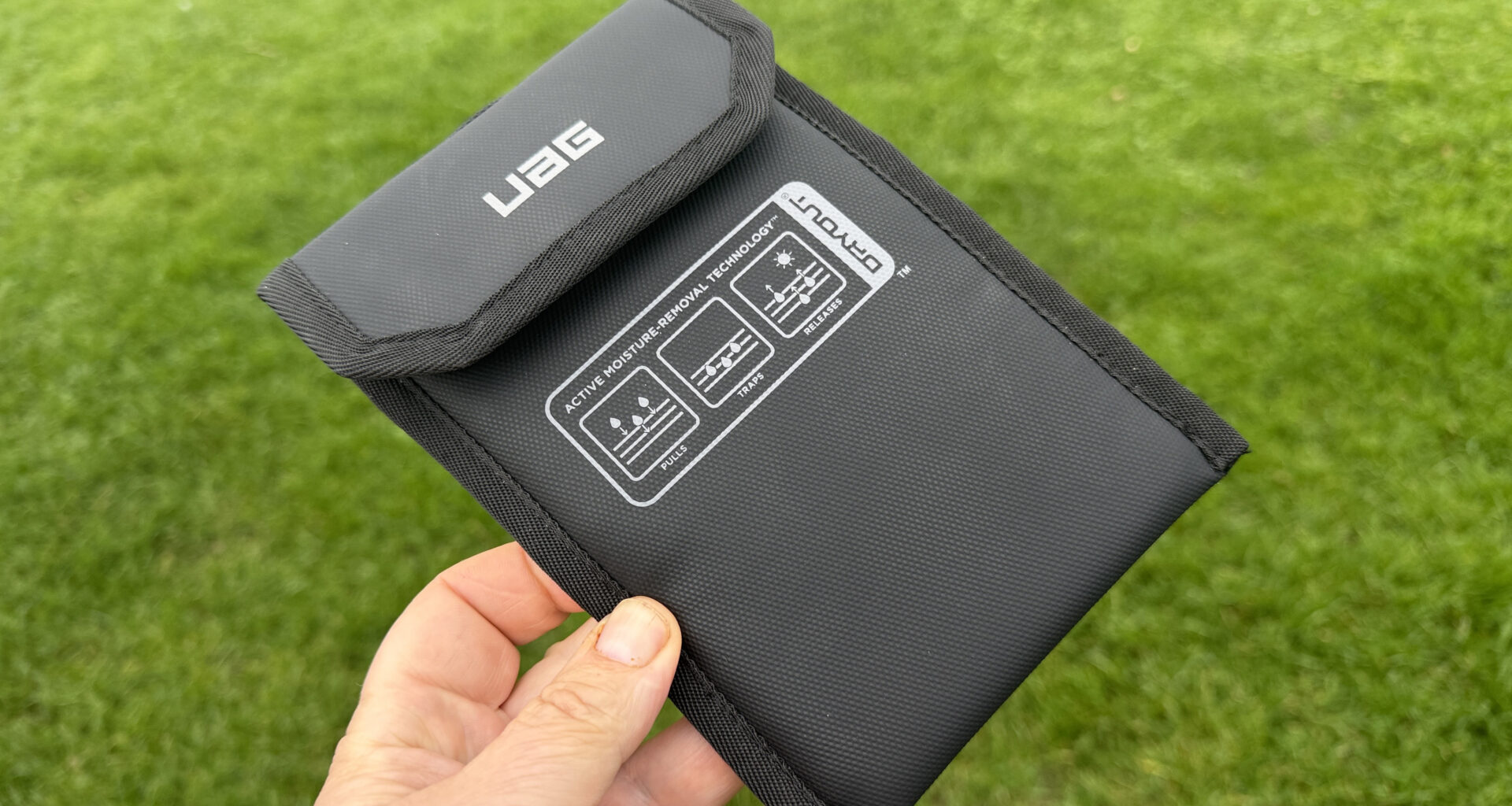
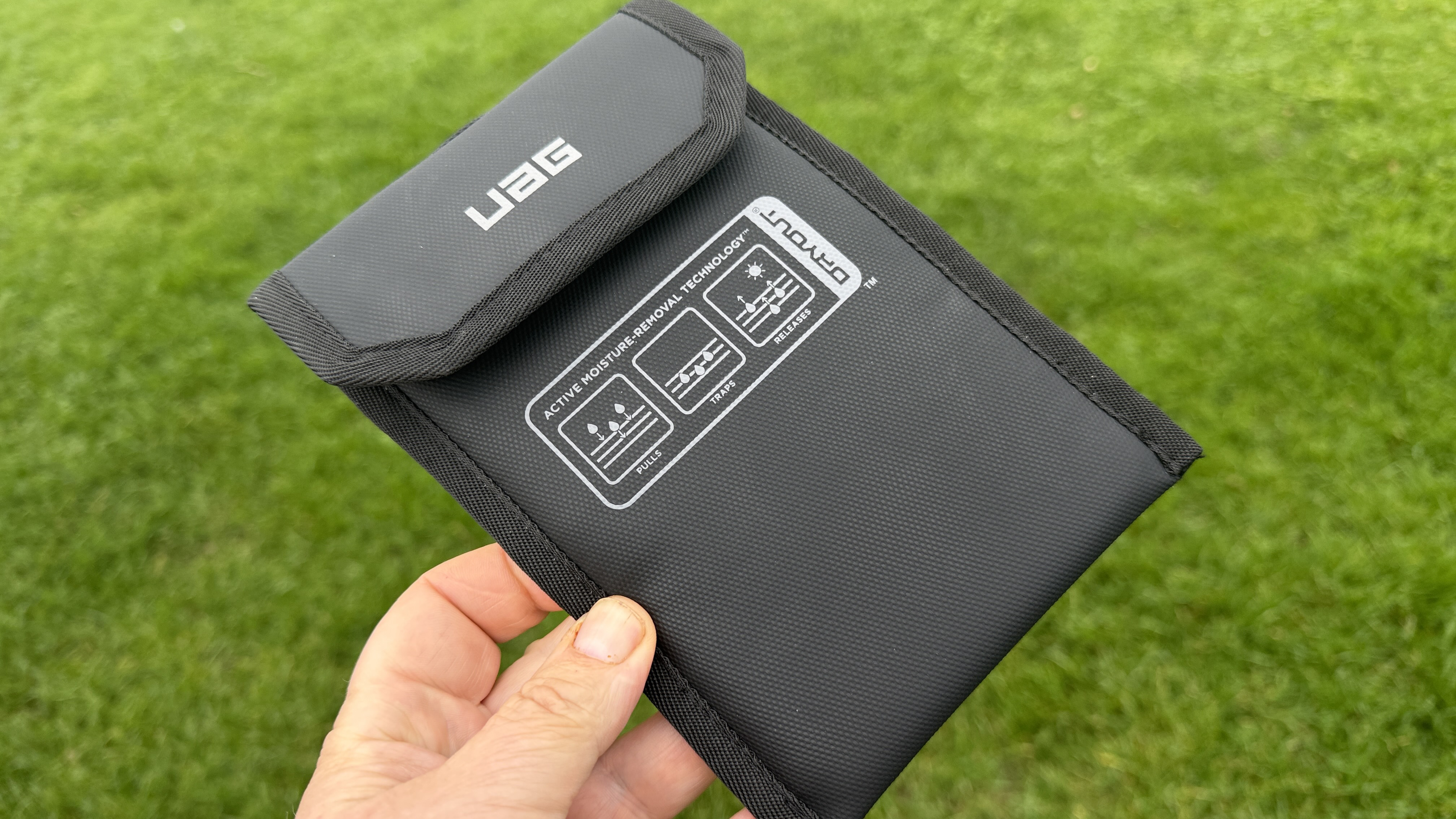
I’m talking about the UAG Dryout Phone Recovery Pouch. It’s a robust, sealable bag made with a very tough, 600D PU-coated polyester outer shell that feels like it could be dragged behind a horse. The stitching is good; there’s a flap that can be secured with hook-and-loop, and a loop on the top for hanging or carrying. Inside is a soft 210D-embossed liner that won’t scratch the most delicate of items.
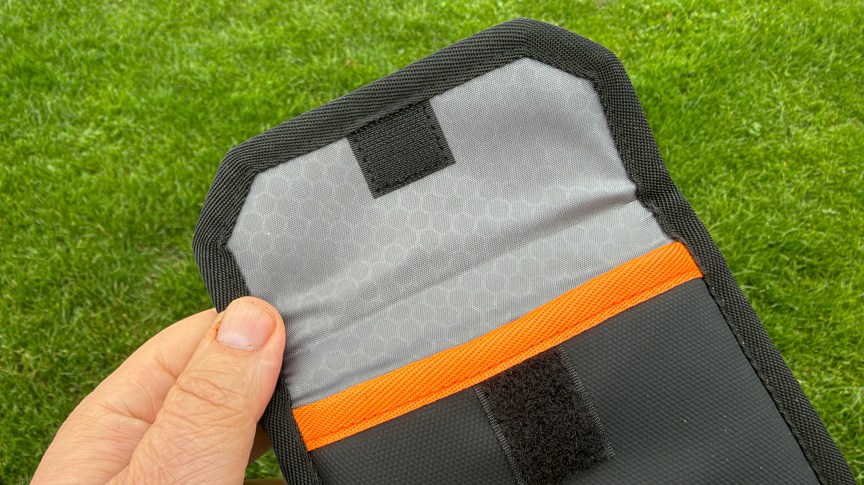 The lining is soft, and this is where the silica gel lives.Adrian Kingsley-Hughes/ZDNET
Between the layers is UAG’s “Dryout Active Moisture-Removal Technology,” which at its heart uses silica gel desiccant to draw moisture from a device and trap it in the core of the bag.
Also: Is your phone truly waterproof? Here’s what the IP rating tells you
There’s no heat required to dry your devices (heat damages electronics), and the bag is completely reusable. You just leave the device in the bag for two to five hours for light water exposure, and between three to 12 hours for especially heavy soakings or immersion.
The bag I’ve been sent for review is the Phone Recovery Pouch, and it measures 6.69 x 3.32 x 0.58 inches, while weighing about two ounces. This is big enough to comfortably take an iPhone 18 Pro Max, and you can also use it to dry out smartwatches, battery packs, key fobs, and other similarly sized electronics.
Built-in silica gel: the secret weapon
The silica gel inside the bag dries the air, creating a pocket of dry air that encourages any water trapped in the device to evaporate. There are no heating elements or batteries, and nothing to plug in. The drying is all carried out at a safe room temperature. But it takes time to collect all the water. So all you do is put the device in the bag and wait.
Also: Are high-end thermal cameras worth it? I tested a $300 model with my iPhone to find out
And wait. And then wait some more.
If you want my number one tip for success with the Dryout bag, it’s patience. The longer you can give it to do its job, the more effective it will be.
Does it work? Yes, but…
In a word, yes. So far I’ve put a few different “wet” things through it, and after a few hours, they’ve come out dry.
It all comes down to physics. The silica gel collects water vapor from the surrounding air, lowering the humidity, which in turn encourages more moisture to continue evaporating from the device until it’s dry. Silica gel is a weird substance, and rather than absorb water, it adsorbs it, with the water molecules clinging to the surface of the very porous beads.
Also: I tested Anker’s air-cooled power bank with a thermal camera – here’s the result
However, there can be a lot more to fixing water damage than getting the water out from inside a device. For getting water out of a charging port or speaker, it’ll work very well, but it’s going to have a tougher time getting water from inside a device because even a badly sealed device (as in it is sealed badly enough to allow water into it in the first place) can be an effective trap for water.
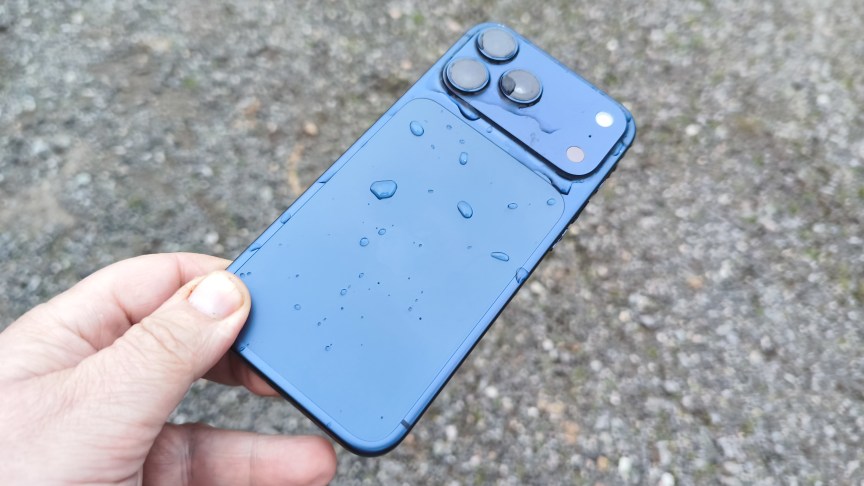 Oh no, I got my iPhone wet! Adrian Kingsley-Hughes/ZDNET
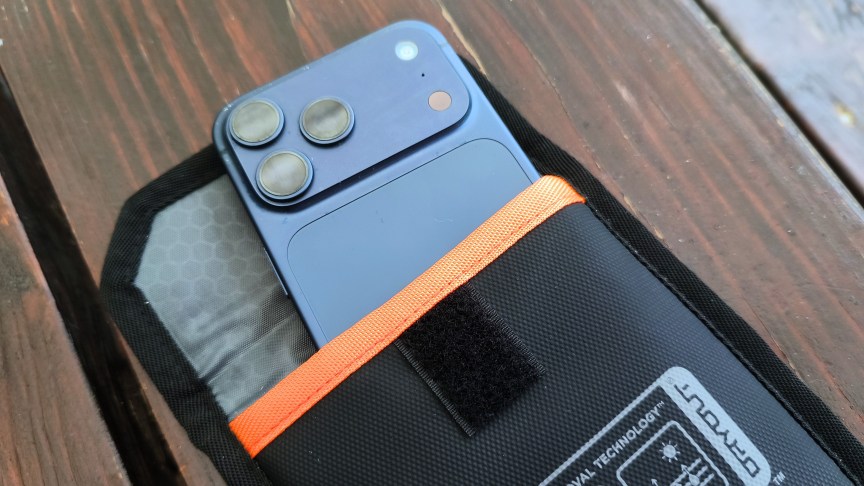 In the bag it goes.
You might not have time to dry your soaked gadget because water can damage electronics in an instant. While pure distilled water is a very poor conductor of electricity, we rarely encounter it in day-to-day life. We deal with puddles, rain, and ponds, and that water can be conductive. If it conducts electricity inside the device to somewhere it shouldn’t be, that’s a short circuit and game over.
The other problem with water is that it has a habit of turning shiny bits of metal into brown, black, and green dust (electronics are very susceptible to the creeping green crusties of corrosion), and while that can take time, any corrosion inside a device is a ticking time bomb.
Also: Don’t waste money on phone storage – try this instead
Your device might not corrode today, tomorrow, or in a month, but there’s a good chance it will eventually, because that’s the nature of mixing water with metals like copper (which is abundant in electronics). And there are far worse things than water from your tap or the stuff that falls from the sky.
Seawater, soda or sugary drinks, and chlorinated pool water are a death sentence for electronics. If they don’t kill the device instantly with a short circuit, the corrosion will get it sooner rather than later. This highlights the biggest weakness of using any method of drying out a soaked gadget that relies solely on evaporation — it leaves nasties like salt and sugar inside the device to cause chaos.
And trust me, it will cause chaos. Something that’s miraculously survived the initial dunking in the sea or a pool is on borrowed time.
Drying out the Dryout bag
You have options. They all start with opening the flap. For the fastest drying, hit it with a blast of warm air from a hairdryer for about half an hour. If that feels like too hands-on a job, you can leave it by a space heater for about three hours, in direct sun for up to 10 hours, or in front of a fan for most of the day.
The only thing that UAG says is not to let it to get hotter than 185°F (85°C). Again, patience is key. It takes time for all that water it collected to leave the bag.
“My phone/earbuds are already waterproof, so I don’t need this”
Wrong!
They were tested to meet a certain level of water resistance. In a lab. When new. Your phone has been rattling around in your pocket for a year, and has been dropped on the floor a few times for good measure. Who knows what the water resistance is like by now.
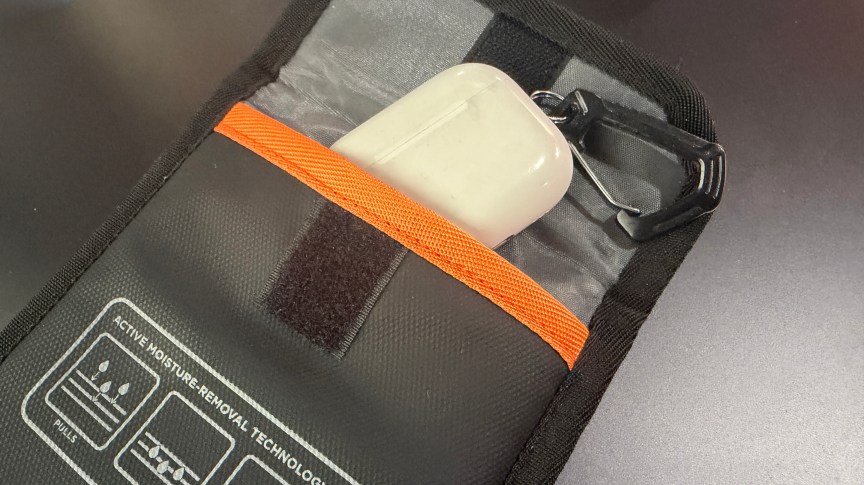 The Dryout bag is perfect for earbuds, too.Adrian Kingsley-Hughes/ZDNET
Also, water can still get into nooks and crevices such as the charging ports and speakers, and while that’s not usually game over, it can be annoying if it takes a few days to dry up (I had a phone that suffered from a soggy charging port for over a week, and it refused to charge up until it finally dried).
Is the Dryout bag worth it?
Yes, but keep your expectations realistic. It’s a great way to dry off surface water, water that’s gotten into a port, or a small amount that’s made its way into a device. I tried it to fix an issue with condensation inside an action camera, and it took a week (much longer than the 12 hours the directions led me to believe), but the trapped vapor seems to be gone.
Also: Why the 16GB Raspberry Pi 5 costs $385 now – and your best alternative options
However, it’s not going to fix something that’s already been damaged by a short circuit, and it’s not going to remove the salt and chlorine that will eventually eat away at anything metallic inside a device. So yes, this is a handy bit of insurance.
What about the rice?
I know what you’re thinking. What about burying the soaked item in rice? Or silica gel? Or pointing a hairdryer at it for an hour?
I’ll keep this brief:
Rice gets inside every crevice, where it can rot. It also isn’t very effective at drying anyway.
Loose silica gel particles get everywhere.
A hairdryer is the perfect way to damage a device with localized heating.
Closing thoughts
The UAG Dryout Phone Recovery Pouch is currently just under $30 on Amazon, and for that price I think it’s worth buying as a “just in case,” especially if you’re prone to getting your devices wet. UAG has a whole line of Dryout bags, ranging from a small earbud pouch to a 16-inch laptop sleeve, a tote bag and a backpack.
While the smaller bags are perfect for emergency dryouts, the bigger bags are suited to keeping things dry in everyday use and pull up any moisture that’s accumulated. I definitely recommend this product. Just be realistic about what you expect from it — it’s effective, but it can’t perform miracles.

Adrian Kingsley-Hughes
Senior Contributing Editor
Adrian Kingsley-Hughes is an internationally published technology author who has devoted over two decades to helping users get the most from technology — whether that be by learning to program, building a PC from a pile of parts, or helping them get the most from their new MP3 player or digital camera. Adrian has authored/co-authored technical books on a variety of topics, ranging from programming to building and maintaining PCs. His most recent books include ‘Build the Ultimate Custom PC’, ‘Beginning Programming’ and ‘The PC Doctor’s Fix It Yourself Guide’. He has also written training manuals that have been used by a number of Fortune 500 companies.
See full bio