
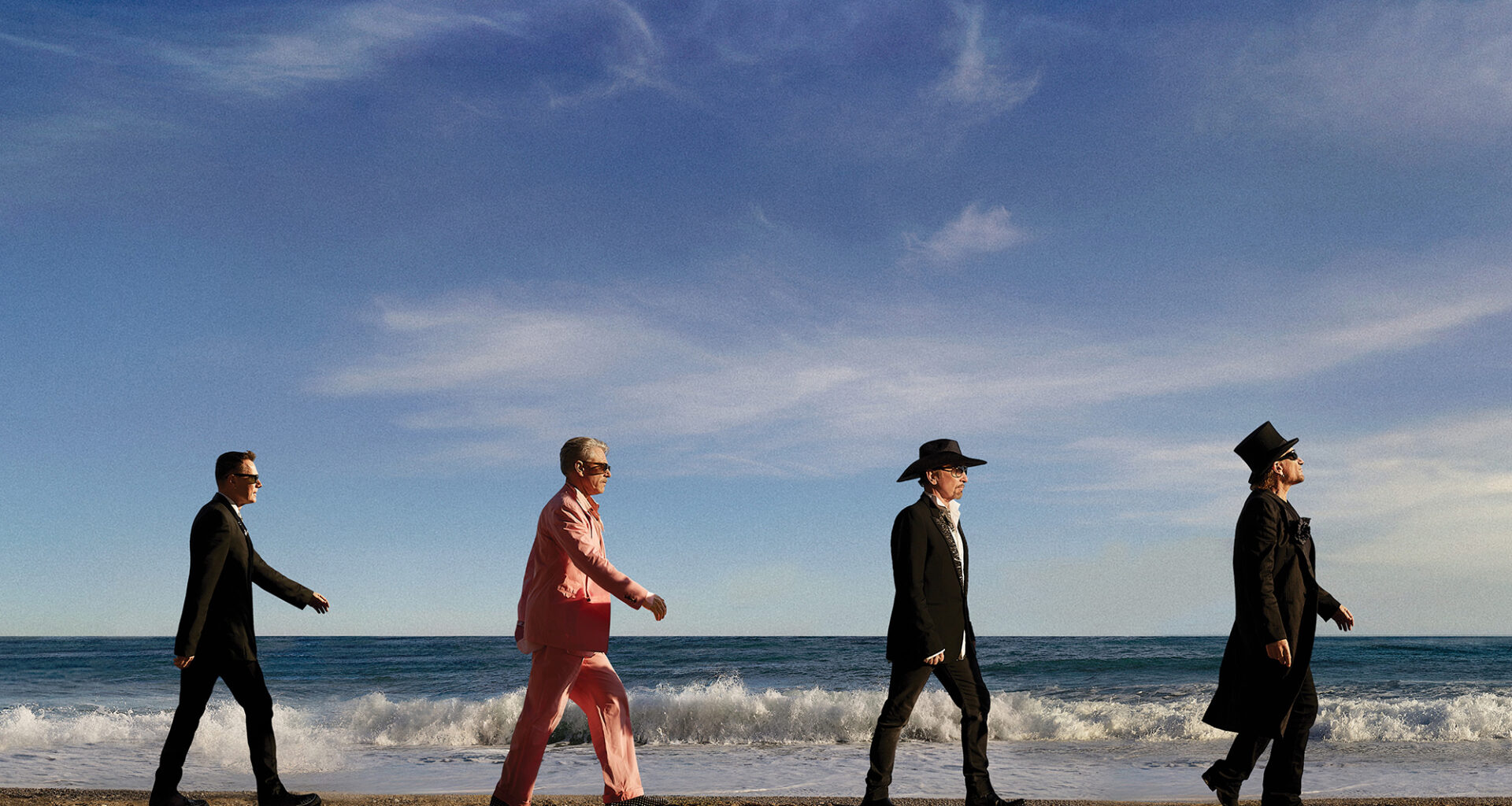
Unbelievably, it has been nine years since U2’s last album of original material, 2017’s Songs of Experience. Since then, there have been books, the Sphere residency and, in 2023, Songs of Surrender, which saw the band re-record and reimagine 40 songs from across their career.
2026 began brightly for U2 with the release of two EPs, Days of Ash and Easter Lily, before attention turned towards their 16th studio album, Carnaval De Luz. Released in the year the band mark 50 years together, the album takes stock of the current human condition while attempting to offer some celebration and encouragement in challenging times. As its title suggests, there are Latin rhythms alongside several new approaches to the band’s familiar sound.
Produced by long-time collaborator Jacknife Lee, Carnaval De Luz also brings familiar creative partners back into the fold. Brian Eno contributes writing, synths and keyboards to several tracks, while Daniel Lanois appears on “Torn”. Rather than settling into one particular version of U2, the record draws on different eras of the band while searching for somewhere new to go.
The album opens with the title track, “Go (Carnaval De Luz)”, and an immediate departure from what might be expected. With Brian Eno contributing synths and keyboards, it plays like techno meeting pop, punctuated by some stellar guitar from The Edge. It announces from the outset that something unexpected is about to be unleashed.
“La Reina” follows with extraordinary distorted guitar married to a gritty glam-rock feel, in some ways reaching back towards U2’s 2010s sound but reinvigorating it for the present. Thematically, the song examines what has happened to our world in the age of social-media stardom, a subject revisited elsewhere on tracks including “Silencio”, “Superficiality” and “If The World Is At War We Better Not Be”.
“Street Of Dreams”, the album’s first single, carries echoes of “Get On Your Boots” from No Line On The Horizon. “The Mirror Maker (Rosalía)” feels to me like a 21st-century relative of “Desire”, propelled by a repeating chorus and a brilliant Adam Clayton bassline.
Despite its title, “If The World Is At War We Better Not Be” isn’t another huge, anthemic U2 song. Instead, Bono delivers an understated vocal as he looks back at the beginnings of the band and considers where that journey has led. I can imagine this becoming one of the album’s standout moments when performed live.
For long-time U2 aficionados, however, it is the second half of Carnaval De Luz where some of the record’s strongest moments emerge.
“The Greatest Show On Earth” opens with a scintillating Edge guitar line before Adam Clayton and Larry Mullen Jr. drive the band forward. Bono occasionally channels something of Nick Cave as he examines the entertainment business and asks what fame ultimately costs. Musically, it combines some of the ennui of late-’90s Pop with the live exuberance of U2 in the 2000s and emerges as the best song on the album.
The Tropicália-infused “Glorify” is a 21st-century gospel track that grows with every listen. “Midnight Sunshine” could almost have appeared on All That You Can’t Leave Behind, although its subject matter is considerably darker. The lyrics ask how we make sense of a world that appears to be falling apart, and what we do when we can neither fix nor fully understand it.
“Can’t Stop Us Now” continues that momentum with a vibrant yet defiant arrangement filled with strings, The Edge’s trademark guitar, Clayton’s magnificent bass and Mullen reminding everyone that he has lost none of his fire behind the drum kit. It is proof that U2 can still create music worthy of their continued presence in the current decade.
Special mention must go to the closing track, “Torn”, a moving duet between Bono and the late Dolly Parton. The song addresses the sadness of family separation and estrangement with considerable tenderness. Beautifully written, performed and produced, it provides a poignant final appearance from Parton and a perfect benediction to an album made by a band that, decades after achieving superstardom, still refuses to stop swinging for the fences.
Carnaval De Luz finds U2 50 years after their formation with the same four members and the same desire to shake things up. The album provides a convincing answer to the question of why they keep doing what they do. They still believe the band is greater than any individual member, that they have something to add to the wider conversation and that they can still surprise listeners with the gifts each of them brings.
Fifty years later, U2 are still chasing the songs they hear ringing in their heads.