
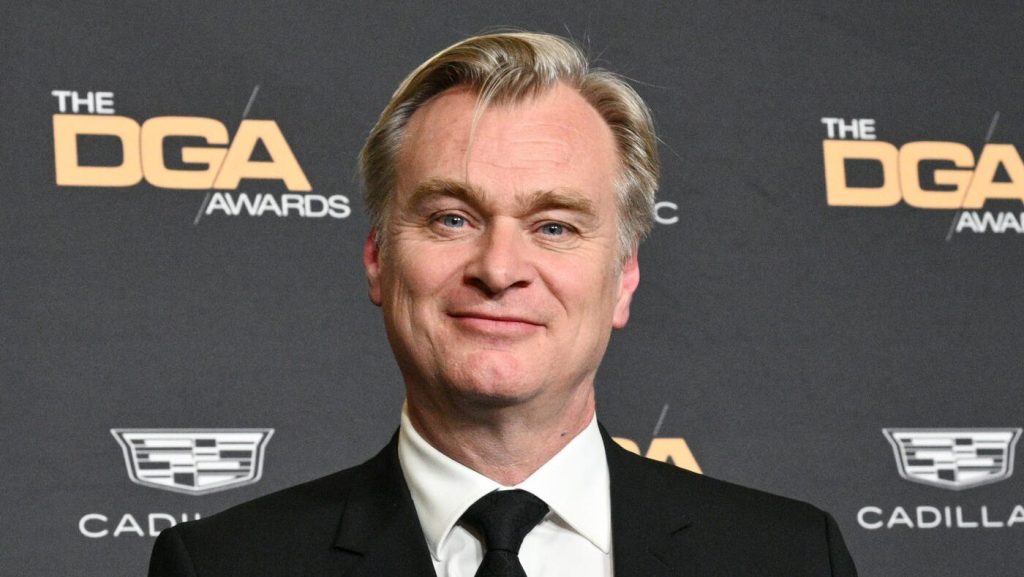
Halfway into his first time as DGA president, Christopher Nolan is holding the studios’ feet to the fire in protecting copyrighted materials from AI.
In a new interview, the 2x Oscar winner explained that it’s “down to the studios” to go after AI recreations of their work, noting that he was “very pleased” his current Academy Award contender The Odyssey contains a legal warning against using the film to train AI data.
“AI is too big a catchall term. It’s describing too many things and it’s being used by companies to absolve themselves of responsibility,” he explained on the Hollywood Insiders podcast. “They sort of want to portray it as this Frankenstein’s monster that can get out of control and can change the world without them having any accountability for it. We have to strongly resist that.”
Nolan added, “There’s already legislation in place that protects people, protects creators, etc. And the fact that they these companies hide behind fair-use provisions, for example, I think longer term that won’t hold up in court. There have already been some significant judgments against it. We’re very focused at the Guild about holding the studios to account for protecting their copyrights. We can’t do that. With very few exceptions in the Guild, we are not the copyright holders of the films that we’ve worked on. It’s down to the studios to do that.
“And I was very pleased to see that the boilerplate at the end of The Odyssey, for the first time, it contains a message saying that this film cannot be ingested and used as training data,” he said.
Following his election as DGA president last September, after serving on the Guild’s Artificial Intelligence Committee, Nolan told Deadline there are “excellent protections” in place against AI, “but that’s not enough.”
“You have to have a voice in how this tool is used moving forward. Also, we like to try and have a voice in, what’s the legal framework?” explained Nolan. “Because we generally aren’t the copyright holders of our work, but our income, our residuals, depends on the appropriate monetization of those copyrights. So we’re constantly in dialogue with the companies about, are you maximizing the value of the work that we’ve created? Because we do benefit from that enormously.”