
Species reduced to fewer than 50 wild individuals can still recover, a study finds, challenging assumptions about their chances of survival.
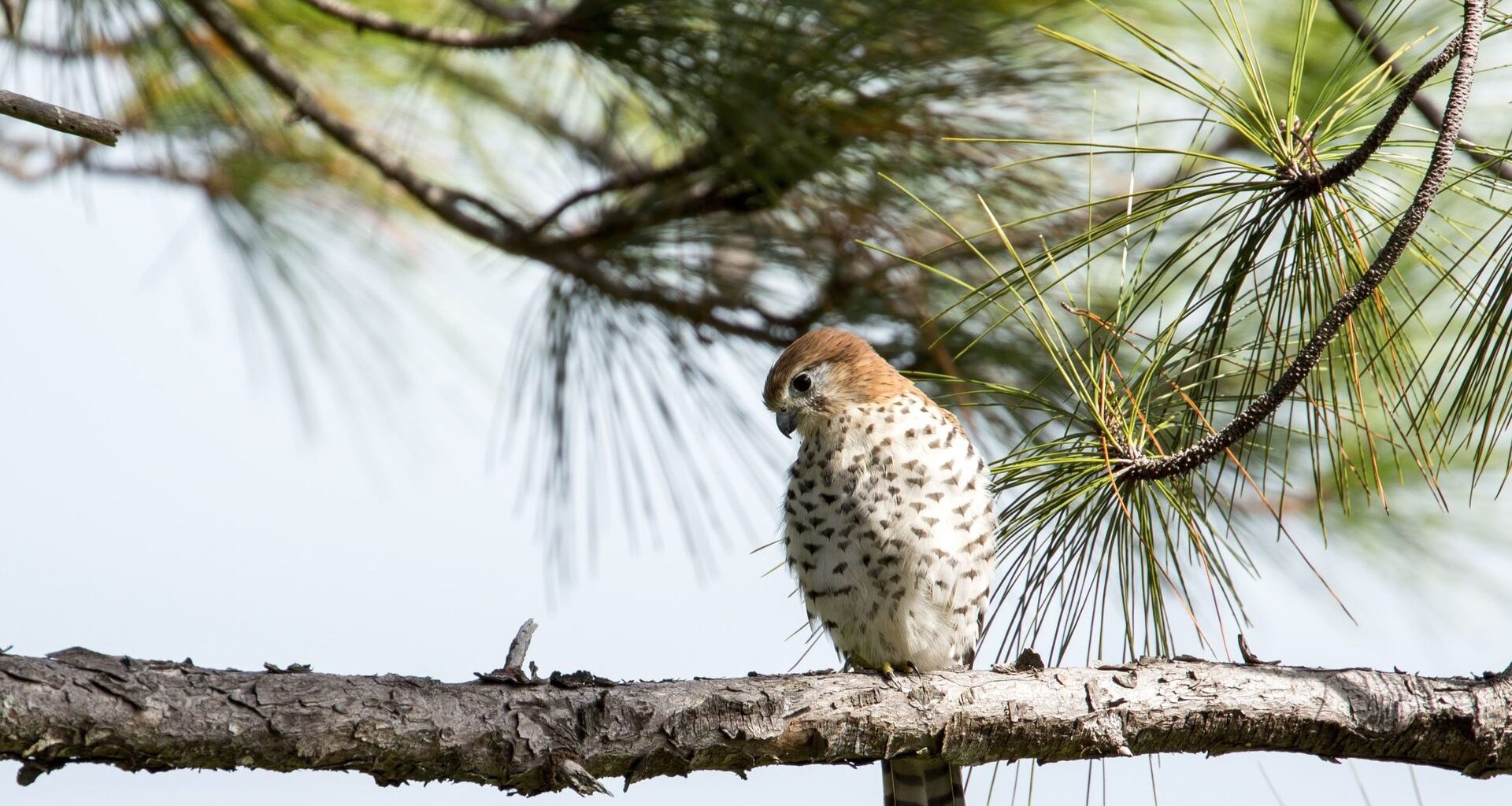
In 1974, the Mauritius kestrel was down to just four known birds in the wild.
Conservation textbooks practically wrote the obituary. Half a century later, the Mauritius kestrel numbers in the hundreds.
A team led by Donal Smith at Monash University, working with researchers from the Zoological Society of London, has now tracked every bird and mammal species that dropped below 50 individuals in the wild at any point since 1950.
The findings deliver an empirically grounded gut punch to one of conservation’s most persistent – and most dangerous – assumptions: that tiny populations are doomed.
The extinction vortex
The theory sounds airtight. When a population gets critically small, bad things compound.
Inbreeding depression. Loss of genetic diversity. Random demographic swings that can wipe out a handful of animals in one bad season.
Biologists call this the “extinction vortex” – a feedback loop that supposedly drags small populations toward zero with increasing speed. Influential thresholds emerged.
Traditional genetic guidelines suggested effective population sizes of 50 to limit short-term inbreeding and 500 to maintain long-term evolutionary potential.
These figures describe the population’s genetic contribution to future generations, rather than a simple count of animals.
The team set out to test that assumption across a comprehensive set of bird and mammal species.
Tracking species conservation
Smith’s team identified 147 bird and mammal species – 98 birds and 49 mammals – known to have fallen below 50 wild individuals since 1950.
Of these, 141 had enough time elapsed to assess an outcome.
The researchers classified every conservation action each species received into three categories.
Limiting factor mitigation covers efforts to remove whatever is driving the decline – predator control, habitat restoration, supplementary feeding.
Population manipulation acts directly on the species itself through captive breeding, translocation, or egg fostering.
Indirect action includes the softer tools: legal protections, public awareness campaigns, designating national parks.
Then they ran Bayesian multi-level logistic regression models to see what actually predicted recovery.
What the analysis revealed
Of those 141 species, 39 went extinct. That’s 28 percent – a grim reminder that the extinction crisis is real.
But 33 species recovered to populations of 100 or more. Recovery was strongly associated with direct conservation action.
Among the 51 species that received direct conservation action, 61 percent recovered to at least 100 individuals.
Among the 90 species that received no direct action, just 2 percent recovered. And 37 percent went extinct.
“Our work shows that population size alone shouldn’t determine whether we give up on a species,” Smith said.
What works, and how well
The Bayesian models put hard numbers on it. Limiting factor mitigation carried an odds ratio of 8.71 for recovery to 100 or more individuals. Population manipulation had an odds ratio of 5.53.
The two together were even stronger: predicted probability of recovery hit 74 percent for birds and 71 percent for mammals when both action types were deployed.
Without either? Six percent for birds. Five percent for mammals.
The median time to recovery was 18 years. Eight species clawed back from populations below 20.
A woodhen, a rodent, and 1,638 birds
The Lord Howe woodhen might be the study’s most dramatic illustration.
Endemic to tiny Lord Howe Island in the Tasman Sea, the species was hammered by feral pigs, cats, and rodents after European arrival.
By the late 1970s, an estimated 23 birds remained. Conservationists launched a captive breeding program while eradicating pigs and cats.
Captive breeding and the removal of introduced predators helped the population recover to around 200 birds.
Following the 2019 rodent eradication campaign, numbers rose sharply, reaching an estimated minimum of 1,638 by late 2024.
The triage trap
Here’s what makes the findings politically charged. Conservation triage – the idea that some species are too far gone to justify spending on – has influenced real decisions.
The baiji, the Yangtze River dolphin, is the study’s starkest cautionary tale. Active conservation efforts were scaled back. The species went extinct.
But Smith’s team found surprisingly little evidence of deliberate triage actually driving extinctions. What they found instead was worse: indecision.
The Christmas Island pipistrelle was monitored for over a decade before anyone intervened. By then it was too late. Decision paralysis, not cold calculation, was the killer.
The clock is ticking in Hawaii
The urgency isn’t theoretical. While the study was being prepared, avian malaria was driving two Hawaiian honeycreepers – the ‘akikiki and the ‘akeke’e – toward the same cliff edge.
The ‘akikiki’s wild population had collapsed to an estimated four non-captive individuals by 2024. A captive breeding program established in 2015 is its lifeline.
The ‘akeke’e, whose population has dropped below 100, depends on whether malaria can be controlled. Recent genomics-informed modelling suggests it can survive – if the threat is addressed.
Not a fairy tale
The paper is careful to note what recovery actually means. Many “recovered” species still require intensive management.
Island invasive species eradication demands permanent biosecurity. Large mammals may need anti-poaching protection indefinitely.
Captive breeding programs often maintain insurance populations for decades. Recovery, in other words, is not a finish line. It’s a commitment.
The findings challenge the idea that a critically small population is, by itself, a reason to abandon conservation efforts.
As the authors put it: predictions of extinction as an inevitable fate may be self-fulfilling.
We’re probably fortunate that so many determined conservationists refused to believe them.
The study is published in the journal Proceedings of the Royal Society B.
—
Like what you read? Subscribe to our newsletter for engaging articles, exclusive content, and the latest updates.
Check us out on EarthSnap, a free app brought to you by Eric Ralls and Earth.com.
——-