
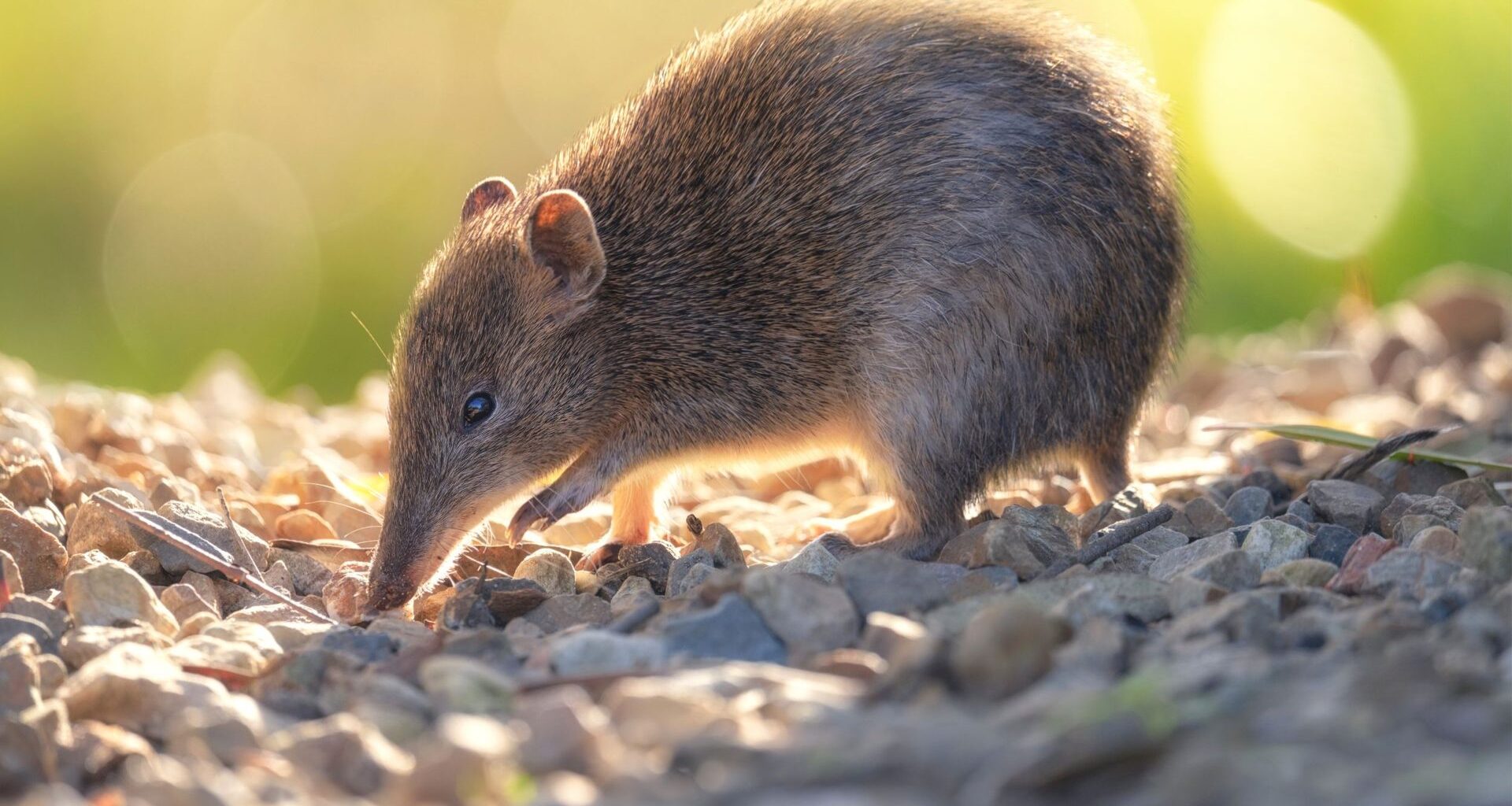
Bandicoot skulls vary with climate and location, with climate explaining more shape differences than body size alone does.
Most bandicoots and bilbies find their food the same way: by scratching and digging through soil.
Their snouts, however, look very different from one species to the next. Some are short and sturdy, while others are long and narrow.
A new study of museum skulls found that climate and location help explain those differences, and that body size alone does not.
The researchers concluded that skull shape, more than size, is where these small to medium-sized marsupials changed most as they spread across Australia and New Guinea.
The work was led by Dr. Meg Martin and colleagues in Professor Natalie Warburton’s research group at Murdoch University’s Harry Butler Institute.
The team collaborated with Dr. Kenny Travouillon of the Western Australian Museum.
The researchers worked only with skulls, so no living animals were observed digging.
“When people think of bandicoots, they often picture a fairly similar group of small, digging marsupials,” Warburton said.
“But when we compared their skulls in three dimensions, we found remarkable differences, particularly in the length and shape of their snouts.”
How the skulls were measured
The researchers scanned 127 adult skulls from 25 species, most of them from the museum’s mammal collection. Three of the species are extinct.
Teeth are shiny, so to cut down on reflections, each skull was first coated with a thin white layer of magnesium oxide. The coating was made by burning strips of magnesium in a fume hood.
Each skull was then scanned in two positions on a rotating platform, and the scans were combined into a single 3D model.
The researchers marked the same 54 points on every model, such as the seams where skull bones meet and spots on certain teeth.
They left out the cheekbones and a few other areas, because those parts were often damaged or worn on old museum specimens and fossils.
Comparing the 54 points across skulls allowed the team to measure shape separately from size.
That step matters, because a bigger animal can have a differently shaped head partly because it’s bigger. Warburton said a single skull can tell researchers a lot about an animal.
“Its shape is influenced by ancestry, feeding, sensory systems, and the mechanical demands placed on the head, so comparing skulls across species gives us another way of understanding how animals have adapted over evolutionary time,” she said.
Snout shape divides the family
The biggest difference was between short, broad skulls with wide braincases and long, slender skulls with narrow faces.
Short-nosed bandicoots, including the quenda of south-western Australia, had the short, sturdy type, and the smallest of these bandicoots had the most extreme versions.
A group of bandicoots called Perameles had longer snouts and narrower skulls, while the New Guinea species were in between.
Of the two bilby species measured, one had a skull close to the average for the whole group, and the other was more like Perameles.
Closely related bandicoots also tended to have similar skulls.
Knowing a skull’s genus, a group of closely related species, explained about 55% of the differences in shape, while knowing its exact species explained about 75%.
Long snouts may help with probing
So why would close relatives end up with such different faces? Warburton pointed to the way each animal finds its food.
“For animals that spend a lot of their time searching and digging for food, the snout is an important part of how they interact with their environment,” she said.
“A long, narrow snout may help an animal probe through soil and fallen leaves for food, while a shorter, stronger snout may be better suited to digging.”
That idea fits what is known about other mammals. Long, thin snouts often belong to animals that pick small, scattered bits of food out of soil or leaf litter, and anteaters and echidnas are well-known examples.
Diet may matter too. Short-nosed bandicoots eat tubers and other underground plant parts, which can be tougher to chew than many insects.
New Guinea’s bandicoots, by contrast, appear to eat a lot of fungi and soft-bodied invertebrates from the forest floor.
The researchers suggest that tougher food, or deeper and more forceful digging, may help explain why short-nosed bandicoots have sturdier skulls.
Still, most bandicoots eat a wide mix of foods, and many species have little detailed diet information, so the team didn’t treat skull shape as a direct guide to diet.
Climate mattered more than size
To test the role of climate, the team looked up climate data for the place where each skull was collected, using a global database called WorldClim.
They kept six measures of temperature and rainfall that didn’t overlap much.
Together, climate, location and body size accounted for about 35% of the differences in skull shape. Climate on its own explained about 13%, nearly twice as much as size on its own.
That makes climate the bigger factor of the two, although most of the differences in skull shape remain unexplained.
The single strongest link was with latitude, meaning how far north or south a skull was collected.
Among the climate measures, rainfall in the driest month of the year had the strongest link.
Other studies of rodents and of carnivores in the dog and cat families have also linked skull shape to climate.
Size still played a part, but after the team removed its effect, the groups still differed clearly in shape. Males had bigger skulls than females, yet their skull shapes didn’t differ reliably.
These results point to links rather than causes, so they can’t tell how climate affected the skulls.
Fossil skulls were more varied
Bandicoot fossils go back about 26 million years, and although the record is patchy, it includes skull shapes no living species has.
The extinct pig-footed bandicoots, which ate mostly plants, had an unusually broad back to the roof of the mouth.
Partial skulls from the Riversleigh fossil sites in Queensland couldn’t be measured, but their features were compared.
Some early bandicoots were tiny, weighing about 3.5 to 5.3 ounces (100 to 150 grams), with snouts shorter than any living bandicoot’s.
Their skulls look like those of antechinuses, small marsupials from a different family, which suggests these early bandicoots ate insects.
Long snouts appear later, in a fossil species called Madju variae. Its place on the family tree suggests long snouts evolved before the modern bandicoot families split apart.
The tiny insect-eaters and some larger meat-eating bandicoots died out as Australia was becoming drier and its climate less stable.
Most survivors were omnivores, and the researchers suggest that eating many kinds of food mattered more than specializing.
Short-nosed bandicoots later evolved shorter snouts again. In this group, the earliest branch has the longest snout and a later branch the shortest, a sign of a fairly recent change.
Clues beyond the skull
For 13 of the 25 species, the team had only three skulls or fewer.
Many fossil species couldn’t be measured at all, so bandicoot skulls were probably even more varied than this study could capture.
The rest of the skeleton is also a gap. The researchers wrote that it’s still poorly understood how the body below the head contributes to digging.
Future studies of the whole skeleton, along with Riversleigh fossils that haven’t been described yet, could help show how extinction and climate change shaped the bandicoots living today.
The full study was published in the Zoological Journal of the Linnean Society.
—–
Like what you read? Subscribe to our newsletter for engaging articles, exclusive content, and the latest updates.
Check us out on EarthSnap, a free app brought to you by Eric Ralls and Earth.com.
—–