
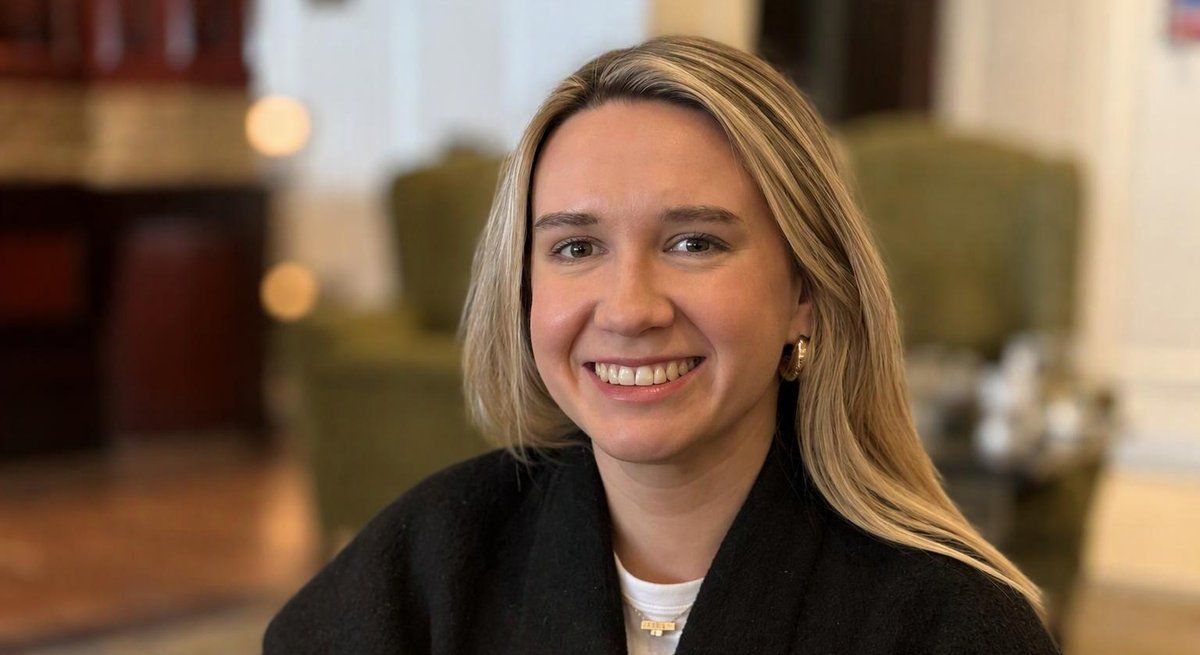
Accenture’s Kate Wallace discusses how a STEM career can often require a blend of technical and people-focused skills.
An AI and data senior manager at Accenture, Kate Wallace told SiliconRepublic.com that her career was inspired by a combination of two things – “the technical side and the people side”.
“I’ve always loved the maths and statistics element of data science, but what drew me in was the interpersonal part: meeting people, building relationships and helping someone work their way to an answer,” she explained.
“Funnily enough, before I ever thought about a career in data, I had always pictured myself becoming a maths teacher. Looking back, there’s a lot more overlap than I expected.”
Her work, she said, is still “fundamentally” about problem-solving and maths, but there is also a human element, so she can work to see the larger picture rather than getting lost in details alone.
“A career in AI and data has given me a way to do both – use the technical skills I enjoyed while still being the person who helps connect the dots for others.”
What educational and work experiences led you to the role you now have?
A lot of it comes down to the teachers and those who mentored me and pushed me to explore this space and step outside my comfort zone. I studied financial maths and actuarial science at University College Cork, which gave me a strong technical grounding, but it was managers at Accenture who gave me stretch opportunities and opened my eyes to where those skills could be used.
I joined through the Accenture graduate programme and from there it’s been a series of ‘say yes and figure it out’ moments – leading teams, taking on complex client delivery and eventually building coaching and mentoring programmes for others.
It’s a nice full-circle moment; people invested in me, so now I try to do the same for others.
What were the biggest surprises or challenges you encountered on you career path?
One thing that surprised me early on in my career was the importance of ‘human’ skills like judgement, creativity, leadership and change management.
I learned that technical depth alone is not enough and we can’t overlook the human side of our work. Accenture’s 2026 Generating Impact research backed this up. It found communication and collaboration, critical thinking, leadership and change management are the capabilities that Irish employees expect to rise in demand as AI adoption grows.
Ultimately, human skills are what determine whether technical capability actually makes an impact.
Was there any one person who was particularly influential as your career developed?
There wasn’t one single person but a series of impressive mentors throughout my time at Accenture. What I’ve taken from each of them is less about a specific piece of advice and more about watching how they operate – senior leaders who are not only good at the job, but do it in a way that brings people with them while still leaving room for a life outside it.
What do you enjoy about your job?
Aside from the social side of it and the people I work with every day, what I genuinely love is that Accenture is investing at scale in AI, which makes it a brilliant place to make a real impact. When generative AI emerged in 2022, we moved quickly and shortly after announcing a $3bn, three-year investment specific to AI.
What that scale means day to day is that I’m never working on theoretical AI projects – it’s a real transformation. That’s genuinely exciting to be part of and it’s a big part of why I still love coming to work.
What aspects of your personality do you feel make you suited to this job?
The blend of being a problem-solver and technically minded, paired with empathy and the ability to communicate with other people really helps in this role, but above all, the desire to keep learning is key. AI is evolving so fast that I have to stay curious and keep updating how I think about the work.
How did your current company support you on your career path?
I’ve been lucky to have some amazing mentors throughout my time at Accenture, and managers who genuinely backed me at the points where it mattered. The training I’ve had access to at Accenture has been instrumental too. The company made a $1bn investment in learning and development this year. From technical upskilling to leadership development, I’ve always felt well supported in my development and growth.
What advice would you give to those considering a career in this area, or just starting out in one?
Don’t assume you need a ‘traditional’ background to belong here. What matters is curiosity and a willingness to keep learning. You need to be comfortable with the fact that this field moves fast. The specific tools and techniques you learn today won’t be the ones you’re using in five years.
That said, don’t overlook human skills like communication, empathy and the ability to bring people with you while you develop the technical skills. As AI handles more of the routine tasks, it’s increasingly the combination of both skillsets that sets people apart. We have demand for hiring in the AI and data practice at the moment.
Don’t miss out on the knowledge you need to succeed. Sign up for the Daily Brief, Silicon Republic’s digest of need-to-know sci-tech news.