
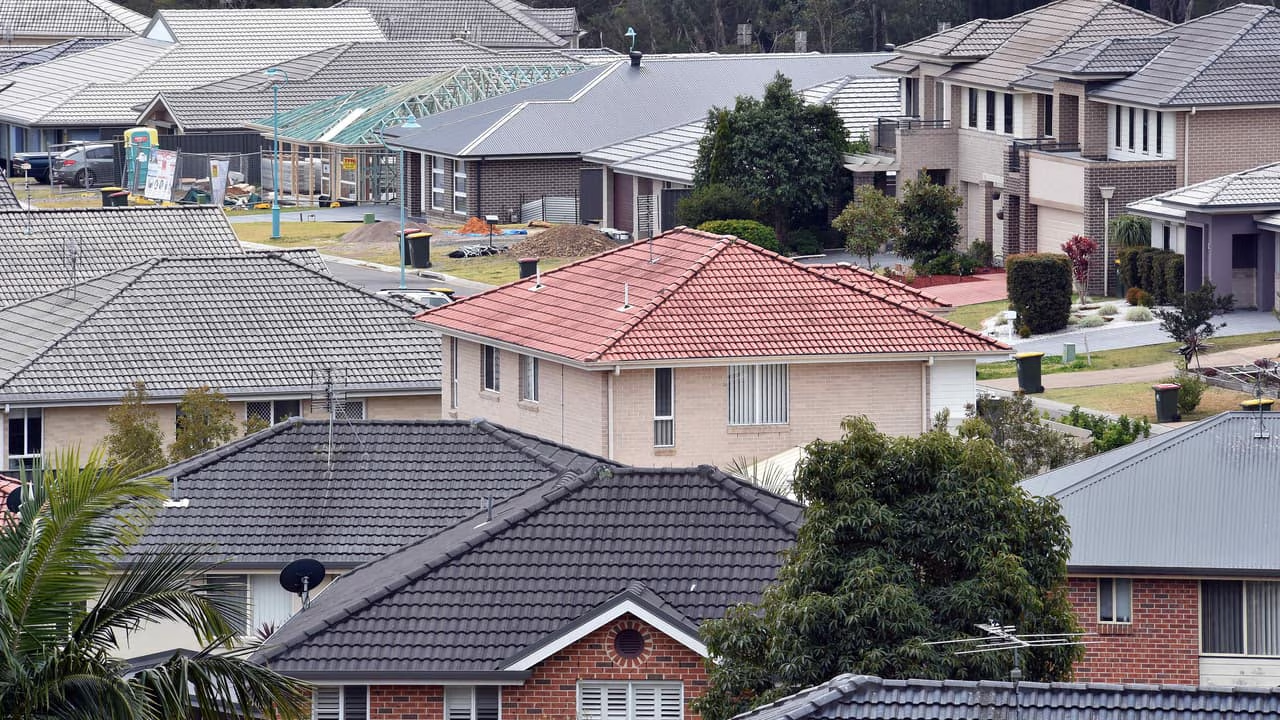
New home loan data showing the biggest fall on record was just the “tip of the iceberg” for a housing sector in crisis, according to industry figures, as builders report a “catastrophic” drop in business.
Australian Bureau of Statistics figures released on Wednesday revealed a 15 per cent drop in new loans written in the September quarter, with investor loans down 30.6 per cent.
Owner-occupier loans were down 5.6 per cent in the quarter and first homebuyer loans fell 8.6 per cent – now 12.3 per cent lower than a year ago.
MORE: ‘Crashed’: Aus city’s stunning home price fall
Australian house prices have experienced the biggest decline in decades on the back of changes to property investment tax concessions and five interest rate hikes in 2026.
The federal government has hoped investor money would flow into fresh stock, which kept the old capital gains tax and negative gearing arrangements, boosting supply.
But home building industry insiders said the changes had smashed demand for new dwellings and would further undercut the National Housing Accord, which was already 95,000 homes behind schedule.
‘Industry-wide catastrophe’
A briefing note sent to news.com.au shows builders have reported drops of 65 to 80 per cent in new contracts heading into 2027 and 2028.
On a national scale, that would represent 160,000 homes never being built and the vicinity of $100 billion in economic value generated by an industry employing 750,000 people being lost.
MORE: $3bn wiped: Aus homes vanish in Albo move
David Brown, a senior figure in the industry as managing director of Meridien Group, told news.com.au this week’s home loan data was the “tip of the iceberg” that only hinted at what was happening on the back end of supply.
“This is catastrophic stuff,” he said.
In his briefing sent to a Queensland MP he said the numbers flowing through pointed to a “industry-wide catastrophe” that was a “national problem”.
It noted that building costs for a spec home rose 37 per cent to $2700 per sqm since Covid and high-density development was up more than 100 per cent to $15,000-17,000 per sqm.
“The build pipeline is pretty full right now,” it said.
“It is the new contracts where the problem is, and that will flow through to a massive drop in construction activity in 2027 and 2028.
“There are early signs of the decline, with building approvals for new homes dropping 6.1 per cent in August, led by medium and higher density housing approvals falling 21.2 per cent.”
The note said one major builder had seen its sales fall 29 per cent and inquiries drop 70 per cent, agents who used to make 20 sales per month were down to two, and firms were laying off staff or closing divisions altogether.
Investors walk away
Auctioneer Tom Panos told news.com.au the home loan data married with what he saw on the ground each weekend, saying he had never seen a spring season like 2026.
Mr Panos said investors had “walked away from the market”, with some instead chasing yields in commercial property, and owner occupiers had not picked up the slack.
“They’re also not buying because they don’t want to catch a falling knife,” he said.
“They believe the market’s going to drop even further.
“I can tell you, that (home loan) data is looking backwards. I would suggest that it’s probably gotten worse in recent times, and that’s not reflected in the data.”
Mr Panos, who is also a business coach, revealed major home builders had told him their sales were through the floor.
”They’re giving me the brief on trying to motivate and ramp up their sales force because sales are collapsing,” he said.
“And these are some of the biggest builders in the country.”
Housing Industry Australia senior economist Maurice Tapang said despite the old tax settings for investment properties being preserved for new-builds, that had not yielded a construction boom.
“The ring-fencing of new home building from the increase in tax does not prevent investors in new housing from incurring higher taxes, as outlined in this year’s federal budget,” he said.
“For that reason, investment in new housing supply is expected to decline.
“The full impact of the Budget changes and the rise in interest rates on housing supply won’t be fully evident in this data until mid-2027.”
Minister defends data
Housing Minister Clare O’Neil put a positive spin on the home loan data, declaring the balance was “shifting back towards Australians who are buying a home to live in”.
“We’ve had a housing market geared towards investors for a generation, and where did it get us?,” she said.
“Plummeting home ownership, out-of-control house price increases, and a generation losing hope.”
Ms O’Neil noted volumes were down overall “as you would expect in a period where prices are softening”.
Opposition housing spokesman Andrew Bragg hit back to say the latest figures showed “no one has won from these taxes, which have smashed the housing system overall”.
“And I make the point that people would look at what Clare O’Neil says and think, ‘Well, what planet is she living on? Why is she saying that fewer loans is good?’,” he said.
“Fewer loans is bad. We need to see more lending, because if we have more lending, then we have more houses.”