
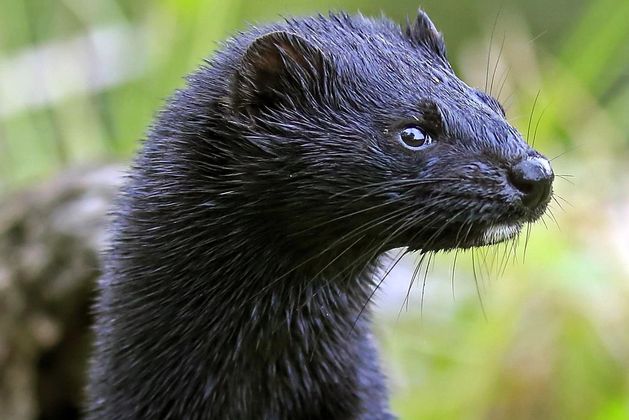
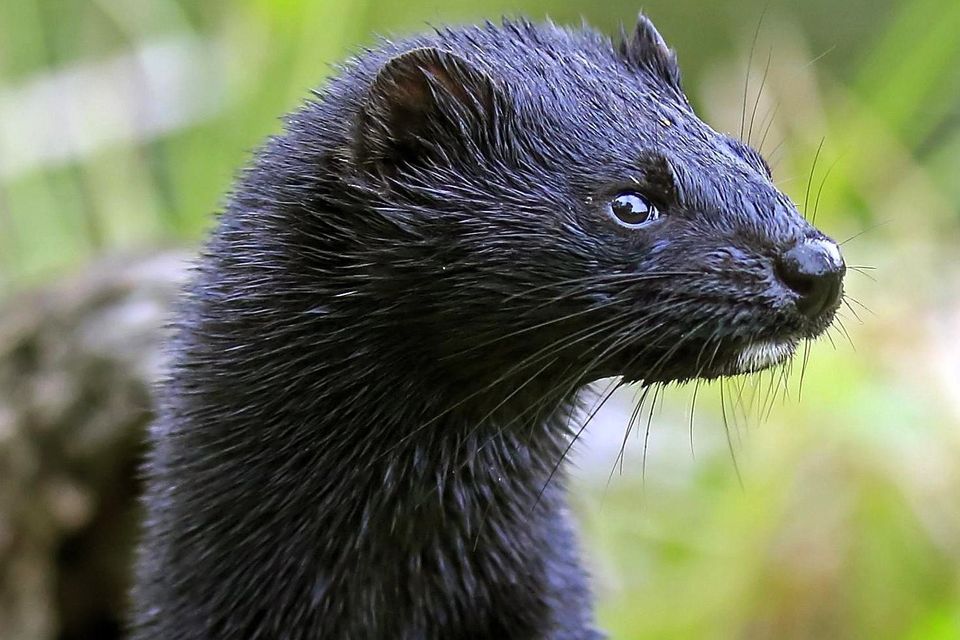
The Mink population in Ireland is estimated to comprise 20,000-30,000 individual animals.
The American Mink is not native to Ireland or indeed to Europe. Animals were imported from North America in the past and were farmed here for the fur trade. Some individuals escaped or were released from their cages, and the species is now widely distributed. The species was first recorded in the wild more than 60 years ago, and since then it has colonised all counties in Ireland.
Mink living wild eat out native wildlife and since they pose a significant threat to ground-nesting birds, the species has been classified as an invasive alien and was recently approved for inclusion on the EU ‘Invasive alien species of Union Concern’, the European Union’s hit list of undesirables. Ireland, together with other EU Member States, is therefore required to take steps to eradicate the unwanted alien to conserve native biodiversity.
Our National Parks and Wildlife Service has initiated a pilot project in the Midlands around Lough Ree, the second largest lake on the Shannon after Lough Derg and an important area for breeding wading birds.
The pilot project will cover a total area stretching 20km in all directions from the shores of Lough Ree. This scope will see activity as far south as Shannonbridge, west to the River Suck, north to Rooskey, and east to Longford town.
The Midlands Mink Eradication Programme is a collaboration between the Breeding Waders European Innovation Partnership (EIP) and the National Association of Regional Game Councils (NARGC) and is supported by the National Parks and Wildlife Service.
The new pilot project is based on science and best practice, including a specialist mink detection dog, and state of the art remote sensing technologies. The programme aims to eradicate mink from the pilot area over a period of three and a half years and will be delivered through a structured, trained and co-ordinated volunteer network. All NARGC club volunteers will be professionally trained in identifying and trapping mink, and their humane dispatch.
Mink eradication programmes have been run successfully abroad so there are past and existing schemes to learn lessons from. Ireland hopes to learn from best practice elsewhere, test how other programmes fit Irish conditions, try new approaches, and devise an efficient and cost effective plan that can be rolled out nationally.
For more information about the Midlands Mink Eradication Programme, visit www.minkeradication.ie.