
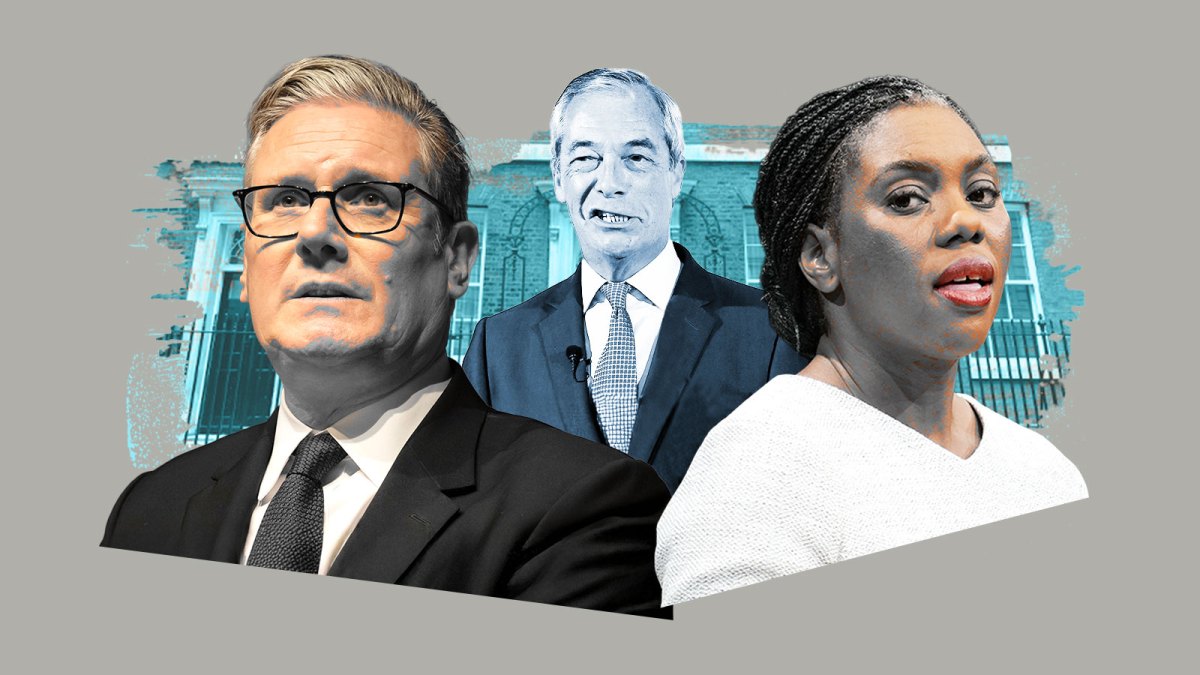
During his visit to Mumbai this week the prime minister received the kind of reception politicians in Britain can only dream of.
As his convoy made its way into the city centre, it passed more than 5,700 posters bearing his face. At one point, Sir Keir Starmer even found himself joining in with a traditional Indian dance to celebrate Diwali.
Only days earlier, at the Labour Party conference in Liverpool, Starmer had drawn rapturous applause from delegates after he said Nigel Farage was a “snake oil merchant” who promulgated racist policies.
The conference was all the sweeter for Starmer after a series of very public interventions by Andy Burnham, the mayor of Greater Manchester and a potential rival for the party leadership, backfired in spectacular fashion.
Kemi Badenoch, the Conservative leader, was also buoyed after a successful party conference, in Manchester. She went into this week fighting for her future and facing the threat of a coup after the Conservative Party’s precipitous fall in the polls. She ended it winning over many of her most ardent critics with a barnstorming conference speech that included a totemic pledge to scrap stamp duty.
When Starmer and Badenoch return to Westminster, though, the afterglow of conference season is unlikely to last long.
For the prime minister and Rachel Reeves, his chancellor, the budget will be all-consuming. The forecasts from the Office for Budget Responsibility are in, and government sources say they are as bad as expected. Economists have predicted that Reeves will need to find between £20 billion and £30 billion. All of which points in one direction: tax rises, with a manifesto-busting increase in income tax among the options being considered.
The challenge being wargamed in No 10 and No 11 is, how do you sell an enormous tax rise to alienated voters who already feel they are taxed too much?
Before the last budget, Reeves tried unsuccessfully to blame the economic inheritance left by the Tories for her decision to raise the employer rate of national insurance. It didn’t work, as she and her party plummeted in the polls.
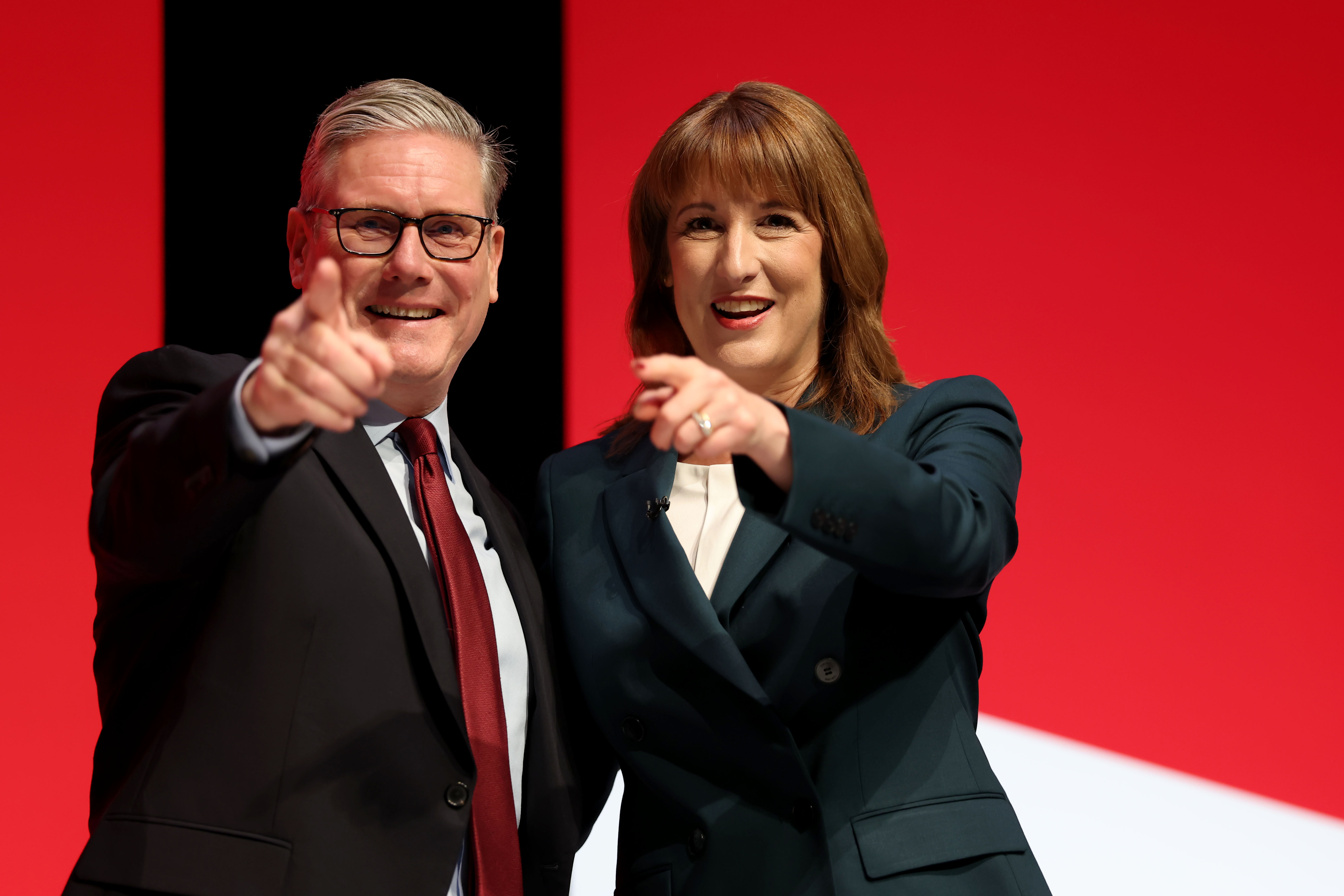
Starmer and Rachel Reeves at the conference in Liverpool
JEFF J MITCHELL/GETTY IMAGES
This time Starmer and Reeves are trying a change of tack, blaming Nigel Farage and Brexit. At the heart of the budget is a big downgrade in productivity by the budget watchdog.
Put simply, the forecaster has concluded that the performance of Britain’s economy over the past decade was even more anaemic than had been thought, leaving Reeves with a bigger black hole in the public finances to fill.
• David Smith: Don’t shoot the messenger by burying OBR forecasts
Starmer and Reeves are expected to argue that, if it hadn’t been for Brexit, this type of downgrade would not have been needed, and to cite official figures suggesting that if Britain had not left the European Union the economy would be about £120 billion bigger by 2035 than current forecasts suggest it will be.
The message is simple: Farage is ultimately to blame as the man who delivered Brexit with “easy sloganeering” then walked away from the aftermath rather than putting in the hard yards. Or, to put it another way: Farage, not us, is responsible for putting up your taxes.
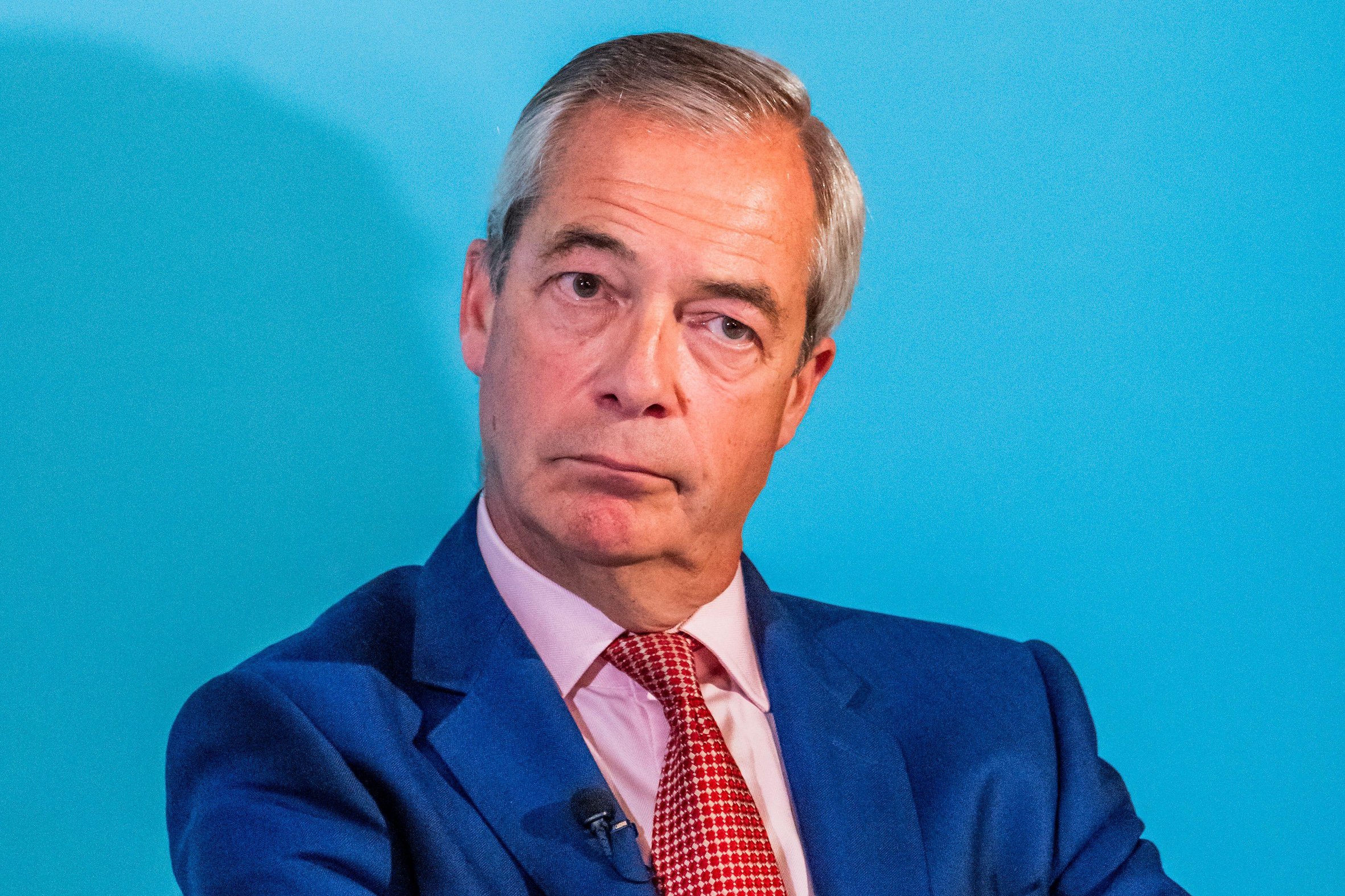
Nigel Farage
GUY BELL/ALAMY
The theme will tie to the main thrust of Starmer’s argument at conference, that the Reform leader is selling easy solutions that are ultimately fantasies.
The other approach taken by Starmer and Reeves will be to present Britain as a bastion of political stability.
Reeves will head to the International Monetary Fund in Washington on Wednesday where she is expected to argue that Britain is a sanctuary of economic responsibility in an increasingly unstable world, and very much open to business. She will nod to the political turmoil engulfing France as a counterfactual.
Starmer’s allies say that, for all the speculation surrounding his leadership, conference has cemented his position. Burnham took a shot and failed to hit his target. The prime minister has a significant majority and is intent on staying the course.
Badenoch believes she emerges from her conference a stronger figure. The blitz of announcements on migration before the conference was intended to squeeze the space between the Tories and Reform as much as possible.
Senior members of the shadow cabinet are privately hoping that Shabana Mahmood, the new home secretary, will succeed in tackling migration so that it becomes less of an issue at the general election. That will then allow the Tories to campaign on the second half of the conference slogan of building a “stronger economy”.
The Tories have identified £47 billion worth of savings and pledged to spend half of it on tax cuts, including the surprise “rabbit” at the heart of Badenoch’s speech, abolishing stamp duty on primary residences. The Tories intend to use it to create a permanent dividing line with Labour, enabling it to argue at the budget that while Starmer raises taxes Badenoch will cut them.
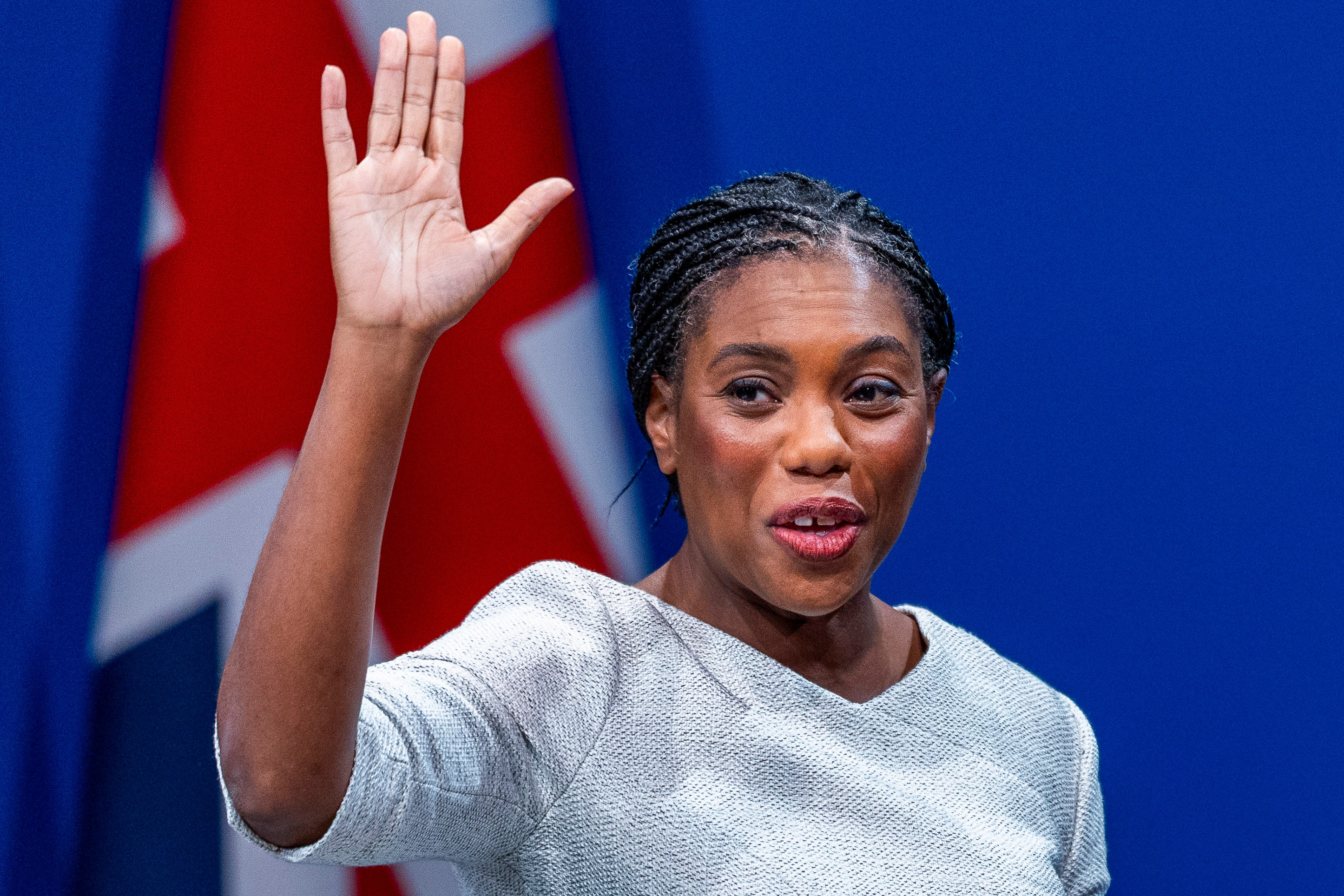
Kemi Badenoch
TIMES PHOTOGRAPHER JAMES GLOSSOP
The Tory leader will launch a national campaign to scrap stamp duty, touring the country to make her case and capitalise on the announcement. On Monday she will head to Grantham, Margaret Thatcher’s birthplace, to mark what would be her hundredth birthday.
• AI Iron Lady tells Margaret Thatcher-obsessed party to move on
The conference speech was enough to stay the hand of her critics in the shadow cabinet, for now at least. However, most acknowledge that after the local elections in May, which are expected to be hugely damaging for the Tories, all bets are off and Robert Jenrick, the shadow justice secretary, remains in the wings. But for now she has bought herself time.
But while Starmer and Badenoch may feel emboldened, analysis of polling by The Times reveals that the electoral prospects for both Labour and the Tories are bleak.
Starmer already suffers the ignominy of being the most unpopular prime minister on record. Polling suggests that after 14 months in office, eight in ten voters are dissatisfied with the prime minister’s performance, eclipsing every other prime minister at this point in his premiership.
The risk for Starmer is that tax rises in the budget risk eroding the party’s support still further. Only 30 per cent of voters think tax rises are necessary and the public is overwhelmingly hostile to the idea of raising either income tax, VAT or national insurance.
Aaron Iftikhar, a director at the opinion research company Stack Data Strategy, said: “Despite what may seem a reprieve post-conference for the PM, the scale of his unpopularity is stark, with no evidence historically that prime ministers can come back from such bad numbers.”
For the Tories the polling is worse. Since the general election there has been a tectonic shift in how voters identify themselves, with the number of people who consider themselves to be “core” Reform supporters, firmly aligned with the party’s values, rising from 1.7 million to 3.8 million. It suggests Reform has effectively solidified its base and is here to stay, far removed from claims it is a protest vote.
The scale of the task before Badenoch is staggering. YouGov’s latest seat-by-seat poll suggests the Tories will win just 48 seats. Even if Badenoch succeeds in winning back 1 million of the voters who have defected to Reform, an extrapolation of polling by YouGov suggests the Tories will still return just 101 MPs, fewer than they have at present.
The same figures suggest Reform is on the cusp of an outright majority, while other pollsters say it is already there. There is a path for Labour, however, in the form of a potential coalition with the Liberal Democrats and the Greens.
Above all the polling suggests that the era of two-party politics is now dead. Britain is transitioning into an era of European-style politics, with as many as five parties vying for contention — possibly six if Jeremy Corbyn’s nascent political project gets off the ground.
But even if the polling is bleak, Starmer and Badenoch are taking some solace from the fact that conference season allowed them to settle on strategies to take on Reform and try to turn things around.
For Starmer the plan is to try to win back the voters who have drifted to the Lib Dems and Greens by positioning Labour as the only party that can realistically see off Reform in a “fight for the soul” of the country.
For the Tories it is to place all bets on the economy, where they are still more trusted than both Labour and Reform, and paint Farage as a risk that’s not worth taking.
For both the hope is that, come the election, in the privacy of the ballot box their traditional voters will come back to them. If they do not, Farage will be heading to Downing Street.