
European Trade Commissioner Maros Sefcovic has called the latest measures by China to limit supplies unjustified and said EU ministers meeting in Denmark to discuss trade issues described them as a “critical concern”.
But what are they and why does it matter?
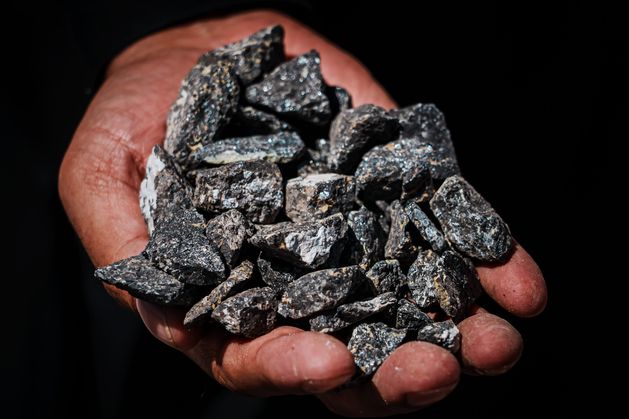
Rare earths are a group of 17 mineral elements including 15 silvery-white metals called lanthanides, or lanthanoids, plus scandium and yttrium.
WHAT ARE THEY USED FOR?
They are used in a wide range of industrial products including consumer electronics, electric vehicles (EVs), aircraft engines, medical equipment, oil refining, and military applications such as missiles and radar systems.
WHAT COUNTRY IS THE BIGGEST PRODUCER?
China accounts for about 60pc of global mine production and 90pc of processed and permanent magnet output.
Beijing sets quotas on output, smelting, and separation, which are closely monitored as a barometer of global supply.
WHAT ARE THEIR NAMES?
In their periodic table order, they are: scandium, yttrium, lanthanum, cerium, praseodymium, neodymium, promethium, samarium, europium, gadolinium, terbium, dysprosium, holmium, erbium, thulium, ytterbium, and lutetium.
WHICH ONES ARE MOST COMMON?
Lanthanum and cerium are among the most common rare earth metals. Lanthanum is used in camera lenses and lighting. Cerium is used in catalytic converters, which reduce combustion engine emissions. Neodymium and praseodymium are in demand for permanent magnets used in EV motors and wind turbines.
ARE THEY RARE?
They are not rare in the sense that they are uncommon; some are more common than lead, for example. But they tend to be spread thin around the Earth’s crust in small quantities and mixed together or with other minerals, so larger deposits are difficult to find and costly to extract.
WHAT ENVIRONMENTAL IMPACT DO THEY HAVE?
Processing rare earths often involves the use of solvents, which can produce toxic waste that pollutes the soil, water, and atmosphere. More environmentally friendly technologies are being developed, but they are not yet widely used.
Certain types of rare earth ores also contain radioactive thorium or uranium, which is often WHY ARE THEY IN THE NEWS?
China last week further tightened export restrictions ahead of talks on trade and tariffs between Presidents Donald Trump and Xi Jinping at the end of the month.
WHAT DID CHINA ANNOUNCE?
China already tightly controlled its exports of rare earths but on Thursday added five new elements, bringing the total subject to restrictions to 12.
It also limited the export of dozens of pieces of equipment and material used to mine and refine rare earths, processes where it is the world leader.
The restrictions force exporters to apply for licences. An earlier round of controls in April caused shortages of rare earth magnets which led car plants around the world to pause operations.
In a nod to fears of a repeat, China said it would facilitate licence approvals, but intended to reject applications related to defence and would closely scrutinise those related to advanced semiconductors and certain kinds of artificial intelligence.
WHAT DOES IT MEAN FOR FOREIGN PRODUCERS?
Beijing said for the first time that it intends to apply its regime to foreign producers who make certain rare earth products using Chinese material or equipment.
Washington has had similar rules since the 1950s, using them in recent years to stop foreign semiconductor companies selling chips to China if they are made with US technology.
Rare earth producers anywhere in the world must now get approval from China for sales if they use the country’s rare earth equipment. Rare earth magnet makers must do the same if their goods contain more than trace amounts of Chinese rare earths.
The rules appear designed to entrench China’s dominance over the rare earth supply chain and hamstring efforts to build alternatives.
DO THE RULES APPLY TO ANY FOREIGN PRODUCER USING CHINESE RARE EARTHS?
No. China is only claiming global jurisdiction over the production of some rare earths and related magnets.
So, a washing machine made in Germany with a Chinese rare earth magnet does not need permission from the Ministry of Commerce to be sold in other European countries.
However, they would apply to a German company making rare earth magnets using Chinese rare earths.
HOW COULD CHINA ENFORCE THESE NEW RULES?
It’s unclear. Chinese law allows for penalties ranging from fines to imprisonment for breaking export control laws but it would be difficult to prosecute foreign producers.
For foreign rare earth companies reliant on Chinese material or equipment, falling foul of the rules could put them at risk of being cut off from Chinese suppliers.
That risk is likely to add impetus to work already underway in the US and Europe to diversify away from the Chinese rare earths supply chain. However, that will take time and previous Chinese controls announced in April caused shortages around the world, such as for carmakers, before a series of deals with Europe and the US eased the supply crunch.
(Reuters)