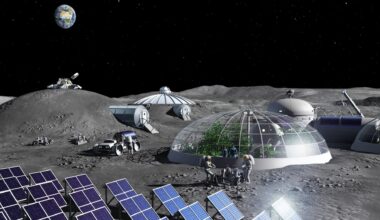
SScience Read More Do we need a lunar building code to build moon bases safely?June 20, 2026 GOLDEN, Colorado – Here on Earth, centuries of accumulated engineering knowhow, hard-learned lessons, and societal evolution have shaped…

SScience Read More Hidden geological process offsets carbon emissions from thawing permafrostJune 20, 2026 A study published in Nature suggests that thawing permafrost may have an unexpected effect on the carbon cycle.…
SSpace Read More Boeing tests quantum protocol in Q4S payload prior to launchJune 20, 2026 Engineers at Boeing demonstrated a key quantum protocol during ground testing of the payload for the Q4S mission,…
SScience Read More The Sky Today on Saturday, June 20: Libra’s Ghost ClusterJune 20, 2026 Back to Article List The globular cluster NGC 5897 glows in Libra the Balance, a ghostly twin to…
SSpace Read More Asteroids may have helped create the conditions for life on early Earth; scientists find |June 20, 2026 For decades, asteroid impacts have been seen as forces of pure destruction, the kind that wiped out the…
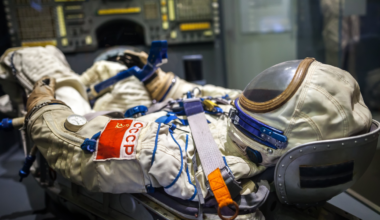
SScience Read More The longest continuous spaceflight in history — 437 days aboard the Russian Mir space station, completed by cosmonaut Valeri Polyakov in 1995 — was specifically conducted to prove that a human being could survive a round-trip mission to Mars, in a piece of human endurance that has been waiting unused on a shelf for three decadesJune 20, 2026 The record sits at the top of every list of human spaceflight endurance achievements, has been there since…
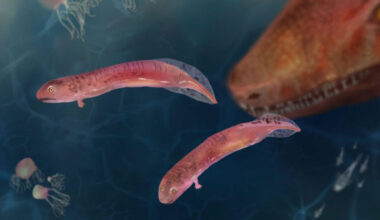
SScience Read More Earth’s First Land Animals May Never Have Been Amphibian-Like After AllJune 20, 2026 Paleontologists from the Field Museum of Natural History have described the fossilized remains of baby embolomeres, crocodile-like predators…
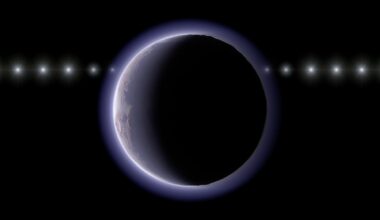
SScience Read More A body on the edge of our Solar System has an atmosphere – and scientists still aren’t sure how that’s possibleJune 20, 2026 Astronomers have discovered signs of a thin atmosphere surrounding an icy body beyond the orbit of Neptune –…
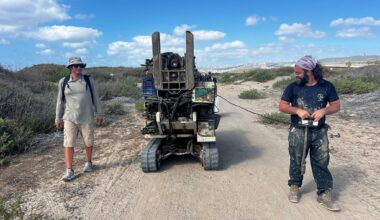
EEnvironment Read More Israeli study unlocks 4,000 years of climate change and human adaptationJune 20, 2026 Cylinders of ancient mud drilled from the Carmel Coast in northern Israel have revealed how ancient human societies…
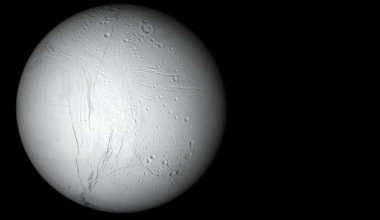
SScience Read More Enceladus, a tiny Saturnian moon only about 500 kilometres wide, is actively venting water vapour and ice grains into space from a salty ocean hidden beneath its crust — and modelling suggests that ocean may have remained warm and chemically active for geological timescales, perhaps long enough for life to have had a chance to emerge.June 20, 2026 Enceladus is small, only about 500 kilometres across, a moon you could lose among Saturn’s dozens. It is…
EEnvironment Read More ‘It’s Russian roulette’: alarm as Europe backs critical minerals mines in water-stressed regions | MiningJune 20, 2026 The European Commission plans to rewrite the EU’s flagship water protection law to speed up the development of…
SSpace Read More In late 2023, Voyager 1 began sending unreadable data from interstellar space. NASA engineers eventually traced the fault to corrupted memory in one of the probe’s computers, rewrote part of its 46-year-old software, transmitted the fix across more than 24 billion kilometres, and waited roughly 45 hours for confirmation that the patch had worked.June 20, 2026 In late 2023, Voyager 1 stopped making sense. The spacecraft was still transmitting from interstellar space, but the…