Ireland News Beep | NewsBeep.com
  • News Beep
  • Ireland
  • Headlines
  • Business
  • Entertainment
  • Health
  • Science
  • Sports
  • Technology
Ireland News Beep | NewsBeep.com
  • News Beep
  • Ireland
  • Headlines
  • Business
  • Entertainment
  • Health
  • Science
  • Sports
  • Technology

Browsing Category

Science

48657 posts
WWildlife
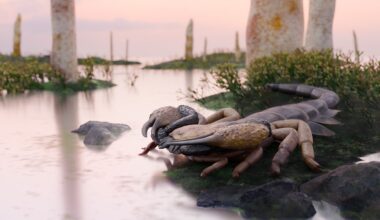
A reconstruction of a brown and black scorpion on the edge of a river bank.
Read More

World’s largest scorpion had 6-inch pincers, and prowled UK land and waters 415 million years ago

  • June 7, 2026
The world’s largest known scorpion lived at a time when other land animals were relatively small, around 415…

SScience
Tiny ocean shells draw a hidden line across the Atlantic, and it may shape Earth’s carbon cycle
Read More

Tiny ocean shells draw a hidden line across the Atlantic, and it may shape Earth’s carbon cycle

  • June 7, 2026
The ocean handles more of Earth’s carbon chemistry than most people realize, and most of it happens invisibly.…
WWildlife
Ella McSweeney: This killer pet has driven 73 species to extinction, and roams free in Ireland – The Irish Times
Read More

Ella McSweeney: This killer pet has driven 73 species to extinction, and roams free in Ireland – The Irish Times

  • June 7, 2026
Here’s a guessing game. Name this animal. The International Union for Conservation of Nature (IUCN) lists it among…
SScience
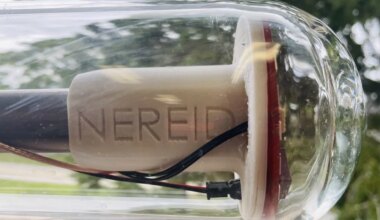
DESIGNED TO DISAPPEAR: The Nereid Biomaterials team, including URochester biologist Anne S. Meyer, developed the first ocean instrument with 3D-printed bioplastic components. Intended for large-scale ocean carbon monitoring, the instruments are designed to biodegrade in marine environments instead of adding to plastic waste.
Read More

Bacteria-based bioplastics reduce ocean waste

  • June 7, 2026
URochester biologist Anne S. Meyer and her colleagues created ‘bio-stickers’ that speed up plastic breakdown in marine environments.…
SSpace
The James Webb telescope keeps finding early galaxies that look brighter, bigger and more mature than astronomers expected, forcing researchers to rethink how quickly the first galaxies formed stars and assembled after the Big Bang.
Read More

The James Webb telescope keeps finding early galaxies that look brighter, bigger and more mature than astronomers expected, forcing researchers to rethink how quickly the first galaxies formed stars and assembled after the Big Bang.

  • June 7, 2026
The James Webb Space Telescope has confirmed MoM-z14, the most distant spectroscopically confirmed galaxy yet, whose light left…
SScience
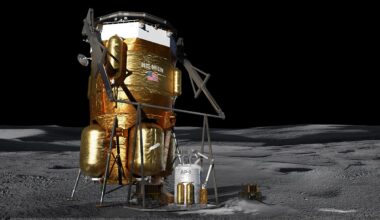
Illustration showing Blue Origin
Read More

US space firm Blue Origin just extracted oxygen from Moon dust. Here’s why it could transform spaceflight

  • June 7, 2026
Blue Origin has announced a significant step towards sustainable space exploration. The US space tech firm has revealed…
SScience
Earth’s Rotation Is Slowing Faster Than In 3.6 Million Years
Read More

Earth’s Rotation Is Slowing Faster Than In 3.6 Million Years

  • June 7, 2026
Topline Earth’s rotation is gradually slowing as climate change melts glaciers and polar ice sheets, redistributing water across…
EEnvironment
‘The ocean has no boundaries’: Beauty and life in a war zone
Read More

‘The ocean has no boundaries’: Beauty and life in a war zone

  • June 7, 2026
Iran closed the waterway to foreign shipping, attacking merchant vessels and cutting off around 20 per cent of the world’s…
SScience
The largest insects that ever lived were dragonflies with wingspans of more than two feet, grown in an ancient atmosphere so much richer in oxygen that nothing that size could survive in the air we breathe today
Read More

The largest insects that ever lived were dragonflies with wingspans of more than two feet, grown in an ancient atmosphere so much richer in oxygen that nothing that size could survive in the air we breathe today

  • June 7, 2026
The largest insect known to science was a predator called Meganeuropsis permiana, with a wingspan of about 71…
EEnvironment
A humble fiber-optic cable could become the next moonquake detector
Read More

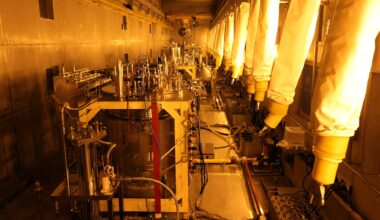
Why pyroprocessing could be a game changer for nuclear waste recycling

  • June 7, 2026
On December 20, 1951, the Experimental Breeder Reactor-I (EBR-I) in Idaho became the first nuclear reactor in the…
SScience
In 1959, the Soviet Luna 3 probe swung around the far side of the Moon and took 29 grainy photographs of a hemisphere humans had never seen, then developed the film onboard and scanned the negatives with a flying-spot beam to radio them back across nearly 480,000 kilometres of vacuum
Read More

In 1959, the Soviet Luna 3 probe swung around the far side of the Moon and took 29 grainy photographs of a hemisphere humans had never seen, then developed the film onboard and scanned the negatives with a flying-spot beam to radio them back across nearly 480,000 kilometres of vacuum

  • June 7, 2026
On 7 October 1959, a Soviet probe the size of a small water heater swung around the back…
SScience
The most powerful AI stories right now are not chatbots. They are the quiet algorithms reading burnt Roman scrolls, trawling through millions of galaxies, and finding things hidden in data no human team could ever finish searching.
Read More

The most powerful AI stories right now are not chatbots. They are the quiet algorithms reading burnt Roman scrolls, trawling through millions of galaxies, and finding things hidden in data no human team could ever finish searching.

  • June 7, 2026
The artificial intelligence that holds the public’s attention writes essays, answers questions and holds a conversation. The artificial…
Ireland News Beep | NewsBeep.com
www.newsbeep.com