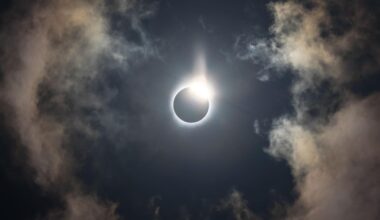
SSpace Read More Tuesday’s New Moon Sets Up A Total Solar Eclipse In 29 DaysJuly 14, 2026 Topline The month’s new moon occurs at 5:43 a.m. EDT on Tuesday, July 14, but it is no…
SScience Read More Scientists discover why peach fuzz can suddenly make you itchJuly 14, 2026 Researchers at the University of Michigan have uncovered a previously unknown biological pathway that explains how certain touch-sensitive…
SSpace Read More Fans of the Arctic – NASA ScienceJuly 14, 2026 Editor’s Note: Today’s story is the answer to the July Puzzler. Call it an alluvial face-off. On the southern…
SScience Read More TU Berlin and BAM Establish Joint Institute for Safe, Digital, and Sustainable Process EngineeringJuly 14, 2026 The Department of Process and Plant Safety at the Federal Institute for Materials Research and Testing (BAM) and…
PPhysics Read More Quantum Computers Identify Nuclear Fusion Fuel in Major First : ScienceAlertJuly 14, 2026 A major barrier to harnessing energy via nuclear fusion is the fuel source. Most proposed fusion reactors (the…
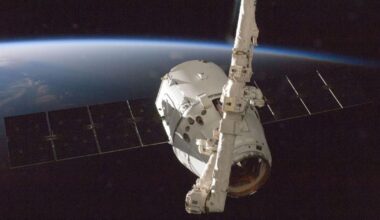
SScience Read More MIT scientist invents new way to detect nuclear weapons in space | NationalJuly 14, 2026 (Photo by SpaceX via Pexels) By Daniel Johnson-Kim It’s a bird … it’s a plane … no, it’s…
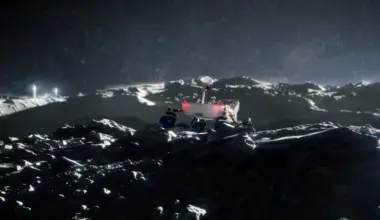
SSpace Read More NASA reveals absolutely bonkers new Moon roverJuly 14, 2026 As NASA prepares for its next mission to the Moon, it has announced PROMISE – the rover it…
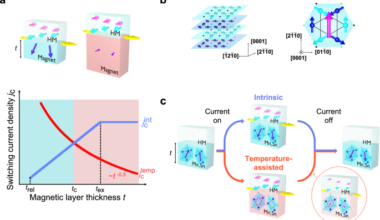
PPhysics Read More Crossover between intrinsic and temperature-assisted regimes in spin-orbit torque switching of antiferromagnetic orderJuly 14, 2026 Wolf, S. A., Lu, J., Stan, M. R., Chen, E. & Treger, D. M. The promise of nanomagnetics…
SScience Read More New dark matter theory could solve multiple cosmic mysteries at onceJuly 14, 2026 Dark matter has long been one of astronomy’s greatest mysteries. It cannot be seen or touched, yet its…
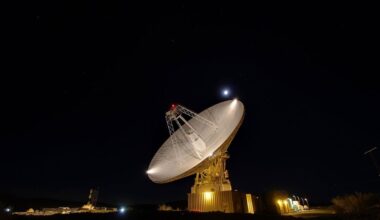
SSpace Read More NASA’s Deep Space Network can detect a signal as weak as a billionth of a billionth of a watt from spacecraft billions of kilometres away — using 70-metre dishes to pull a technological whisper out of the noise of spaceJuly 14, 2026 By the time a spacecraft’s radio signal reaches Earth from the outer Solar System, it is no longer…
WWildlife Read More Sperm whales dive to depths of nearly 2,250 metres on a single breath, their heads packed with a waxy oil called spermaceti that solidifies under cold pressure and helps them sink like a stone toward prey they hunt in total darknessJuly 14, 2026 A sperm whale can hold its breath for over an hour and drop nearly 2,250 metres below the…
SScience Read More Uranium-Eating Bacteria Leave Just 5% of The Radioactive Metal in Toxic Mine Water, Scientists Discover : ScienceAlertJuly 14, 2026 One of the world’s largest uranium mines, the Wismut GmbH Schlema-Alberoda operation in what was then Soviet East…