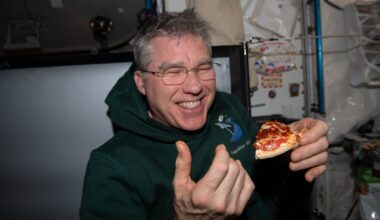
SSpace Read More How spaceflight changes astronauts’ ability to eat and drinkAugust 9, 2026 Imagine trying to swallow a sip of water while your face feels stuffed with congestion, your sense of…
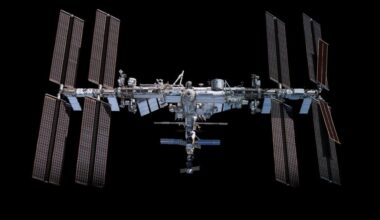
SSpace Read More NASA has contracted a purpose-built spacecraft to push the International Space Station out of orbit in late 2030, steering the 430-tonne structure towards the remote South Pacific near Point Nemo, where passing astronauts can briefly be the nearest humansAugust 9, 2026 There is an uncomfortable practical question inside every permanent-looking human project: who turns off the lights? For the…
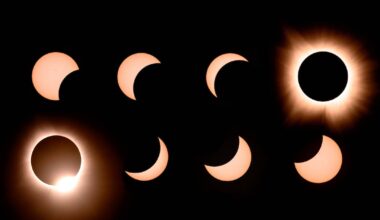
SSpace Read More Everything you need to know about how to see the solar eclipse next weekAugust 9, 2026 AN EXCEPTIONALLY RARE celestial event will be visible across Ireland on 12 August: a near-total eclipse of the…
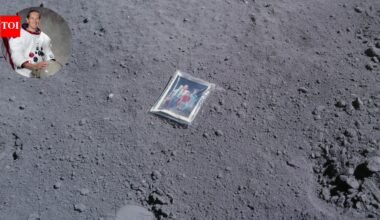
SSpace Read More In 1972, an Apollo 16 astronaut left his family photograph on the Moon: The message identifies them as visitors “from planet Earth”August 9, 2026 The photo left behind by the astronaut | Wikimedia Commons Apollo 16 astronaut Charles Duke left something deeply…
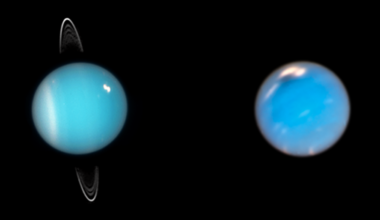
SSpace Read More Neptune sits more than a billion kilometres farther from the Sun, yet parts of Uranus’s atmosphere fall to minus 224 degrees Celsius and become colder — a reversal scientists associate with the strange planet releasing remarkably little heat from its own interiorAugust 9, 2026 Neptune orbits the Sun at an average distance of about 4.5 billion kilometres. Uranus is closer, at roughly…
SSpace Read More Rocket Lab (RKLB) Won a Major Space Force Contract. Now It Has to Prove NeutronAugust 9, 2026 The Pentagon Is Betting on a Rocket That Hasn’t Flown Yet Rocket Lab Corporation (NASDAQ:RKLB) continues to strengthen…
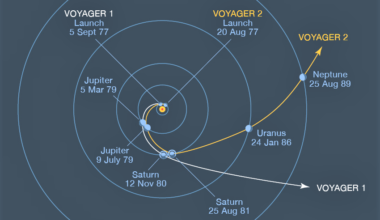
SSpace Read More NASA timed Voyager 2’s 1977 launch to catch an alignment of the four outer planets that only lines up once every 176 years, letting a single spacecraft slingshot past Jupiter, Saturn, Uranus and Neptune on borrowed gravity — a shortcut through the solar system that will not repeat until the 2150sAugust 9, 2026 Voyager 2 left Cape Canaveral at 14:29:44 UTC on 20 August 1977. Its Titan IIIE-Centaur rocket supplied the…
SSpace Read More ‘It’s very moving’: The growth of dark sky tourism in Ireland as enthusiasts prepare for solar eclipse – The Irish TimesAugust 9, 2026 In a world of screens and urban haze, more people are finding something restorative in the act of…
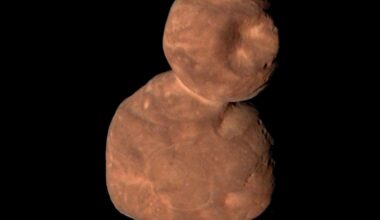
SSpace Read More NASA’s New Horizons spacecraft flew past Pluto in 2015 and kept going, and in January 2019 it photographed a small icy world called Arrokoth four billion miles from the Sun, the most distant object ever visited, shaped like two snowballs gently stuck together since the solar system’s birthAugust 9, 2026 At 5:33 UTC on 1 January 2019, NASA’s New Horizons spacecraft passed roughly 3,500 kilometres from a small…
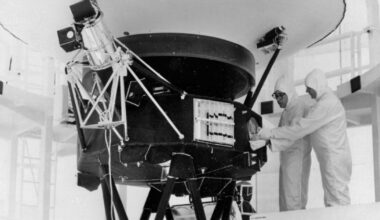
SSpace Read More NASA gives Voyager 2 a new lease on life nearly 48 years after launchAugust 9, 2026 Nearly 48 years after its launch, NASA engineers have found a way to keep Voyager 2’s mission going…
SSpace Read More Elon Musk says SpaceX will hit $1 trillion in revenue by 2030 and build factories on the moonAugust 9, 2026 Elon Musk loves a bold prediction. From humans colonizing Mars to flooding U.S. roads with robotaxis by 2020,…
SSpace Read More All you need to know about next week’s solar eclipse and how to keep your eyes safe – The Irish TimesAugust 9, 2026 The most complete solar eclipse most of us are ever likely to see occurs at sunset on Wednesday,…