
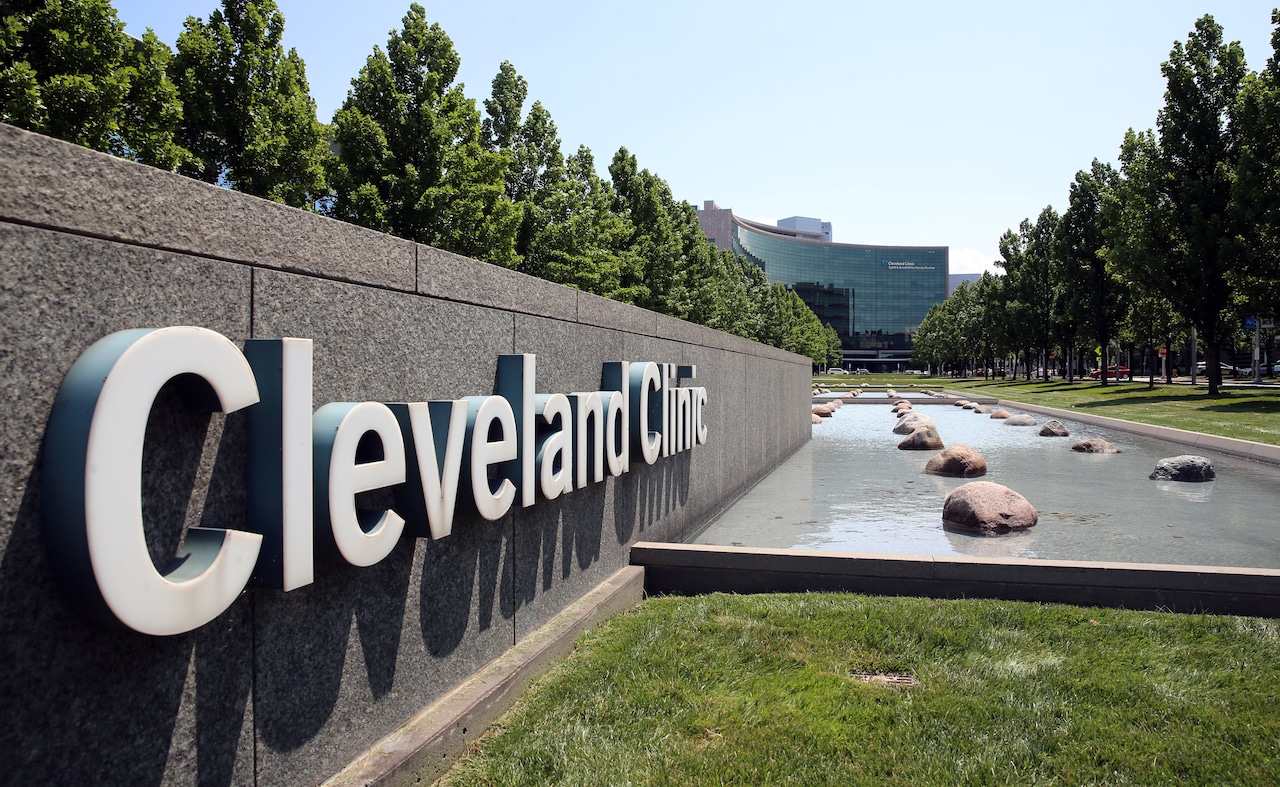
CLEVELAND, Ohio — Soon, all Cleveland Clinic hospitals in Ohio will use artificial intelligence to detect and treat sepsis earlier, the health system recently announced.
Bayesian Health’s AI sepsis detection software is already used at 13 Clinic hospitals in Ohio and five in Florida, and the Clinic plans to roll it out to all Ohio hospitals in the coming months.
Bayesian Health is an AI-based clinical platform company.
Sepsis occurs when the body has an overwhelming immune response to an infection, leading to tissue damage, organ failure and death.
At least 1.7 million adults in the United States develop sepsis each year and thousands die from it, according to the U.S. Centers for Disease Control and Prevention. It is a leading cause of deaths that occur in hospitals, the Clinic said.
Typically, sepsis is diagnosed through physical exams, lab tests and imaging. When detected early enough, it can be treated effectively with antibiotics. But sepsis has a variety of symptoms, and diagnosis can be difficult, the Clinic said.
Bayesian’s software integrates into a hospital’s electronic medical record and analyzes vast amounts of medical data, such as laboratory tests, vital signs and clinical notes, to immediately determine if a patient is at risk of developing sepsis, the Clinic said.
“Artificial intelligence is demonstrating the ability to support clinicians and improve patient outcomes,” said Rohit Chandra, chief digital officer at Cleveland Clinic. “This innovative platform has the potential to help healthcare providers identify complicated conditions such as sepsis earlier by providing real-time insights that are embedded directly into workflows.”
The Clinic’s main campus and its Fairview Hospital location participated in pilot programs of the software, where the tool helped to identify more sepsis cases, reduced false alerts and alerted healthcare providers earlier to the infections.
At Clinic Fairview, the software was used on more than 3,330 patients in 2024 and early 2025, the Clinic said.
Bayesian Health’s clinical awareness AI platform is based on nearly a decade of academic research. Its approach to AI takes into consideration the diversity of the patient population, the unique ways in which doctors and nurses deliver care, and the characteristics of each health system, allowing it to be more accurate and timely, the Clinic said.
In July 2022, Bayesian Health published three papers in Nature Medicine using data from more than 760,000 patients — including more than 17,500 patients who had sepsis — at five academic and community-based hospitals where more than 2,000 care providers used the software.
The papers suggested that the AI program delivered accurate and earlier detection, leading to an 18% relative reduction in deaths from sepsis, the Clinic said.
The Clinic is an investor in Bayesian Health and may benefit from the future commercialization of this technology, the medical system said.
I am a healthcare reporter for cleveland.com, covering NE Ohio hospitals, medicine, clinical studies, infectious diseases, COVID-19 and more.
If you purchase a product or register for an account through a link on our site, we may receive compensation. By using this site, you consent to our User Agreement and agree that your clicks, interactions, and personal information may be collected, recorded, and/or stored by us and social media and other third-party partners in accordance with our Privacy Policy.